

 Newsletters


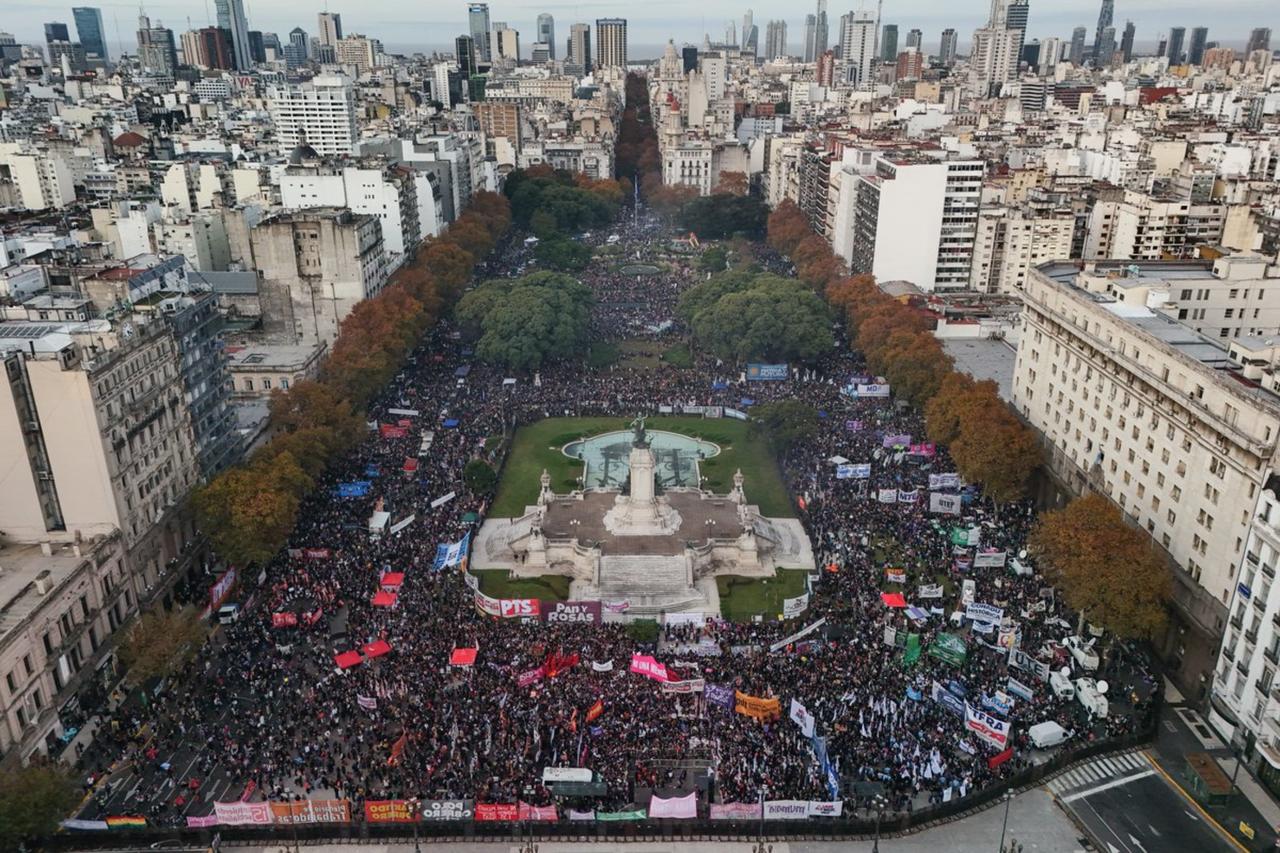


Hundreds of thousands of women, activists and labor union members flooded the main public squares of Argentina on Wednesday for the 11th annual Ni Una Menos (Not One Less) demonstration.
In Buenos Aires, protestors packed a 10-block stretch of Avenida de Mayo, moving from the Casa Rosada government palace to the National Congress.
The massive mobilization sought to honor victims of gender-based violence and voice public outrage over a continuous rise in femicides, Anadolu Agency (AA) reported.
The atmosphere at this year's march was heavily charged, catalyzed by the brutal murder of 14-year-old Agostina Vega just days prior.
Social organizations and trade unions have leveraged the tragedy to demand immediate state intervention and the reinforcement of protection systems for women and minors.
At the Plaza de los dos Congresos, grieving families constructed a massive memorial blanket composed of knitted squares bearing the names and faces of their slain loved ones.
The display drew emotional crowds. Speaking to the Buenos Aires Herald, Carola Labrador, whose 11-year-old daughter, Candela Rodríguez, was kidnapped and murdered in 2011, expressed deep exhaustion with the system.
"We’ve never had support from the state or from the judiciary, and now even less so. We support each other," Labrador said.
The sentiment was echoed by Macarena Cortez, whose sister Tamara was murdered in 2023 while eight months pregnant.
Cortez told the Herald, "We can’t keep living like this. We need a change, and that’s why we are protesting."
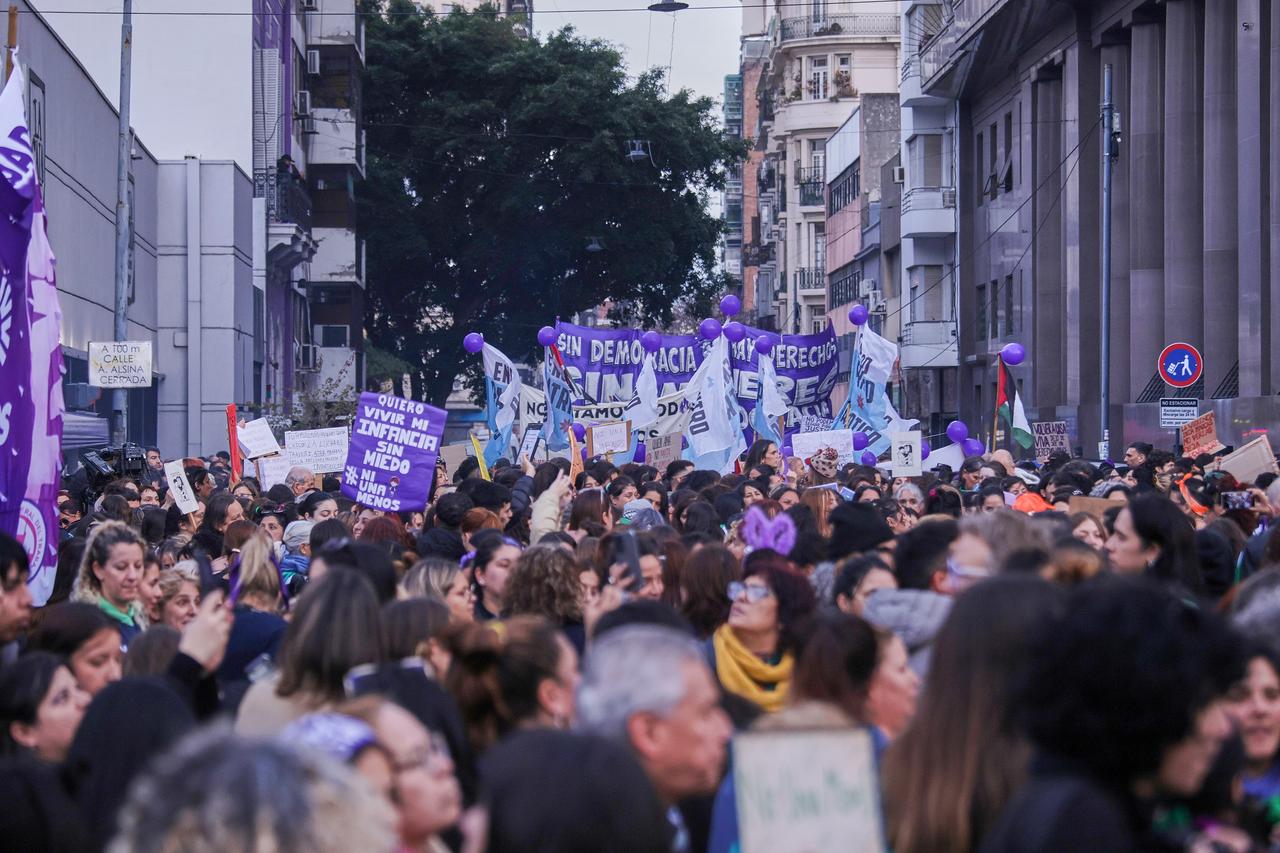

Beyond demanding judicial accountability, this year's march directly targeted the current administration's systemic budget cuts.
Feminist collectives and independent protestors strongly denounced the dismantling and defunding of state sectors dedicated to gender equality under President Javier Milei.
In an official manifesto, the Ni Una Menos movement labeled the Milei administration as "denialist of patriarchal violence," demanding an immediate restoration of protection programs.
Activist Olga Maita told the Herald that the current political climate represents a dangerous step backward, criticizing the president's "misogynistic speech."
The statistical backdrop to the protests remains grim. Data from the feminist observatory Ahora que sí nos ven reveals that 2,752 femicides, 392 "femicides by connection," and 46 transfemicides have been recorded over the last 11 years.
This equates to one fatal victim of gender-based violence every 30 hours since the movement's inception on June 3, 2015.
The observatory's data also highlights a terrifying reality: 85% of victims knew their killers.
This trend was painfully reflected in Argentina's most recent losses:
Agostina Vega (14) was allegedly killed by her mother’s ex-boyfriend; Noelia Romero (30) was stabbed by her partner; and Dulce Candia (16) was allegedly murdered by a taxi driver known to her.


 Set as preferred source
 Set as preferred source


 1 min read
 1 min read


