Newsletters





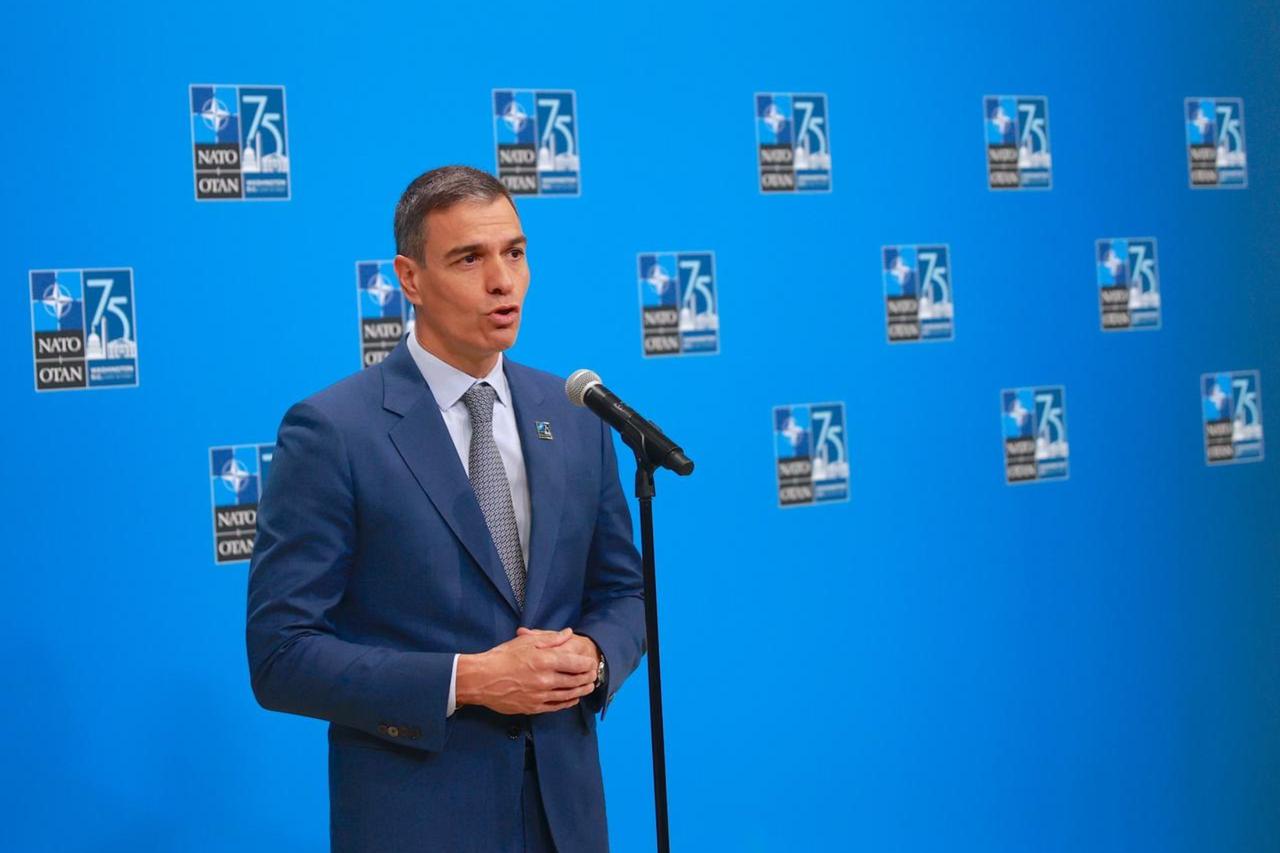
An Israeli legal advocacy group filed a formal complaint with the International Criminal Court on Tuesday urging prosecutors to investigate Spanish Prime Minister Pedro Sanchez for allegedly aiding war crimes through the approval of dual-use exports to Iran.
The complaint was filed by Shurat HaDin, an Israeli NGO that has mounted legal challenges worldwide against what it describes as "Israel's enemies." It calls on the ICC prosecutor to examine whether Sanchez and other senior Spanish officials bear criminal responsibility for the transfers, and to consider issuing an arrest warrant against the prime minister.
The filing, submitted under Article 15 of the Rome Statute, alleges that Spain approved the export of roughly 1.3 million euros worth of dual-use goods to Iran between 2024 and mid-2025, including materials linked to detonators and other explosive applications.
"These materials are not innocent industrial products, but critical components that enable explosive devices to function, and they were transferred in circumstances where their use for attacks against civilians was foreseeable and reasonable," Shurat HaDin said in a statement.
There was no immediate response from Spanish officials.
The complaint rests on the argument that supplying a component essential to the functioning of a weapon can constitute material assistance in war crimes. Shurat HaDin contends the exports were made against a well-documented backdrop of Iran arming allied groups, including Hezbollah, Hamas and the Houthis.
Group president Nitsana Darshan-Leitner argued that criminal responsibility does not rest solely with those who pull the trigger, but extends to those who supply the means that make such acts possible.
Article 15 of the Rome Statute allows individuals and organisations to submit communications to the ICC prosecutor, who may then conduct a preliminary examination before deciding whether to open a full investigation. The court relies on member states to enforce its decisions, a structural constraint that has historically limited its reach against sitting heads of government.
The filing lands in the middle of a sustained breakdown in Israeli-Spanish relations that traces its origins to the Gaza war. Sanchez became one of the most vocal Western leaders in condemning Israel's bombardment of the territory, and Madrid formally recognised a Palestinian state in May 2024, drawing a furious response from Jerusalem.
The two governments have since withdrawn their respective ambassadors. Last week, Israeli Prime Minister Benjamin Netanyahu barred Spain from participating in a U.S.-led centre set up to coordinate post-war Gaza stabilisation, accusing Madrid of waging a sustained diplomatic campaign against Israel.
Sanchez has also publicly opposed the U.S.-Israeli military campaign against Iran, which began on February 28 when Washington and Jerusalem launched coordinated airstrikes on Iranian military and nuclear sites. Iran retaliated with missile and drone strikes against Israel, American bases, and countries across the region, until a fragile ceasefire brokered by Pakistan took hold earlier this month.
Spain denied U.S. requests to use the joint bases at Rota and Moron for offensive operations and later closed its airspace to American aircraft involved in the strikes, prompting threats of trade sanctions from President Donald Trump.
Shurat HaDin has a lengthy record of pursuing legal action across multiple jurisdictions, targeting states and individuals it accuses of enabling violence against Israelis or supporting groups designated as terrorist organisations.
The decision to bring the case to The Hague reflects the symbolic weight of the ICC as a venue, even as securing a prosecution against a sitting European head of government would face formidable legal and political obstacles.
Spanish opposition figures have also raised objections to Sanchez's conduct, with some arguing his government's posture was placing Spain in alignment with Tehran's interests, according to the filing.


 Set as preferred source
 Set as preferred source


 1 min read


 1 min read