Newsletters


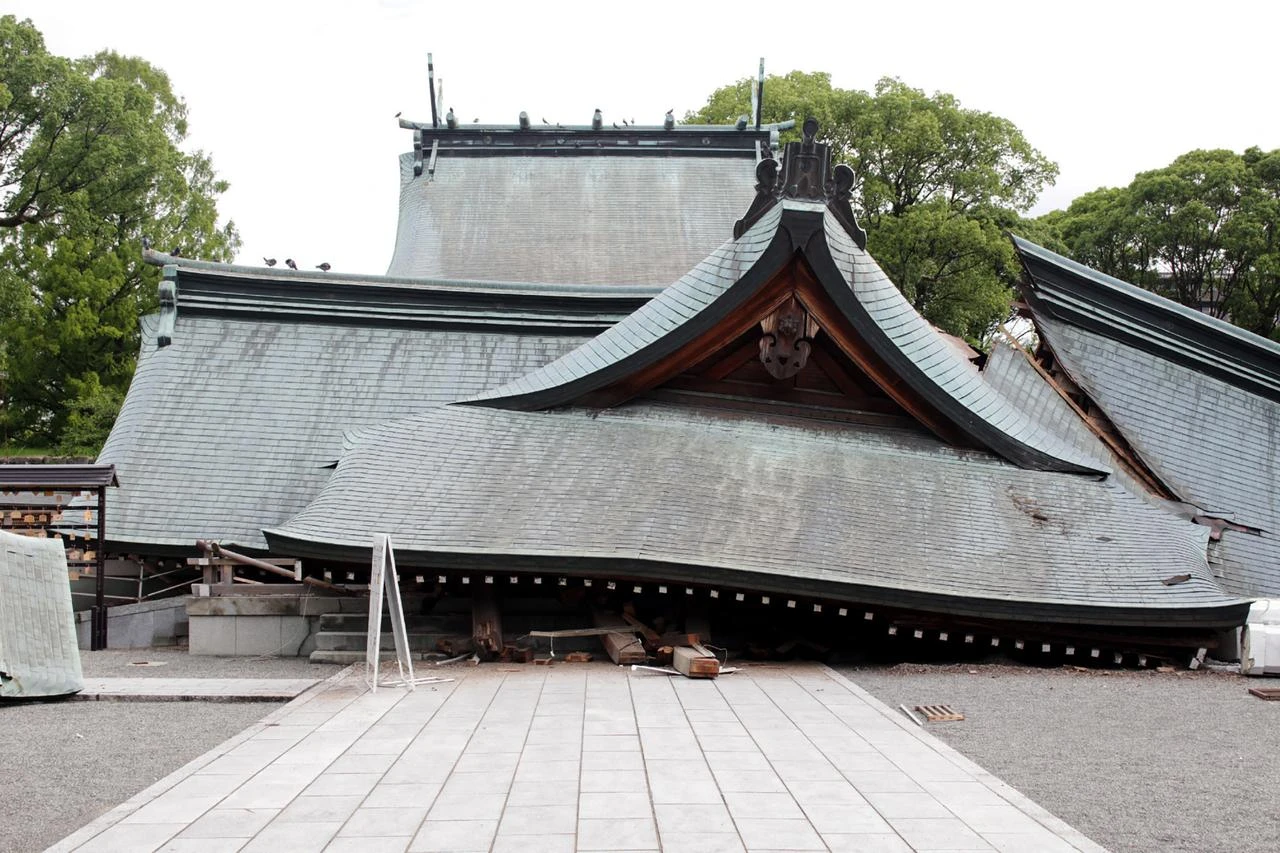


A powerful earthquake in Japan has killed at least 13 people after severely damaging a shopping mall, officials said Wednesday, with rescue teams working to reach survivors believed to be trapped beneath the rubble.
The 7.1-magnitude tremor on Tuesday flattened homes, triggered fires, ruptured bridges and left tens of thousands without power in the southwestern Kumamoto region, where twin quakes killed hundreds in 2016.
"Extensive damage has been confirmed, including casualties, collapsed buildings, fires and damage to roads," Prime Minister Sanae Takaichi said in Tokyo as she announced the 13 fatalities.
Government spokesman Minoru Kihara said that seven others were seriously injured and that as of early Wednesday more than 9,000 people had sought refuge in 506 shelters in three regions of Kyushu island.
Some locals said the quake was the biggest they had felt in their lifetimes, measuring at the top of Japan's seven-level shindo scale of shakiness, a measure of ground shaking intensity at which it is impossible to remain standing.
"It was the strongest quake I ever experienced," Kanzo Matsumoto, 73, the operator of a luxury onsen hot spring inn in Yatsushiro, stated. "I'm not sure if (the region) will be able to recover from the damage."
Chiharu Hara, a 35-year-old recruitment agent, said that she was "terrified" when the quake struck. "The office swayed violently side to side. I was afraid it would collapse. Everyone panicked," Hara said.
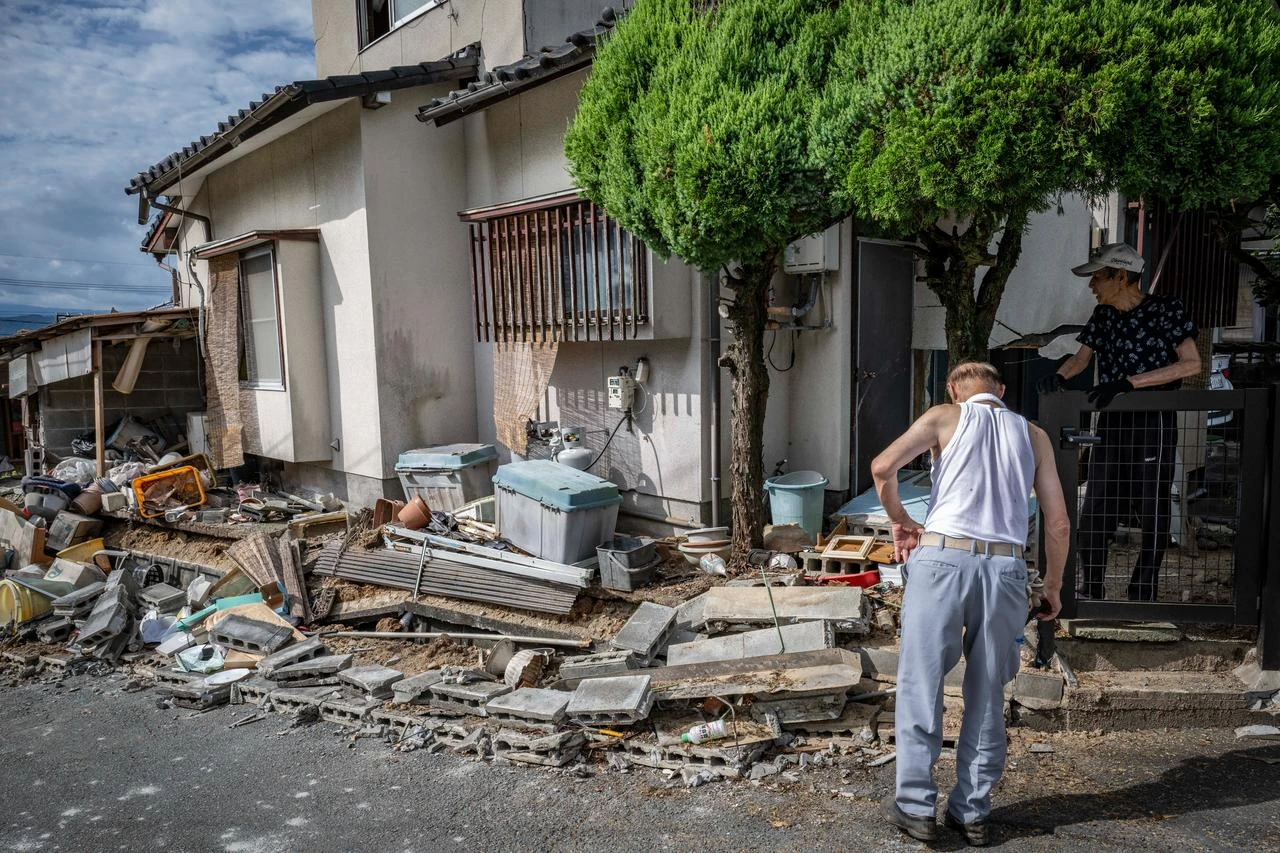

At least two of the dead were women killed in a shopping mall in the town of Kashima, apparently caught in a gas explosion around half an hour after the quake, which was followed by dozens of aftershocks.
Footage from inside the mall showed rescue workers in orange overalls and white helmets picking their way through a mass of twisted steel, dangling cables and chunks of ceiling.
"The explosion occurred after the customers and staff had evacuated," a spokesman for the mall's operator Aeon stated. According to locals, eight people were rescued from the mall, five of whom had injuries.
Initial reports said that as many as 20 to 30 people were trapped inside, but broadcaster NHK cited police early Wednesday as saying that the number was "lower than that."
Nine people were meanwhile unaccounted for in a Nippon Paper Industries factory in Yatsushiro, where part of a red-and-white smokestack smashed into the sprawling facility below, officials said.
Across Kumamoto, 36,880 households and facilities still had no power on Wednesday morning, officials said.
The powerful tremor struck at 4:27 p.m. local time (7:27 a.m. GMT) on Tuesday and was measured at 6.8 by the US Geological Survey (USGS) at a depth of 10 kilometers (6.2 miles).
The temblor also knocked over a cargo train, flattened a traditional "torii" gateway, a traditional Japanese gate that marks the entrance to a Shinto shrine, and cracked roads, making many impassable. High-speed shinkansen trains remained suspended on Wednesday.
Footage also showed parts of a wall at the centuries-old Kumamoto Castle collapsing. Kumamoto airport was closed for several hours before reopening on Tuesday evening.
The Japanese military has mobilized 3,600 personnel for disaster relief operations and sent 20 aircraft to assess the damage from the air, the defense minister said.
Japan is one of the world's most seismically active countries, sitting on top of four major tectonic plates along the western edge of the Pacific "Ring of Fire," a zone around the Pacific Ocean known for frequent earthquakes and volcanic activity.
The archipelago, home to around 125 million people, typically experiences hundreds of jolts every year and accounts for about 18% of the world's earthquakes.
The vast majority are mild, although the damage they cause varies according to their location and the depth below the Earth's surface at which they strike.
Japan is haunted by the memory of a massive 9.0-magnitude undersea quake in 2011, which triggered a tsunami that killed or left missing around 18,500 people and wrecked the Fukushima nuclear plant.


 Set as preferred source
 Set as preferred source



 2 min read