Newsletters




A majority of voters in the United States, the United Kingdom, France and Canada believe World War III is likely to break out within the next five years, according to a new poll that also reveals limited public willingness to make sacrifices to support higher defense spending.
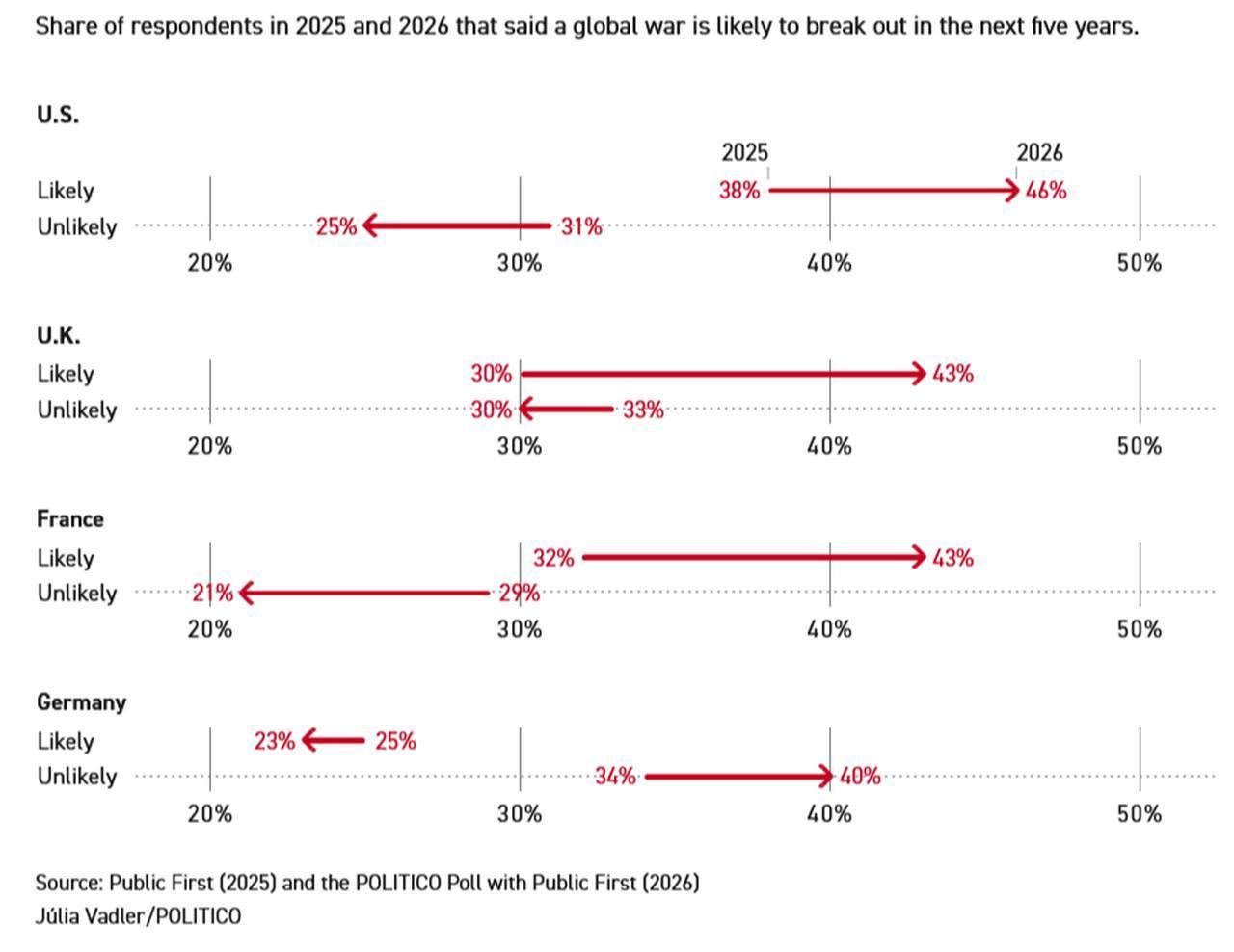
The Politico Poll, conducted by Public First between Feb. 6-9 with over 2,000 voters surveyed in each of five countries, found that fears of global conflict have risen sharply since March 2025.
In the United States, 46% of respondents think a new world war is "likely" or "very likely" by 2031, up from 38% last year.
In the United Kingdom, 43% believe a new world war is "likely" or "very likely"—up from 30% in March 2025.
The pattern extends to France and Canada, where respondents also see global conflict as more likely than not within five years. Only in Germany do voters believe on balance that a third world war is not likely in the next five years.
"The changed attitudes of the Western public in under a year reflect a dramatic move to a more insecure world, where war is seen as likely and alliances are unstable," said Seb Wride, head of polling at Public First.

At least one in three people in the U.S., U.K., France and Canada believe a nuclear weapon is "likely" or "very likely" to be used in a war in the next five years.
When it comes to individual nations engaging in military action, U.S. respondents were the most likely to think their own country will be at war within five years, followed by the U.K.. .and France.
This suggests NATO's nuclear powers may be more braced for conflict than other nations, and that Trump's "president of peace" image is not convincing voters at home.
 1 min read
Russia is seen as the biggest threat to peace in Europe across all countries surveyed.
However, in France, Germany and the U.K., the second-biggest threat is perceived to be the United States—cited far more often than China.
Canadians see Trump's America as the greatest danger to their security.
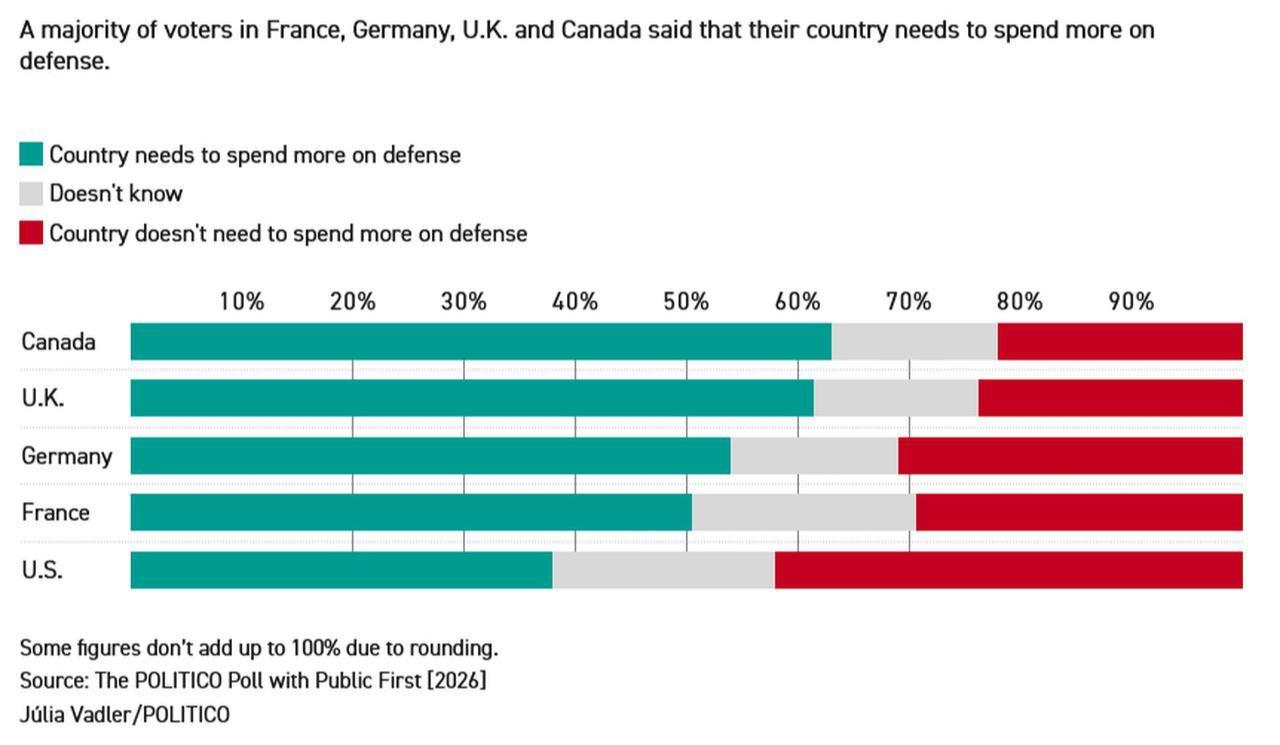
A majority of voters in France, Germany, the U.K. and Canada said their country needs to spend more on defense, with that sentiment strongest in the U.K. and Canada.
However, support for increased defense spending fell sharply when respondents were asked to consider funding it through cuts to other budgets, taking on more government borrowing, or raising taxes.
"Our polling shows the growing concern about war does not give leaders license to spend heavily on defense," Wride said, adding that, "If anything, voters are now less willing to make the trade-offs needed to improve military security."
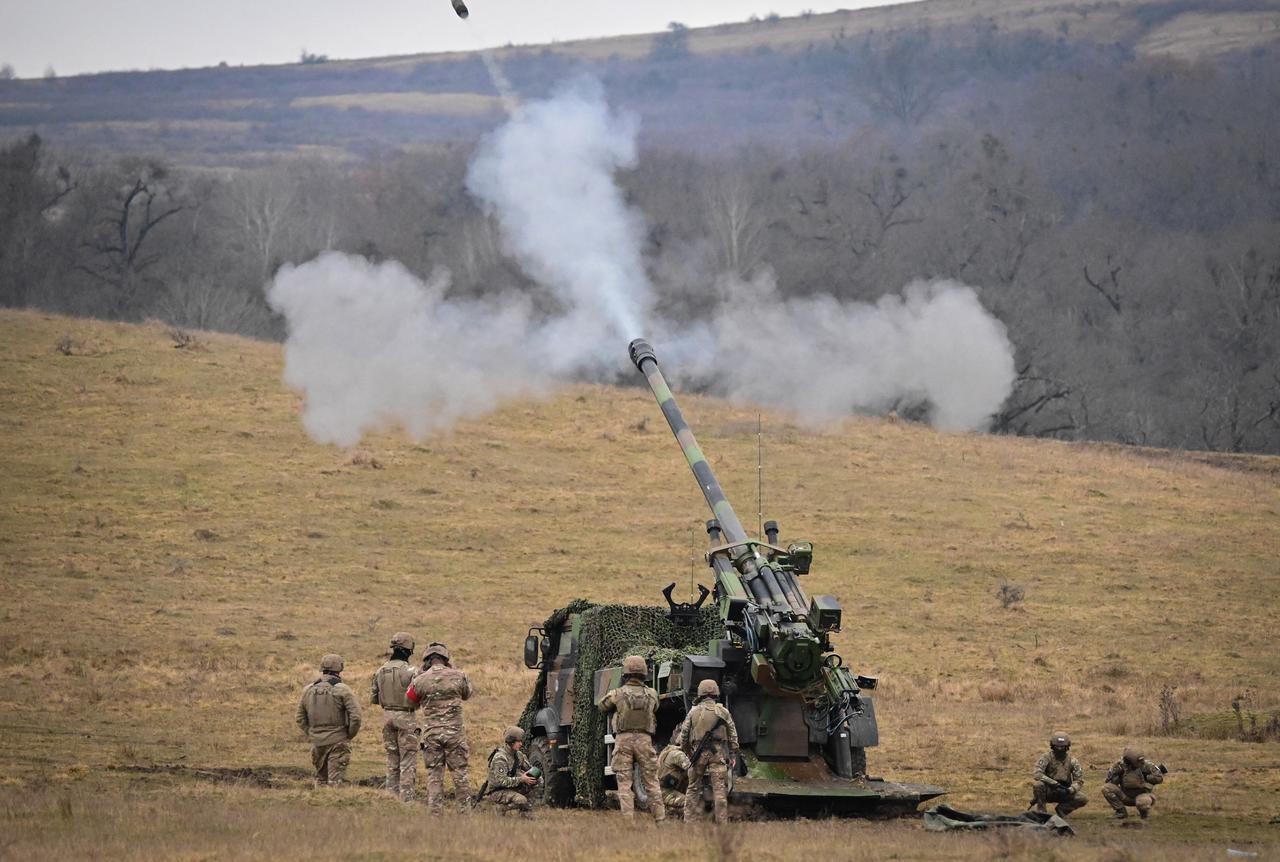
The French and German publics are now less likely to support higher defense budgets when trade-offs are mentioned compared to last year.
In France, support for increased defense spending when trade-offs were mentioned fell from 40% in 2025 to only 28% this year.
In Germany, support dropped from 37% to 24%. Defense spending was one of the least popular uses of money in Germany, ahead of only overseas aid.
Both countries are now more likely to oppose spending more on defense when they have to consider how to pay the bill.
The poll showed significant public skepticism about creating an EU standing army under one central command, an idea mentioned by the European Commission.
The proposal received support from only 22% of people in Germany and 17% in France.
Mandatory military service was most popular in Germany and France, where around half of the people support the idea.
The findings lay bare the challenge facing NATO leaders as they try to strengthen security at a time when public finances are tight.
"European leaders are left in a bind—unable to rely on the U.S., unable to use that as a reason to invest domestically, and under higher pressure to urgently solve this for a world where conflict feels closer than before," Wride said.
The results come as politicians from around the world head to Germany for the annual Munich Security Conference, which starts Friday.
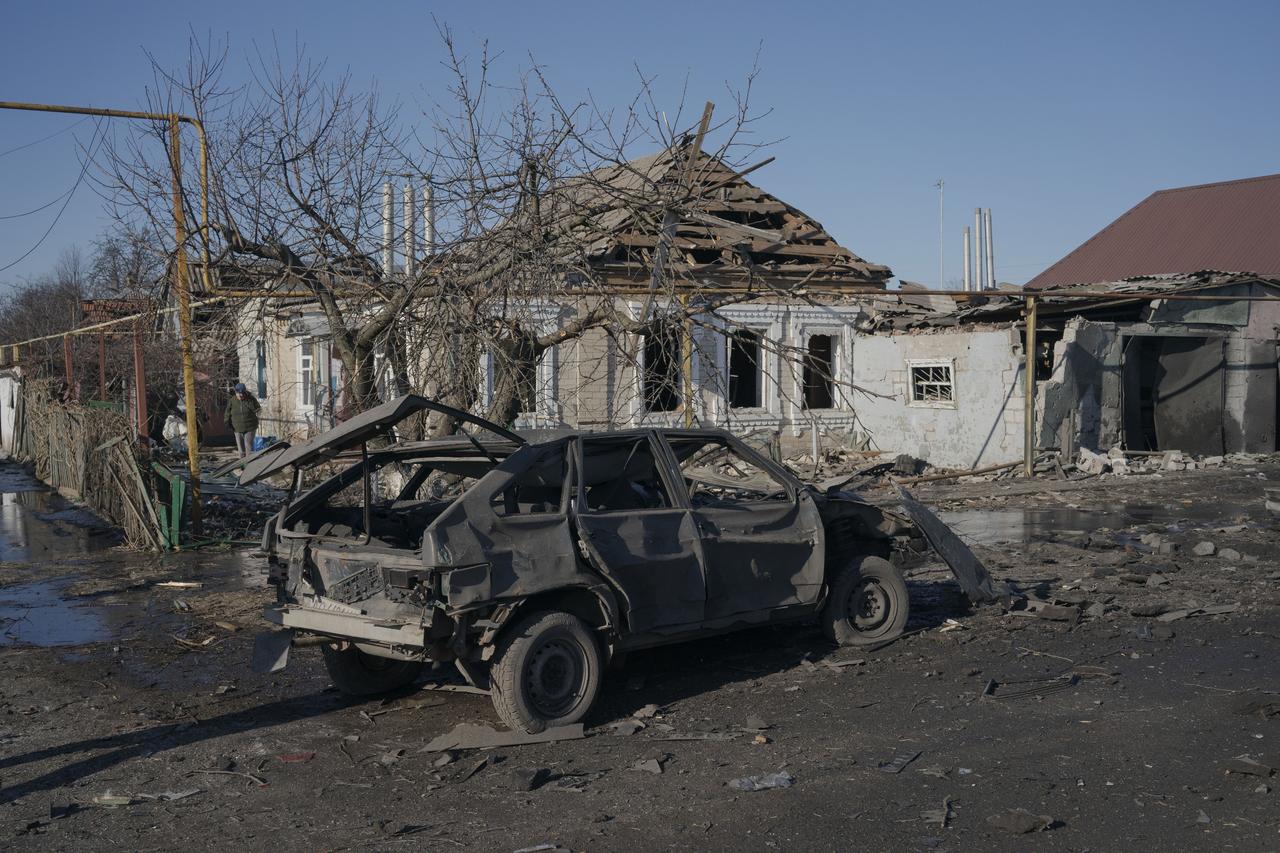
With no sign of an imminent end to Russia's four-year war against Ukraine, and the U.S. taking military action in Iran, Syria, Venezuela and Africa under President Donald Trump, many voters see a growing risk of global conflict.


 Set as preferred source
 Set as preferred source


 1 min read