Newsletters




Argentine President Javier Milei signed on to the Isaac Accords in Jerusalem on Sunday and declared that the joint American-Israeli military campaign against Iran was "the right thing to do," deepening his government's alignment with Washington and Tel Aviv at a moment when much of Latin America has moved sharply in the other direction.
Standing alongside Israeli Prime Minister Benjamin Netanyahu, Milei pledged his "firm support for the United States and Israel in their war against terrorism and against the Iranian regime," invoking Argentina's own history as a victim of attacks that Buenos Aires courts have long attributed to Tehran. "Our countries are brothers in suffering," he said.


The Isaac Accords, a US-backed initiative designed to strengthen Israel's political, economic, and diplomatic ties with Latin American nations, mirrors the Abraham Accords under which several Arab countries, including the United Arab Emirates, Bahrain, and Morocco, normalized relations with Israel during Donald Trump's first term in office. The name is an intentional reference to biblical continuity, framing the Latin American framework as an extension of the earlier Middle East agreements.
Milei has been the driving force behind the accords since their announcement in mid-2025, positioning Argentina as what he has called a regional "pioneer" alongside the United States. Sunday's signing ceremony, during his third visit to Israel as president, marked a formal milestone in that effort.
Central to Milei's rhetoric is Argentina's unresolved grievance with Iran over two bombings that remain open wounds in the country's national memory. In March 1992, an explosion at the Israeli embassy in Buenos Aires killed 29 people and wounded 200. Two years later, a bomb destroyed the Asociacion Mutual Israelita Argentina, known as the AMIA, a Jewish community center in the Argentine capital, killing 85 and injuring more than 300 in what remains the deadliest terrorist attack in Argentina's history. Argentine courts have blamed both attacks on Iran, which has always denied involvement and refused to extradite suspects.
"Argentina was the victim of cowardly terrorist attacks on the AMIA and on the Embassy of Israel, both instigated by the Islamic Republic of Iran," Milei said. "To this day, we still demand justice."
Milei's government has already designated Iran's Islamic Revolutionary Guard Corps a terrorist organization, a move he cited on Sunday as evidence of Argentina's commitment to the anti-Iran coalition.
Beyond the accords, Israel and Argentina formalized a deal to launch direct flights between Buenos Aires and Tel Aviv beginning in November, a connection Milei said would cement "an unbreakable bond" between the two nations. He also renewed a pledge to relocate Argentina's embassy from Tel Aviv to Jerusalem "as soon as conditions allow," calling the move "necessary, but above all, just."
Netanyahu, for his part, praised the Argentine leader for showing "moral clarity" in standing with Israel, saying Milei had stood up "when we fight the battle of civilization against barbarism."
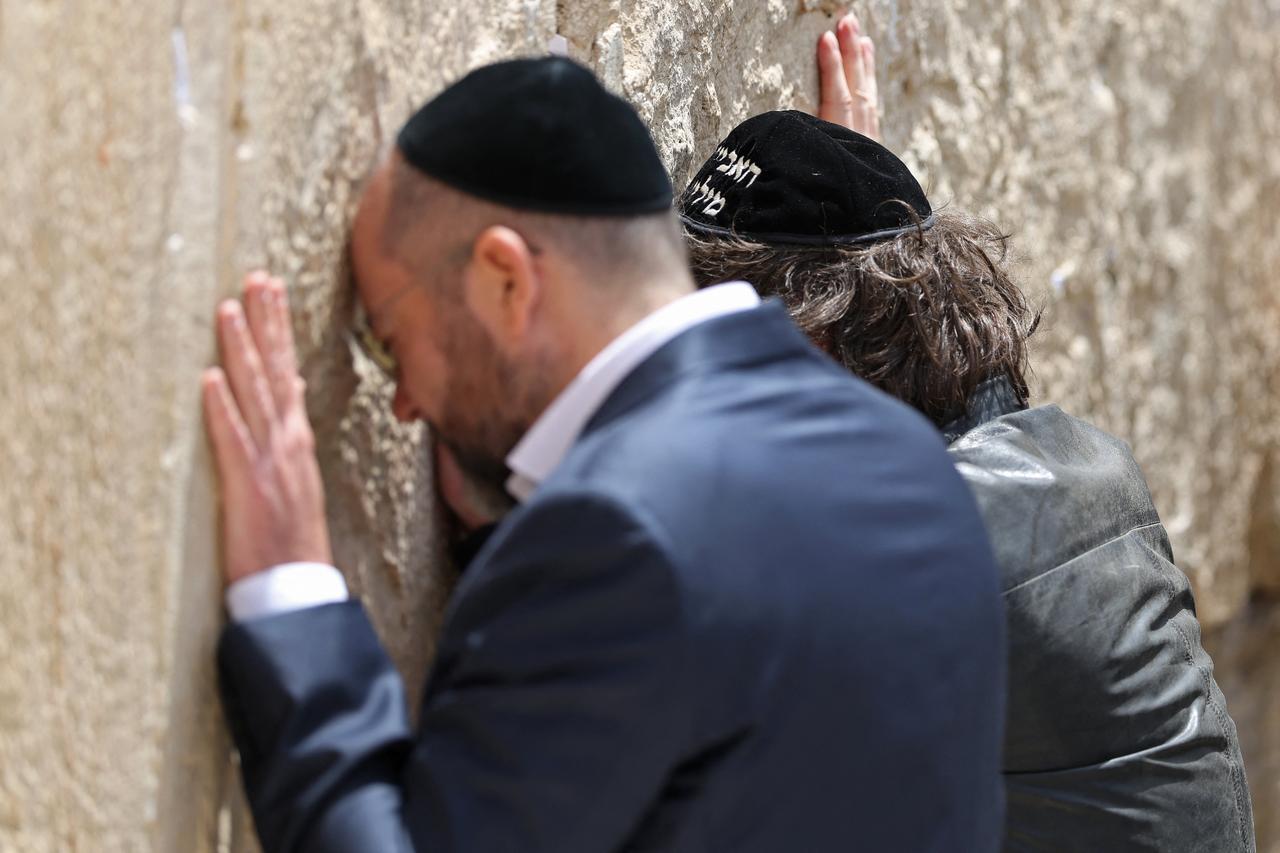
Earlier on Sunday, Milei visited the Western Wall in Jerusalem's Old City, a site he has now visited three times as president. Argentina is home to the largest Jewish community in Latin America, numbering close to 300,000 people, the majority of whom live in Buenos Aires.


 Set as preferred source
 Set as preferred source


 1 min read

 1 min read