Newsletters


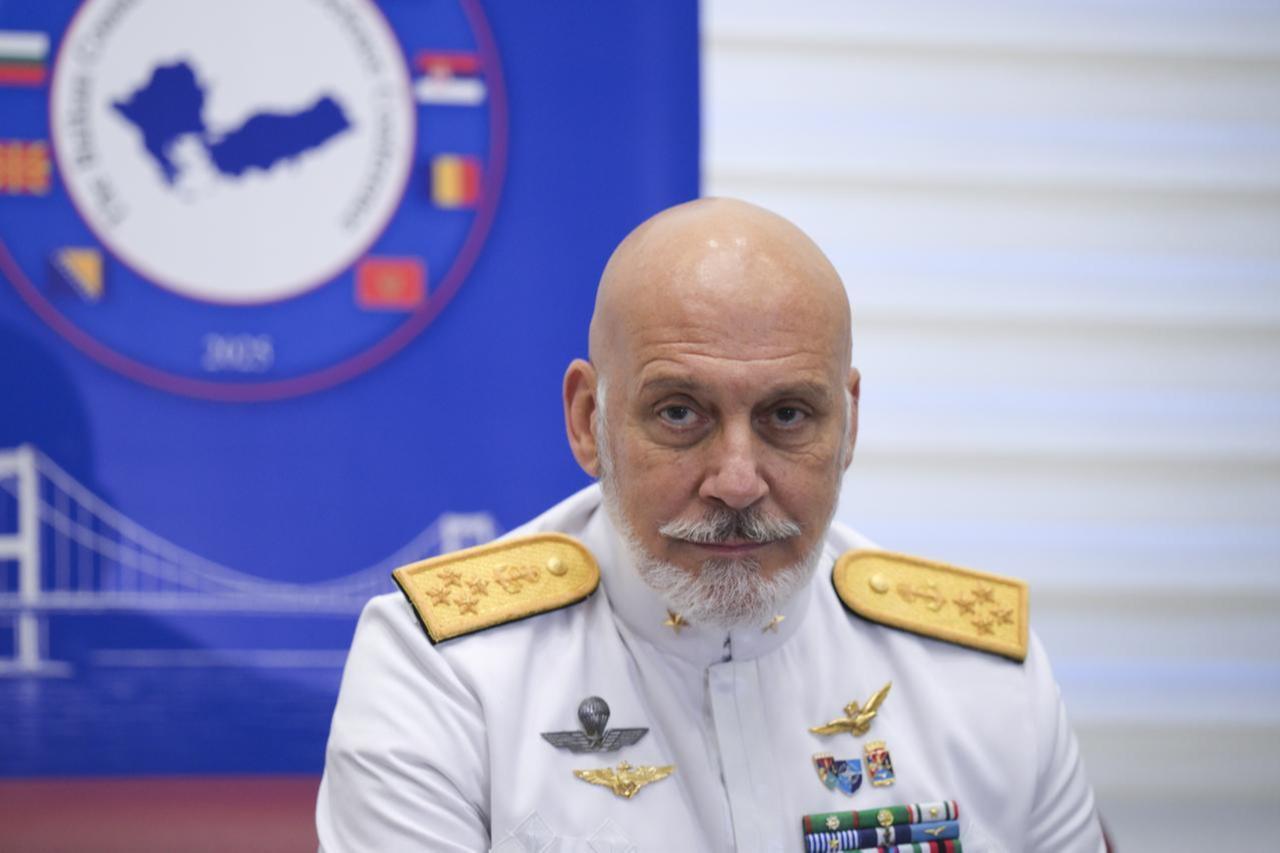


Recent airspace violations, drone incidents and hybrid activities attributed to Russia have tested the resolve of NATO allies but have ultimately made the alliance more unified and determined, the chair of NATO's Military Committee said Saturday, adding that the alliance's plans, command structure, forces, systems and weapons are ready to respond to threats.
Admiral Giuseppe Cavo Dragone made the remarks at a news conference following a meeting of the NATO Military Committee in Copenhagen, which brought together the chiefs of defense from allied nations.
Cavo Dragone said the choice of Copenhagen, situated between the Baltic Sea and the North Atlantic, reflected the 360-degree approach to security that NATO has adopted across all its flanks and domains.
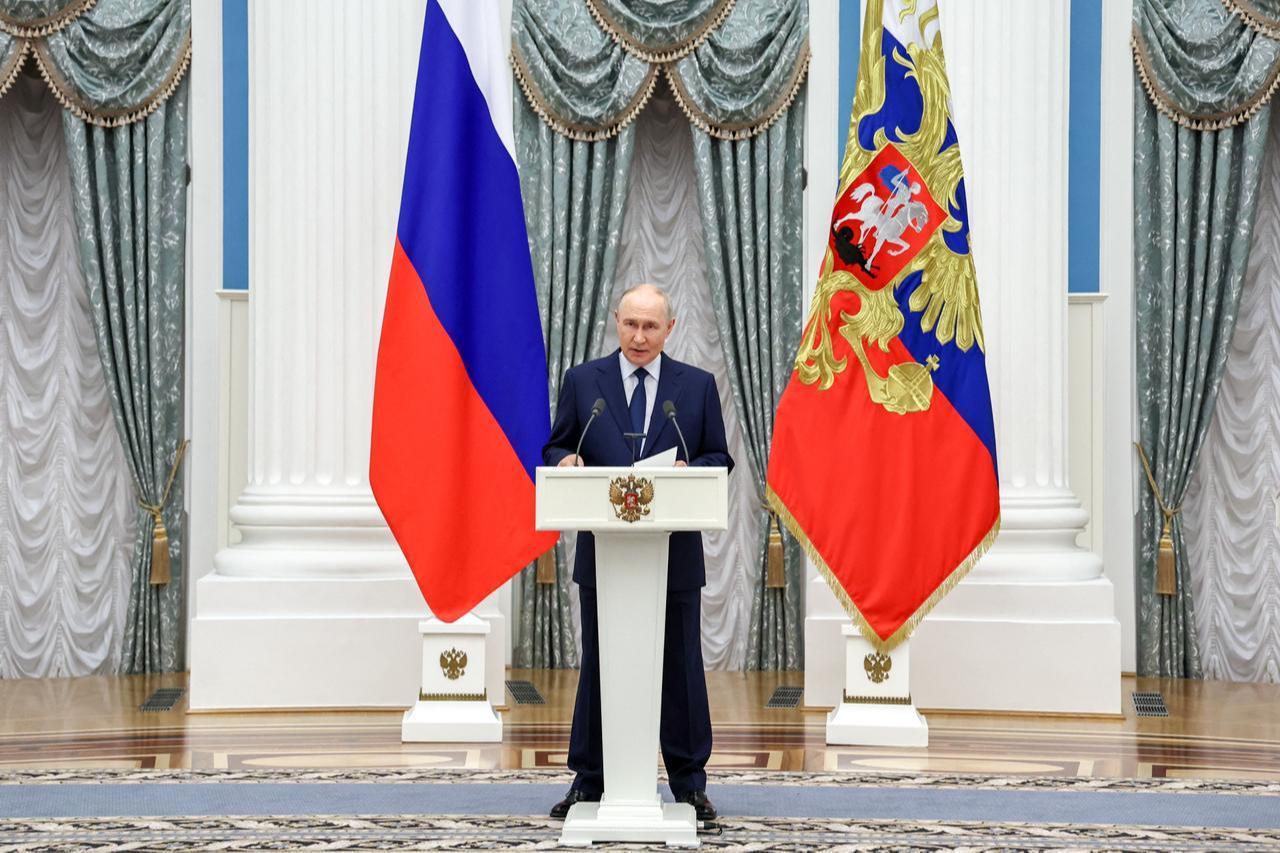

Cavo Dragone said Russia's dangerous conduct in recent weeks and months had tested NATO's resolve, and that airspace violations, drone incidents and hybrid activities could not be ignored. He said Russia has been investing increasingly in cognitive warfare aimed at undermining allied trust and weakening unity among member states.
"The threat is real, but I want to make clear that these attempts are not dividing us — they are sharpening our tools, making us more united and more determined," he said.
He noted that NATO forces have responded quickly and effectively to recent incidents, which he said demonstrated the alliance's readiness to defend every inch of allied territory.
Asked about NATO's posture toward hybrid attacks, Cavo Dragone said such activity, ranging from cyberattacks to cognitive warfare, typically falls below the threshold that would trigger Article 5 of the NATO treaty, the collective defense clause, meaning not every hybrid attack automatically invokes it.
He said the alliance's approach in such cases is first to identify who is responsible and then to inform the public, noting that the goal of hybrid activity is often to sow distrust among the public toward political leaders and NATO itself.
He urged citizens not to accept information they encounter at face value and to verify its sources, adding that thousands of cyberattacks occur every day and that their number is increasing.
Cavo Dragone said Russia spends roughly $2 billion a year on cognitive warfare activities and has been engaged in the effort for a long time.
He also said earlier remarks he made to La Repubblica and the Financial Times had been inaccurately represented, adding that his comments were shared about 30,000 times, a significant portion of it through Russian or Russian-controlled channels, and that Western media outlets had also repeated the narrative without scrutiny, something he described as an example of how cognitive warfare operates.
Asked whether NATO has sufficient forces on its eastern flank, Cavo Dragone said the alliance's regional force plan is ready to be implemented in the event of rising tension or an adverse development. He said reaction mechanisms have been predetermined to speed up decision-making as much as possible, and that a 4,000-page plan exists for the eastern flank.
"The alliance is ready, the command structure is ready, the forces, systems and weapons are ready," he said. "We have both the volume we need and the advanced capabilities required. Everything is ready."
He said NATO is adapting to evolving threats and that any party carrying out an attack would lose far more than it could gain. "That is deterrence," he said. "As long as the current situation is maintained, we are at peace. It may be an armed peace, but it is still peace."
He said the meeting did not address the possibility of a Russian attack but that defenses on the eastern flank have been reinforced. "We must be credible and send a message of strength," he said. "We must show that we will defend every inch of our territory."
On the topic of ammunition stockpiles, Cavo Dragone said the war in Ukraine has underscored the significance of the volume of ammunition consumed daily.
He said defense companies are being encouraged to shift from the peacetime production model that prevailed until a few years ago toward higher and more sustainable long-term output, adding that while significant changes have taken place in the sector, a long road remains.
"The money is on the table," he said. "The delivery of capabilities needs to accelerate." He said defense companies are responding to demand but need to do more, adding that the alliance has the necessary financial resources for defense investment and that a transition period is needed to scale up production to the required volume and speed.
Asked about NATO's "Drone Edge" initiative, Cavo Dragone said it represents a $50 billion investment, though he said he did not know the precise timeline for bringing new capabilities into service. He called the initiative a priority for NATO and said other efforts are underway to develop air defense, drone and counter-drone capabilities on the eastern flank.
Cavo Dragone said the Military Committee meeting also assessed progress in implementing decisions from the NATO summit, stressing that commitments must be translated into military reality.
He said investments need to produce war-ready forces, deployable capabilities and workable plans, describing this as the foundation of what he called "a stronger and fairer NATO 3.0, a stronger Europe within a stronger NATO."
He added that the meeting also addressed air and missile defense, drones, cybersecurity and space capabilities, and that operational readiness must be accelerated so forces can move quickly, operate at scale, sustain long missions and fight effectively.
He said protecting critical infrastructure, from undersea cables to energy and digital networks, is essential, calling societal resilience a core element of defense and deterrence.
He said allies continue to provide Ukraine with equipment, training and assistance, and that important lessons have been drawn from Ukraine's defense.


 Set as preferred source
 Set as preferred source


 1 min read

 1 min read