Newsletters


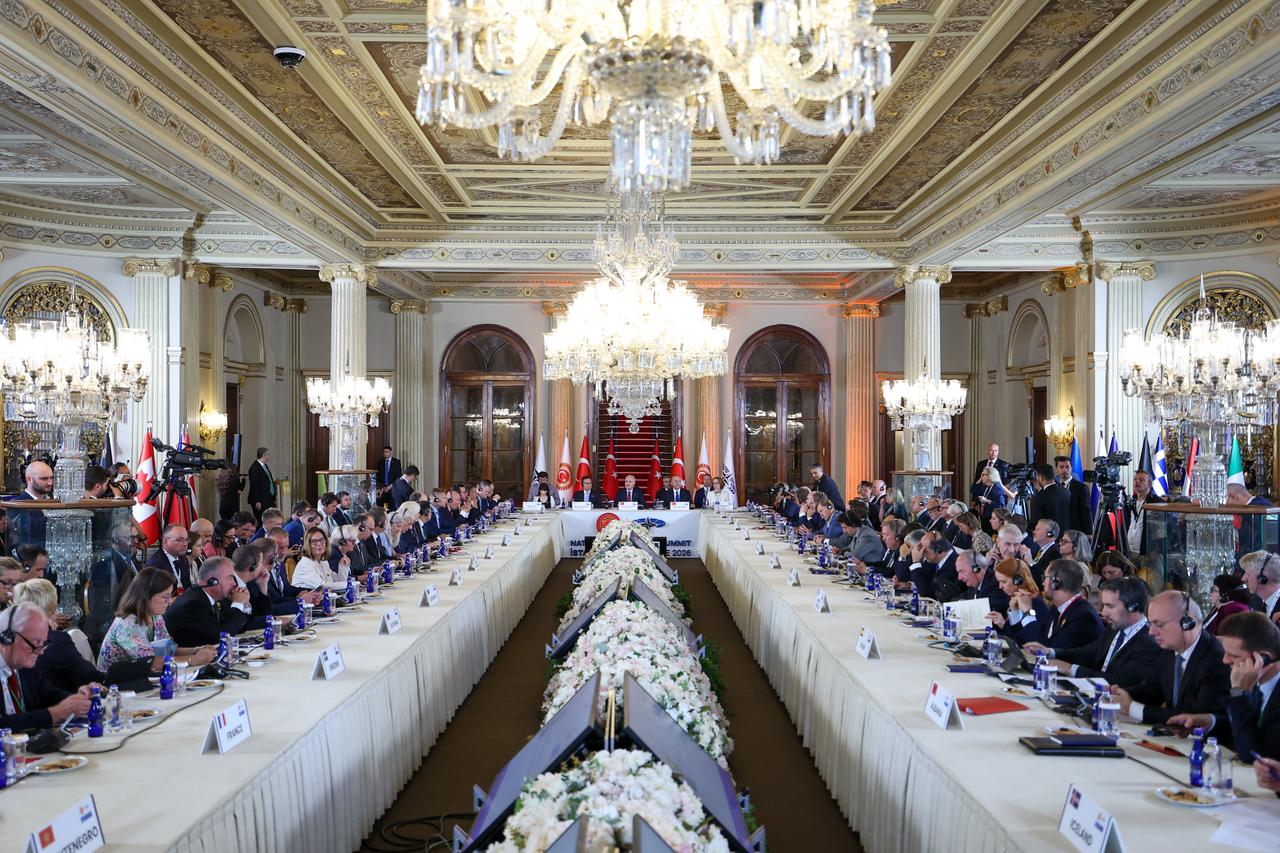


Parliamentary leaders from NATO allies called for stronger defense investment, deeper coordination, continued support for Ukraine and greater alliance unity during the NATO Parliamentary Summit hosted by Türkiye in Istanbul.
Speakers from across the alliance said the upcoming NATO summit in Ankara would be an opportunity to reaffirm commitments to common security, transatlantic solidarity and the defense of NATO territory amid Russia's war in Ukraine, hybrid threats, disruptive technologies and rising strategic competition.
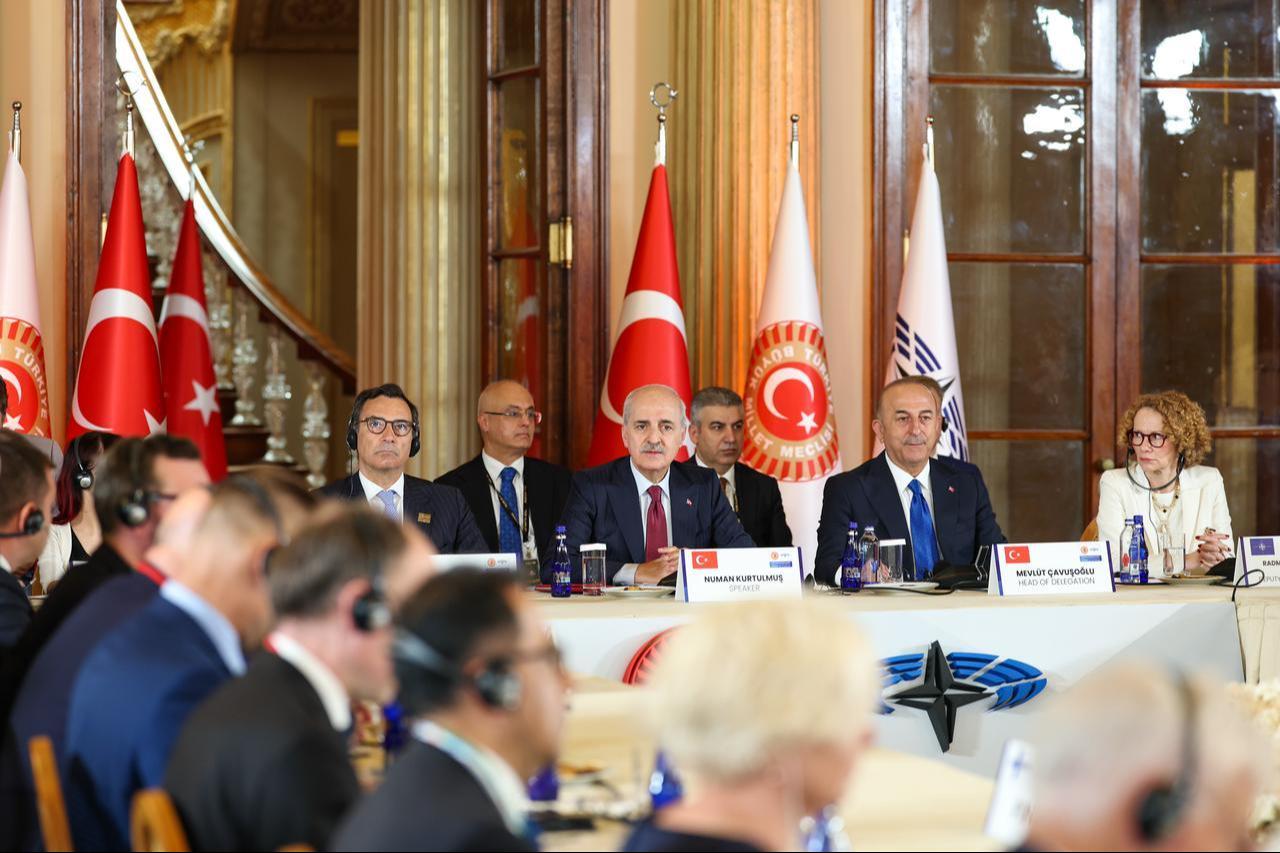
NATO Parliamentary Assembly President Marcos Perestrello and NATO Deputy Secretary-General Radmila Shekerinska also addressed the summit, calling on allies to increase defense investments and arrive in Ankara with concrete plans to meet the target of allocating 5% of gross domestic product (GDP) to defense by 2035.
Perestrello thanked Turkish authorities for their warm welcome and organization, saying Russia was carrying out cyberattacks and sabotage against NATO. He said the outcome of next week's NATO summit in Ankara would depend largely on parliamentary action.
"Defense will require much more investment," Perestrello said, adding that support for Ukraine was a responsibility for NATO.
He said building a stronger Europe for a stronger NATO was not only about spending more money but also about making smarter, faster and more coordinated investments. He said a strong, sovereign and independent Ukraine was vital and expressed hope that the summit would show NATO as united, adaptive and ready to defend allied territory.
Shekerinska said the world would be watching Ankara next week to see whether allies deliver what is expected of them.
"We expect all allies to come to Ankara with concrete plans to reach the 5% defense spending target by 2035," she said.
Shekerinska said the Ankara summit would show that defense commitments would be met, NATO defense remained strong and the alliance was ready to defend its territory. She said NATO's recent defense actions showed that its defense mechanisms were working and that allied solidarity was visible on the ground.
Shekerinska also said defense would be among the most important issues on the Ankara agenda, noting that rising tensions and conflicts around the world made more determination, financing and investment necessary.
She pointed to successful defense companies in NATO countries and cited Aselsan as an example, recalling NATO Secretary-General Mark Rutte's visit to the company. She also stressed the importance of continued support for Ukraine.
Bulgarian Parliament Speaker Mihaela Dotsova said the NATO summit in Ankara would allow Bulgaria to reaffirm its firm commitment to the alliance's values, common security and the strengthening of stability in the Euro-Atlantic region.
Dotsova said Bulgaria sees NATO as the main pillar of security.
Pointing to growing instability and various conflicts in the current global environment, she said member states must strengthen their defense capabilities.
Dotsova said Bulgaria was fulfilling its commitments to collective defense and continuing to modernize its armed forces.
"Investing in defense means investing in security, resilience and the state's ability to protect its citizens and national sovereignty," she said.
Croatian Parliament Speaker Gordan Jandrokovic said Russia's attacks on Ukraine, hybrid threats, disruptive technologies and intensifying strategic competition were reshaping Europe's understanding of security and the way societies function.
"In this context, military power of course remains indispensable, but it is no longer sufficient on its own," Jandrokovic said.
He said critical infrastructure, economic and technological progress, and political cohesion were equally important parts of the equation.
Jandrokovic said stronger European defense capabilities were needed in solidarity with a reliable transatlantic bond. He said Croatia was on a path to allocate 3% of GDP to defense spending by 2030 and was determined to raise that figure to 5% by 2035.
He said NATO allies form a common security space and that weakness in any part of that space affects the security of all allies. He added that NATO must be ready for future threats.
Latvian Parliament Speaker Daiga Mierina said support for Ukraine would continue and that Russia remains, and will continue to remain, a long-term threat to all members of the alliance.
She called for maintaining a policy of supporting Ukraine and isolating Russia, saying this would deter possible provocations.
"The peace through strength approach is the most effective way to end this terrible war with a just and lasting peace," Mierina said.
"The ball is now in our court, and that is precisely why we need to act in unity and determination," she added.
Lithuanian Parliament Speaker Juozas Olekas said Lithuania adopted a budget this year allocating 5.38% of GDP to defense and had committed to keeping this rate at least between 5% and 6% in the coming period.
Olekas said Lithuania would continue supporting Ukraine.
"The future of Europe's security is being determined today in Ukraine," he said. "What we need most is strong political will and fair burden-sharing."
He said NATO unity means Europe must take greater responsibility for its own defense, supported by strong transatlantic ties.
Olekas said Lithuania was working on the deployment of a German brigade to the country and stressed that the U.S. military presence in Europe was vital, especially for NATO's eastern flank.
He said recent incidents in the Baltic Sea affecting underwater infrastructure had shown the urgency of investing more in air defense capabilities, including a new integrated air and missile defense plan.
"The strengthening of defense industry infrastructure in NATO countries is making progress, but capacity growth is still not fast enough," Olekas said.
He said the solution required a highly qualified ecosystem, an attractive investment environment, strong state support and investment in forward-looking military technologies adapted to realities on the ground. He wished for successful outcomes from the Ankara summit.
Luxembourg Chamber of Deputies Speaker Claude Wiseler said multiple crises had broken out in different parts of the world, reminding countries that freedom is not given but must be earned and protected.
Wiseler said Ukraine continued to resist with determination and that support must be increased.
"Every hesitation, every delay carries a concrete cost," he said. "This cost is measured in destroyed infrastructure, damaged hospitals and, above all, lost lives."
Wiseler said Luxembourg believes NATO is the strongest response to threats against its security and that the alliance is indispensable at a time when peace is being tested.
He said Luxembourg had doubled defense spending over the past two years and would increase its defense budget by 5% every year. Wiseler said a large part of the spending would initially be directed toward air and missile defense.
He added that Luxembourg would continue investing in space and communications, and that the country gives priority in NATO to the rule of law, the reliability of commitments and joint action instead of acting alone.
Czech Senate President Milos Vystrcil said every NATO member has a responsibility to allocate at least 2% of GDP to defense.
"Europe must take more responsibility for NATO defense because a stronger Europe means a stronger NATO," Vystrcil said.
He said 82% of Czech citizens support the country's NATO membership and 62% support annual defense spending at a level of at least 2%.
"Responsibility and more unity should be our common goal today," he said.
Vystrcil said NATO's future was based on unity among allies, fulfillment of commitments and greater European support for collective defense.
"If we are to give one message from Istanbul, it is this: When it comes to defending our freedom and democracy, we all stand shoulder to shoulder," he said.
Czech Chamber of Deputies Speaker Tomio Okamura said the world was currently very unstable and that countries must be prepared before a crisis emerges, not afterward.
"Strengthening defense in peacetime can remain limited, but we need to be prepared before a crisis arises, not after," he said.
Okamura said every country has both the right and duty to defend its territory, citizens, borders and way of life. He said the protection of sovereignty should be supported by stronger defense spending and called for the war in Ukraine to end as soon as possible.

Danish Parliament Speaker Soren Gade said Euro-Atlantic security had become much more complex and stressed the importance of keeping NATO strong and capable of responding.
Gade said ending the nearly five-year Ukraine-Russia war would be in everyone's interest.
"As a former defense minister, I have personally seen how much pressure NATO has been under, but NATO remains the strongest and most successful alliance in history," he said.
Gade said this was because NATO is not only a military alliance but also a political alliance based on shared democratic values.
He said unity had become even more important at a time when NATO was facing international pressure.
"Although the international security situation is under great pressure, I believe NATO has the necessary tools to deal with the challenges ahead," he said.
Polish Senate Speaker Malgorzata Kidawa-Blonska said resilience against Russia must be increased.
"We must support Ukraine with all our strength," Kidawa-Blonska said.
She highlighted the importance of further increasing NATO's defense readiness and developing new formats of cooperation.
Referring to good relations between Türkiye and Poland, Kidawa-Blonska said the two countries play a key role as allies on NATO's eastern flank.
"I hope our bilateral and multilateral cooperation within NATO will contribute to further strengthening the alliance," she said.
Portuguese Parliament Speaker Jose Pedro Aguiar Branco underlined the importance of preserving the internal unity of the alliance.
Branco said NATO's deterrence and collective defense mission must remain one of its main goals, adding that this requires investment in military areas.
"Our short- and medium-term support for Ukraine must remain a priority within the Euro-Atlantic security framework," Branco said.
Slovak National Council Speaker Richard Rasi said Slovakia's foreign and security policy is based on membership in the European Union and NATO, which he described as the foundation of the country's security and prosperity.
Rasi said NATO remains the most important pillar of Slovakia's defense and that a stronger European pillar is needed within the alliance.
He said Slovakia plans to gradually raise defense spending to 5% and that a significant part of the defense budget is allocated to modernization.
Rasi added that Slovakia wants conditions for a just and lasting peace on the issue of Ukraine.
Estonian Parliament Speaker Lauri Hussar described NATO members' decision to allocate 5% of GDP to defense by 2035 as historic.
He said Estonia was deepening cooperation in regional defense planning and military areas such as air defense in line with this target.
Hussar said the principle "If you want peace, prepare for war" contains truth.
"This is not about escalating tensions, but about recognizing that strong defense reduces the possibility of war," he said.
Hussar said Russia's violations of NATO countries' airspace reminded allies that increasing defense capability must be a priority.
He called for more pressure on Russia and more support for Ukraine.
"Integrating Ukraine into NATO would be a strategic investment in our own security," Hussar said.
"We must remember that peace is never free and weakness always has a cost. Unity is NATO's center of gravity," he added.
Finnish Parliament Speaker Jussi Halla-Aho said Finland wants to actively contribute to joint deterrence.
"We know that NATO's strength comes from the strength of its members," Halla-Aho said. "That is why we want to actively contribute to common deterrence."
He said a common response was needed against Russia's threats and that everyone must do their part.
Halla-Aho described Ukraine as an important part of Europe's defense.
"The only way to convince Russia to end its attacks is to raise the economic and political cost of the war to an unsustainable level," he said. "This may take time, but I believe we are on the right path."
Italian Chamber of Deputies Speaker Lorenzo Fontana said countries must recognize that security in the Euro-Atlantic region is not shaped along a single axis and must view the world realistically.
Fontana said NATO's eastern flank is critically important in the context of the Russia-Ukraine war.
He said the Mediterranean, the Middle East, the Red Sea and the Gulf are not crisis zones to be watched from afar but are deeply connected to security, trade routes, energy supply and social stability.
Fontana stressed that the transatlantic dimension is indispensable.
"NATO is strong when it is united," he said. "It is credible when it can prevent crises, not only react to them."
Dutch House of Representatives Speaker Thom van Campen began his speech by thanking Turkish Parliament Speaker Numan Kurtulmus in Turkish for hosting the summit.
Van Campen said diplomatic relations between the Netherlands and Türkiye date back to 1612 and form one of Europe's oldest uninterrupted bilateral relationships.
"Our relations extend beyond diplomacy and trade," he said.
He said the tulip, one of the Netherlands' most famous symbols, originated in Anatolia and remained a vivid reminder of deep and lasting ties between the peoples of the two countries.
Van Campen said interparliamentary diplomacy plays a vital role in building trust between countries, improving mutual understanding and strengthening transatlantic solidarity.
"We are meeting in Türkiye, which serves as a bridge between continents and cultures, and this is no coincidence," he said. "An alliance with different histories but united in purpose is exactly the kind of alliance we should aim for."
He said Russia's war of aggression against Ukraine is not only a threat to Ukraine's sovereignty but also a direct attack on the rules-based international order that protects everyone.
Van Campen called on allies to continue supporting one another and show that NATO is united, determined and ready to act.
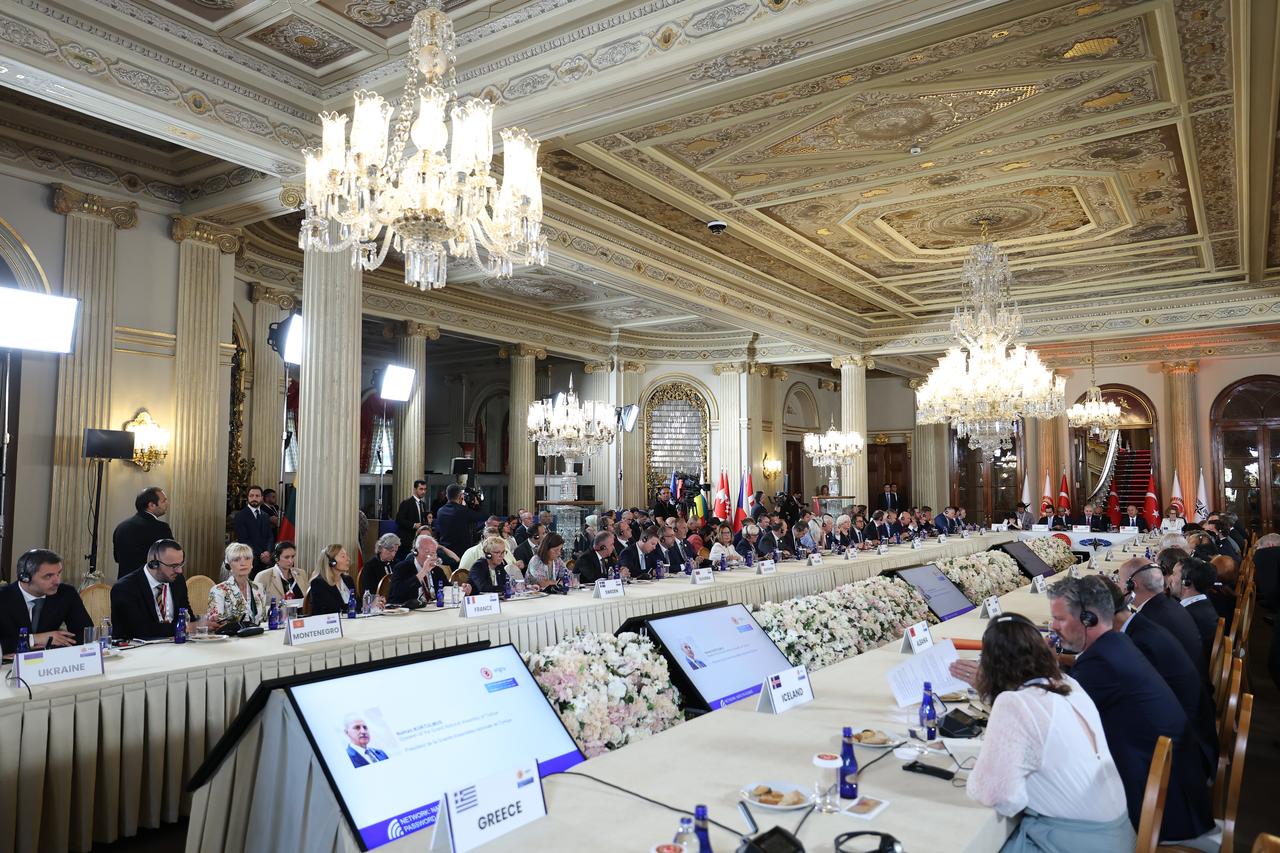
North Macedonian Parliament Speaker Afrim Gashi said the world was changing rapidly and NATO must also move quickly in line with the threats it faces.
"NATO 3.0 should be assessed from the perspective of the alliance's strategic restart," Gashi said.
He said allies should foresee that Europe can take on a larger share of the conventional defense burden and assume primary responsibility for the defense of the continent.
Gashi said future support for Ukraine should take into account balanced burden-sharing and allies' investments in their own national capacities.
He also said developments in the Middle East have serious consequences for peace, energy markets and humanitarian conditions, adding that diplomatic efforts to reduce tensions must continue.
Norwegian Parliament Speaker Masud Gharahkhani said Norway was increasing defense production and investing in new systems such as unmanned aerial vehicles and digital solutions.
"This is not an optional issue," Gharahkhani said. "We need to ensure more coordination. We need to accelerate our industrial capacities and production to strengthen our common security."
He said this was about supporting both national needs and NATO readiness.
Gharahkhani said there was consensus among political parties in Norway on a defense plan extending to 2036.
He said this reflected the increasingly serious security environment and lessons learned from Russia's brutal war in Ukraine.
United Kingdom House of Lords Speaker Michael Forsyth said Türkiye is a valuable partner for the U.K. in many areas at the crossroads of Europe, the Middle East, Africa and Asia.
"You play a vital diplomatic role in connecting regions and mediating conflicts," Forsyth said.
He said NATO is the main pillar of U.K. defense policy and that allies stand together against threats to freedom, democracy and the rule of law.
"Deterrence is much less costly than conflict; collective defense is more effective than acting alone," Forsyth said.
He also pointed to changes caused by artificial intelligence and cyber technologies, saying allies were ready to adapt.
Forsyth said Ukraine had endured Russia's attacks for years.
"Today, Ukraine is holding the front against this aggression on behalf of all of us here," he said. "We owe Ukrainians a great debt of gratitude. Their struggle is our struggle."
U.K. House of Commons Deputy Speaker Judith Cummins said NATO had kept allies safe and prosperous for 77 years, united by a shared history and common values.
She said tensions around the world, especially in Ukraine and the Middle East, showed the need for cooperation.
"At this most dangerous point in our history, we NATO members need each other," Cummins said. "We must cooperate more closely and reinforce the principle that an attack on one of us is considered an attack on all of us."
Cummins said current obstacles were less predictable and pointed to growing competition and new technological threats.
NATO PA French Delegation Chair Natalia Pouzyreff recalled that the G7 Leaders' Summit in France discussed de-escalation in the Middle East and passage through the Strait of Hormuz.
She said a joint statement issued under the G7 recognized Ukraine's territorial integrity and called for strengthening military aid to the country.
Pouzyreff said Ukraine's future in NATO should be reaffirmed, adding that Ukraine's Euro-Atlantic integration directly contributes to security and regional stability.
Spanish Senate First Vice President Javier Maroto said NATO allies' leaders must cooperate and defend respect for international law in every conflict without exception, whether in Ukraine or the Middle East.
Maroto said Europe must become a stronger member inside NATO.
"NATO reform should not mean less U.S.," he said. "It should mean Europeans taking on more command and responsibility, exercising regional leadership and shouldering more of the conventional defense burden."
He said Europe did not yet speak with one voice on defense.
"Many Europeans speak of democracy as if it can be protected without defense, but without security there is no welfare state, no hospitals, no schools and no freedom," Maroto said.
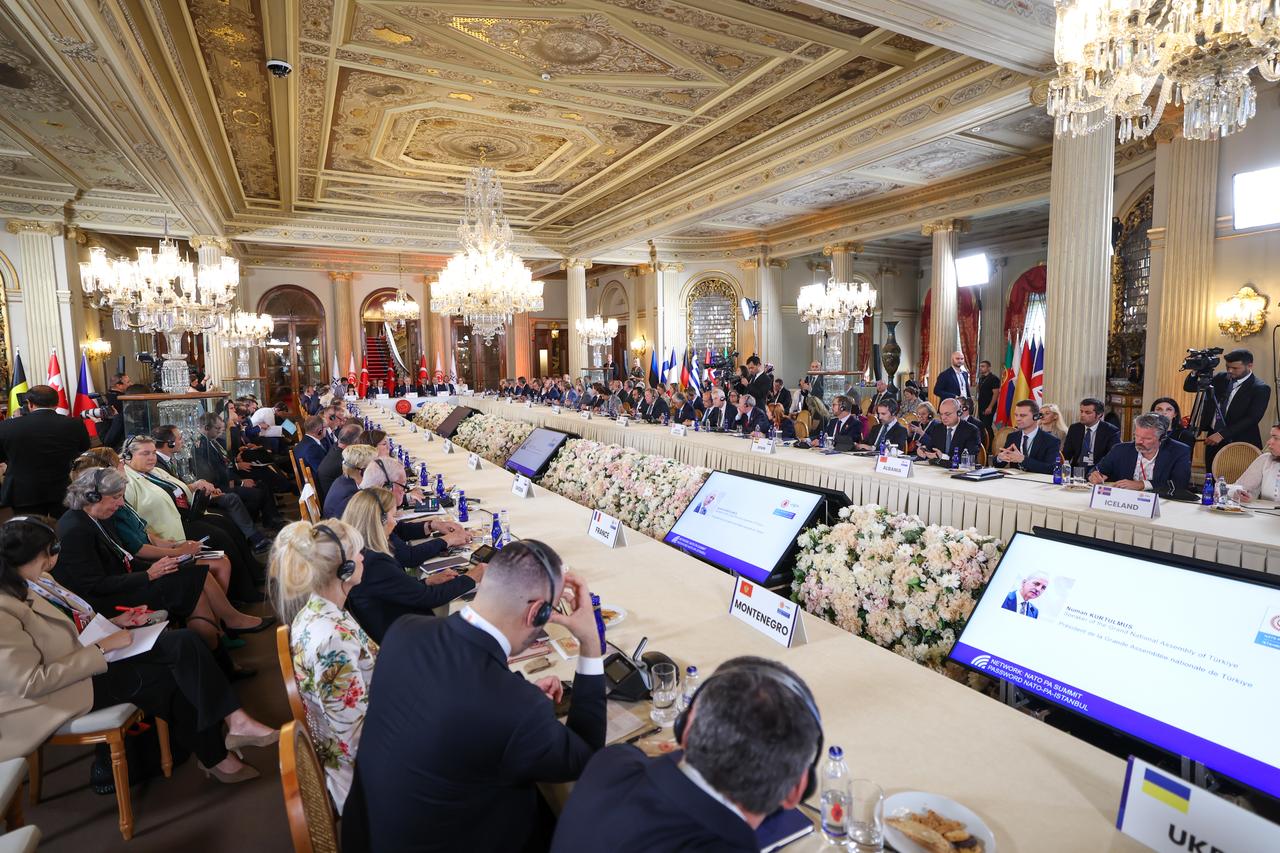
Swedish Parliament Third Deputy Speaker Kerstin Lundgren said the agenda at the NATO leaders' summit in Ankara would include alliance capacity, sustainable support for Ukraine and increasing industrial production in defense.
Lundgren said parties in the Swedish Parliament were committed to the decision by NATO members to allocate 5% of GDP to defense by 2035.
"NATO is an alliance based on the view that democracy, human rights, the rules-based world order and free trade are not only great ideals but also principles that make us strong today," she said.
She said this view is facing security threats and challenges, while underlining the importance of commitment to protecting allies and supporting Ukraine.
Albanian Parliament Foreign Affairs and EU Affairs Committee Chair Igli Hasani said security depends on the capacity to act together.
Hasani expressed Albania's support for Ukraine.
"We repeat a basic principle: Security is defended not only on the battlefield but also through sustained solidarity and determination," he said.
He said NATO defense investment plans are a strategic step in terms of preparedness, resilience and deterrence, and described critical infrastructure as a driving force of modern defense.
Hasani said the Western Balkans face several threats and should be a strategic priority. He also stressed the importance of strengthening the NATO Parliamentary Assembly's contribution to alliance unity and credibility.
NATO PA Greek Delegation Deputy Chair Dimitris Keridis described Istanbul as "magnificent and majestic," saying, "There are many cities in the world, but Istanbul is unique."
Keridis said the Greek Consulate General issues about 2,000 Schengen visas per day to Turkish citizens, showing how intertwined the peoples of the two countries are and how positive their feelings toward one another are.
He said more than 2 million Turkish citizens were expected to visit Greece this year.
Keridis said Greece believes Türkiye should be included in the Schengen Area.
"Some of your European partners are eager on trade agreements while preferring to keep you away from Schengen," he said. "We, however, are sincere in extending a hand of friendship."
NATO PA Icelandic Delegation Chair Dagur Eggertsson said it was a special privilege to be in Istanbul, a city that has connected cultures, continents and civilizations for centuries.
"This city reminds us that security is never built in isolation, but through dialogue, cooperation and shared responsibility," Eggertsson said.
He said participants had gathered at a time when the international order was under unprecedented pressure, with growing threats to international law, attempts to weaken democratic institutions and disinformation efforts aimed at undermining trust in societies.
Eggertsson said NATO exists not only to defend territories but also to protect the principles that make peace possible.
"Military capacity matters, deterrence matters and lies at the heart of NATO, but military power alone cannot sustain an alliance," he said.
"The real foundation is trust: trust in each other, trust in our democratic institutions and trust that the shared values we defend are worth protecting."
NATO PA Montenegrin Delegation Chair Dusko Stjepovic said ongoing wars in Europe and the Middle East, cyberattacks, disinformation campaigns and attempts to weaken democratic institutions clearly show that security can no longer be assessed only from the perspective of states.
He said NATO is therefore more important than ever.
Stjepovic said Montenegro strongly supports further strengthening NATO's defense capacity and increasing investments in defense.
"This issue is not only about statistics or a certain percentage of GDP," he said. "It is an indicator of how ready we are to protect peace, stability and our common way of life."
Stjepovic said Montenegro aims to become the European Union's next member in 2028, adding that this would allow the country to contribute more to stability in Europe and the Mediterranean region.
NATO PA Ukrainian Delegation Chair Yehor Cherniev said years of joint efforts had begun to produce results and thanked participants on behalf of the Ukrainian people.
Cherniev said Ukraine had begun to seize the initiative in the war against Russia.
He said Russia had suffered military, economic, humanitarian and moral losses.
"We must not give it the opportunity to recover and rebuild its forces," Cherniev said. "We must finally pressure it and force it into peace, because the only country that does not want peace is Russia."
Cherniev thanked Türkiye for organizing the 2022 negotiations in Istanbul.
"Unfortunately, the results of those talks were not successful because the peace terms were not fair and acceptable for Ukraine; we could have lost our sovereignty," he said.
Cherniev said Ukraine's value for NATO would increase further in the postwar period and that Europe's security would remain incomplete without Ukraine's full membership in NATO.


 Set as preferred source
 Set as preferred source


 2 min read
 1 min read