Newsletters




In his famous essay, Isaiah Berlin divided the world into two types: the hedgehog, who knows one big thing, and the fox, who knows many things. For 75 years, NATO has been the ultimate "hedgehog," knowing the one big thing of collective defense.
Yet, as General Wesley Clark describes it at an event hosted by the Atlantic Council Türkiye Program in Washington, the alliance has become a "sausage machine," a bureaucratic marvel where 32 national views are fed into 400 committees, turning a slow crank that may no longer keep pace with the modern "wolf" at the door.
With 721,000 Russian troops currently occupying Ukraine and outnumbering all standing European militaries, the "hedgehog" must now learn from the "fox."
The future of the alliance, hence, lies in a modular architecture in which the broad umbrella of Article 5 is supported by agile "inner coalitions" with aligned agendas. The blueprints for the model already exist.
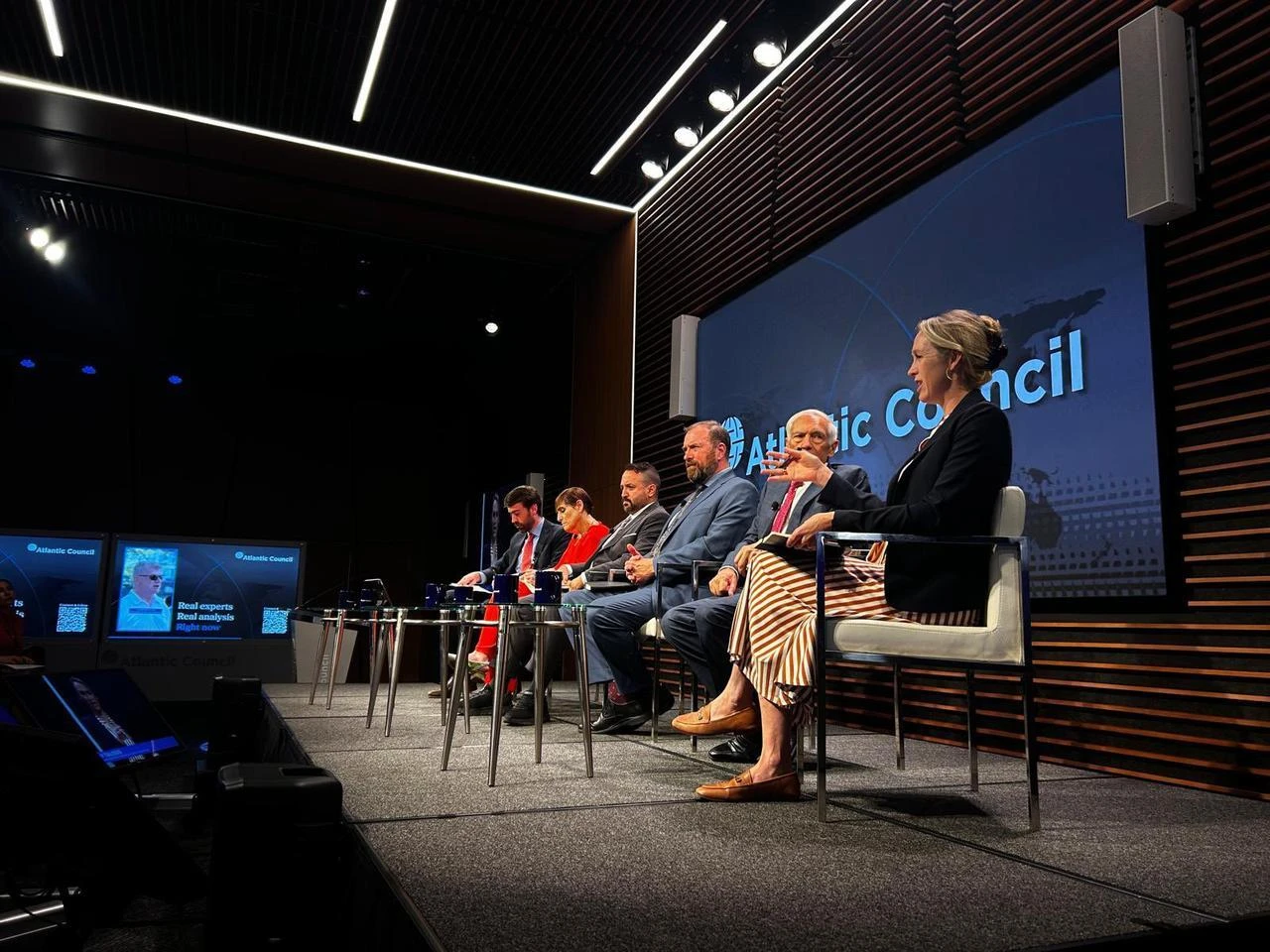

Can Kasapoglu, a non-resident senior fellow at the Hudson Institute and co-managing editor of the Atlantic Council Türkiye Program's defense journal, reaches for a blunt analogy to describe where NATO's defense industry stands: Nokia didn't lose the phone wars because its hardware failed.
"It lost because it kept engineering for durability while the market moved to software and connectivity." NATO, in his reading, is at the same fork, still planning in five-year capability cycles built for a world that no longer moves that slowly.
He lays out the shift in three stages. The Nokia phase is the one the alliance is leaving, hardware resiliency prized above all else. The iPhone phase is arriving now, where software and cloud connectivity matter more than how much punishment a platform can absorb.
Behind that comes what he calls an Android moment: plug-and-play architecture built to a common standard that many producers can build for, instead of one exquisite system from one manufacturer that takes a decade to field.
Debra Cagan, senior adviser at the Atlantic Council's Eurasia Center, pushed the same point further on the timeline. The planning horizon isn't five years or three. "The future is five months from now," she said, pointing to Ukraine's front-line feedback loop, where a system that underperforms in combat gets reported to its developer within the hour and can see a software fix pushed within a day or two. The Western and Turkish defense industries have no equivalent mechanism, in her account, and building one matters more than the next procurement announcement.
Neither speaker treated this as an argument for dismantling NATO's structure. It's an argument for building around it. Managing an alliance of 32 members is not easy, Kasapoglu said, and Italy and Sweden will not always share Canada's and Türkiye's threat perception or timeline.
The answer both speakers converged on is smaller groupings inside the alliance rather than unanimity across it: mini-NATOs within NATO, agile modules built around a shared regional interest or a shared technology gap, operating with NATO's blessing but not waiting on its full machinery.
Kasapoglu named Nordic Defense Cooperation (Nordefco) and the Turkish-Bulgarian-Romanian Black Sea memorandum as two live examples, and both are proof the alliance can produce faster-moving subunits without fracturing the whole.
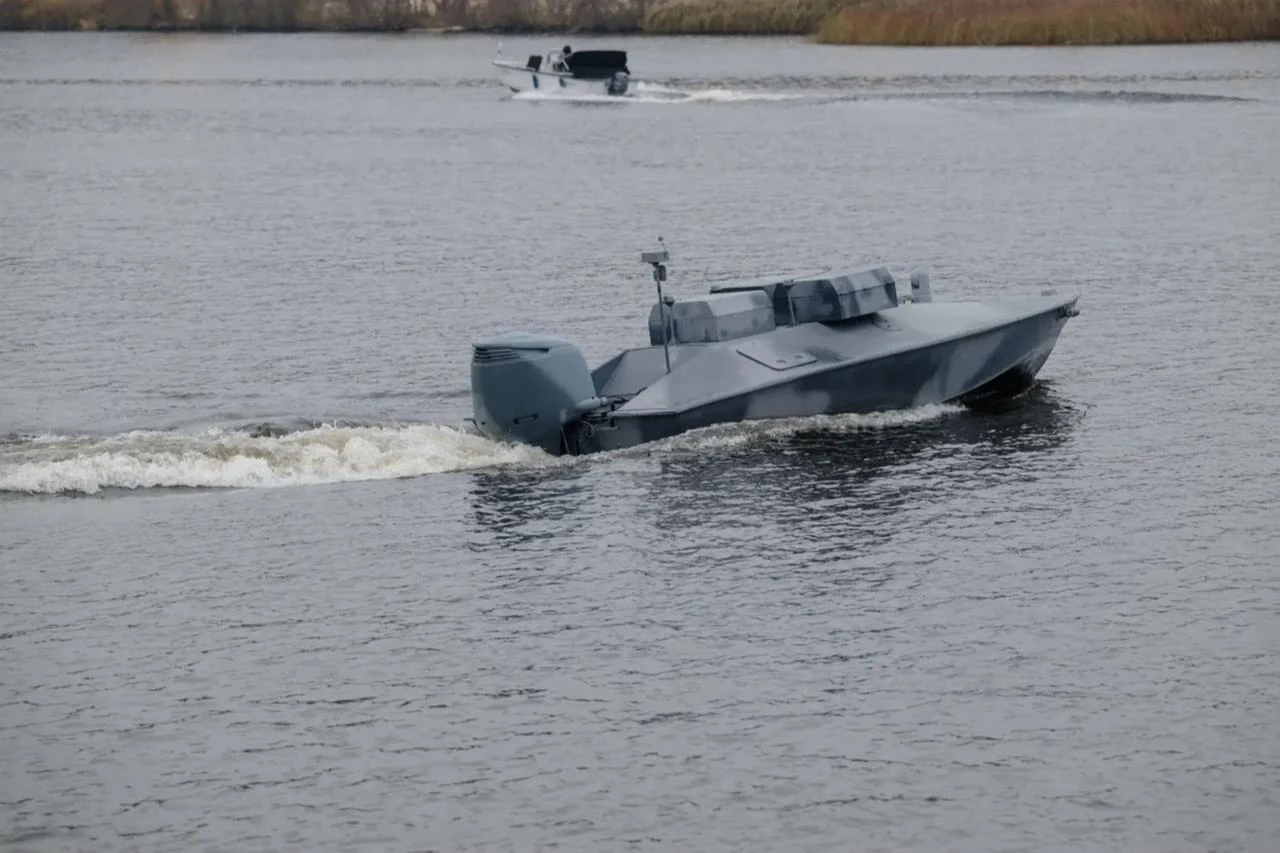
The clearest working example of that architecture sits in the Black Sea. Rich Outzen, a non-resident senior fellow at the Atlantic Council's Türkiye Program and co-managing editor of its defense journal, pointed to the Turkish-Bulgarian-Romanian memorandum as a template: three littoral states assuming responsibility for their own waters instead of routing every mine-clearing or maritime-security decision through the full alliance.
It is a narrow arrangement, built around a specific shared problem, but that narrowness is the design feature. Regional allies who understand the terrain move on it directly.
Outzen closed the panel by arguing the Black Sea deserves the institutional attention NATO already gives the Baltic. "It's time we start looking at the Black Sea the same way we do the Baltic Sea," he said, calling the gap in billing a problem the alliance needs to correct and describing the Black Sea as a natural weapons laboratory for the next phase of naval conflict.
The record he was pointing to is substantial. Ukraine, operating without a traditional navy, has used unmanned surface vessels to strike roughly 30% of Russia's Black Sea fleet over the course of the war, sinking some vessels and disabling others, and in doing so pushed the effective range of naval conflict some 200 nautical miles east toward Novorossiysk.
Kasapoglu noted that Ukrainian surface drones have intercepted Russian Su-30 aircraft over open water, a capability that didn't exist in any doctrine three years ago.
That is the case for treating the Black Sea memorandum as more than diplomatic signaling. It is a live cell generating combat-tested lessons on unmanned surface warfare and maritime denial at a pace no 32-member planning cycle could match, then feeding those lessons back into the broader alliance rather than waiting for the alliance to generate them centrally.
If NATO 3.0 has a stated goal, it's "making the alliance more European." If it has a declared enemy, according to Türkiye's deputy foreign minister, Levent Gumrukcu, it's duplication.
Gumrukcu was specific about where he draws that line. European Union proposals to build independent military standards or to convert the EU's mutual assistance clause into a full collective defense arrangement are not a competition Türkiye is prepared to welcome.
"This is dangerous," he said, describing such moves as both an unnecessary duplication of NATO's core tasks and a source of fragmentation, a new division within Europe between EU and non-EU allies at a moment the alliance can least afford one.
He prefers the word "complementarity" over "autonomy." The EU brings financial capacity and regulatory reach that can help member states hit the capability targets NATO sets every three to four years. That role works, in his view, only if Brussels stays inside that lane rather than trying to build a new one alongside it.
The exclusion problem is where he said that principle breaks down in practice. The United Kingdom and Türkiye are, in his account, the two defense-industrial powerhouses sitting outside the EU framework, and leaving them out of EU-led defense initiatives raises costs and slows delivery timelines for capabilities the whole alliance needs.
Despite what he described as deepening bilateral defense cooperation with individual EU states, from Spain and Portugal to Romania and Poland, Türkiye remains locked out of the EU's collective defense initiatives as a bloc. He attributed that gap to the narrow political interests of a few capitals and a continued lack of strategic vision in Brussels, not to any shortfall in Turkish industrial capacity.
He pointed to NATO's own planning cycle as the more logical framework. Türkiye alone has been allocated 361 capability targets to meet by 2030, and he argued that EU financial tools should reinforce that structure rather than build a parallel one next to it.
Whether that change will say as much about the EU's direction as about Türkiye's defense sector.
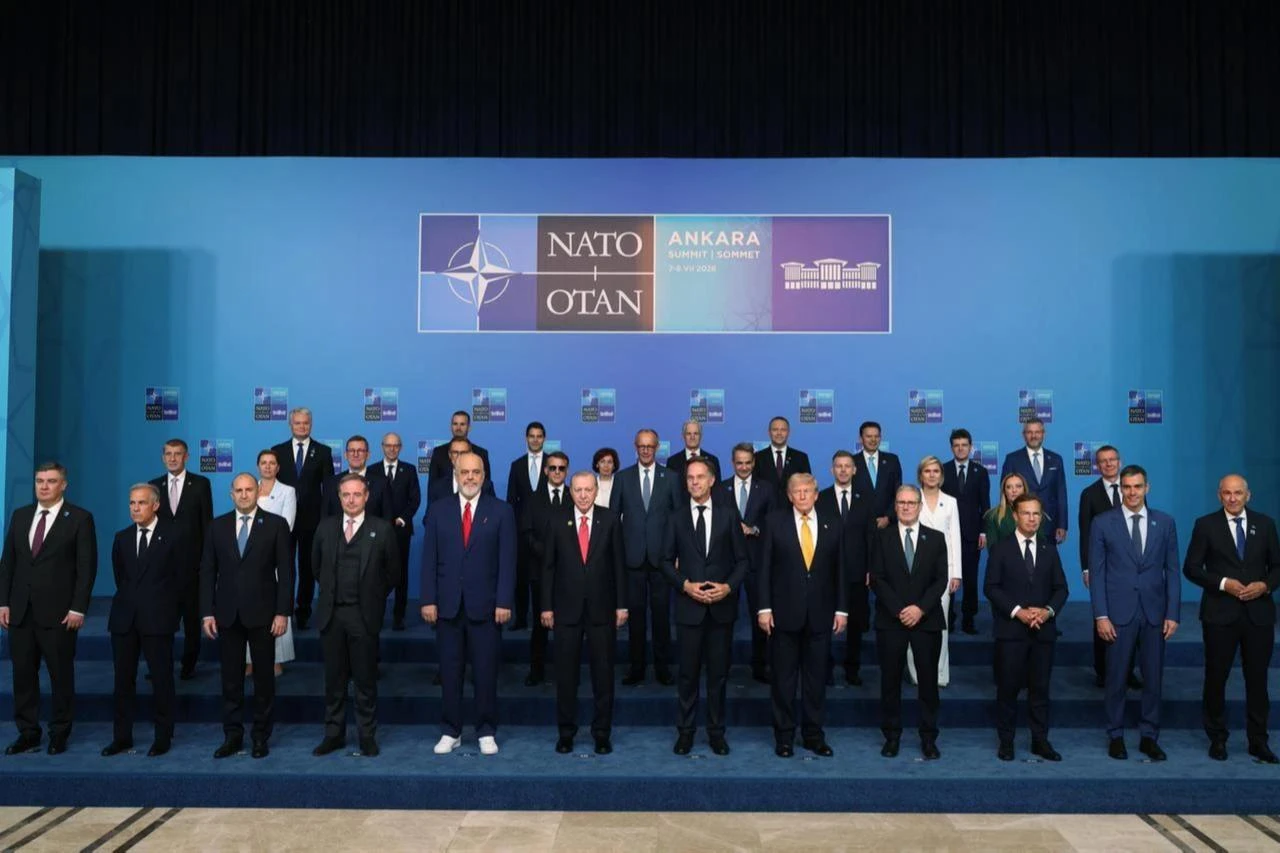
NATO's own "front door" initiative, launched at Ankara to give industry visibility into aggregated demand across the alliance, was built in part to address exactly the kind of exclusion Gumrukcu described. Whether Brussels adopts that logic or keeps building alongside it is the question the summit left unanswered.


 Set as preferred source
 Set as preferred source


 1 min read
 1 min read