Newsletters




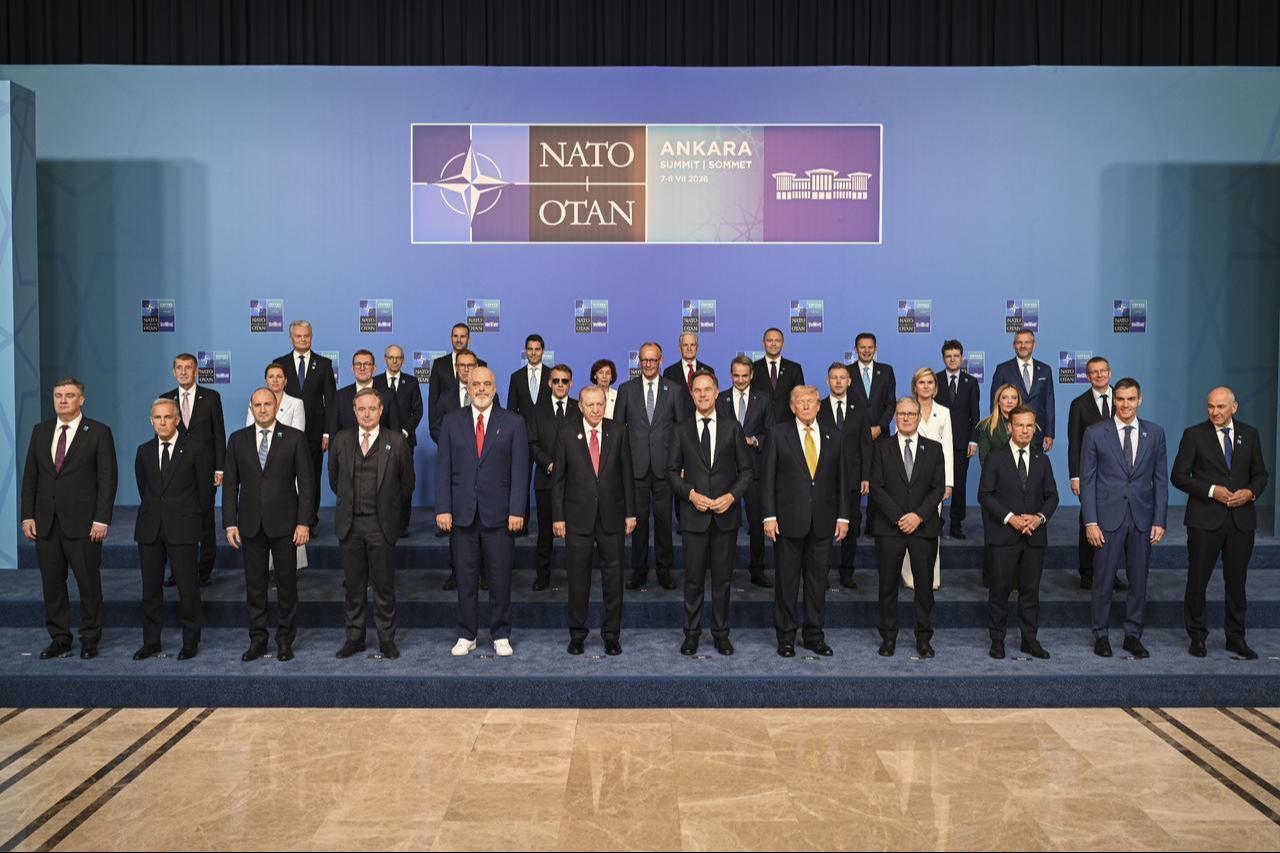
There are moments in international politics when history quietly changes direction. The NATO summit in Ankara was one of them. Its significance lies less in the language of the final declaration than in what it revealed: a strategic landscape more than two decades in the making, finally coming into view.
Türkiye has completed its transformation from NATO’s southeastern flank into one of the indispensable powers of the wider Euro-Atlantic space.
As a Romanian, I believe this carries an equally important implication for my own country. If the 21st century belongs to a new Black Sea, Romania and Türkiye will have to shape it together.
For much of the past generation, the Black Sea has been viewed as Europe’s frontier, defined primarily by instability and confrontation. That perception is giving way to a different reality.
Energy security, maritime trade, defence production, digital infrastructure, logistics and food security increasingly intersect across this basin. The Black Sea is emerging as one of Europe’s strategic centers of gravity, with direct implications for the continent’s security and economic competitiveness.
Türkiye occupies a unique position in this emerging landscape. For years, many observers in the West underestimated Ankara’s determination to build its own defense industry, diversify its diplomatic reach and expand its strategic autonomy. Those investments have fundamentally altered Türkiye’s position within the alliance.
Today, security in Southeastern Europe, the Eastern Mediterranean, and the Black Sea cannot be ensured without Turkish leadership. This is no longer a matter of political aspiration. It is a geopolitical reality.
Romania has also transformed. Constanta has become the largest port on the Black Sea and NATO’s principal logistical hub on its western shore. By 2027, the Neptun Deep project is expected to make Romania the European Union’s largest producer of natural gas.
Russia's invasion of Ukraine accelerated the expansion of Romania's military infrastructure, while its role in facilitating Ukrainian grain exports showed the country had become an active contributor to regional security and resilience.
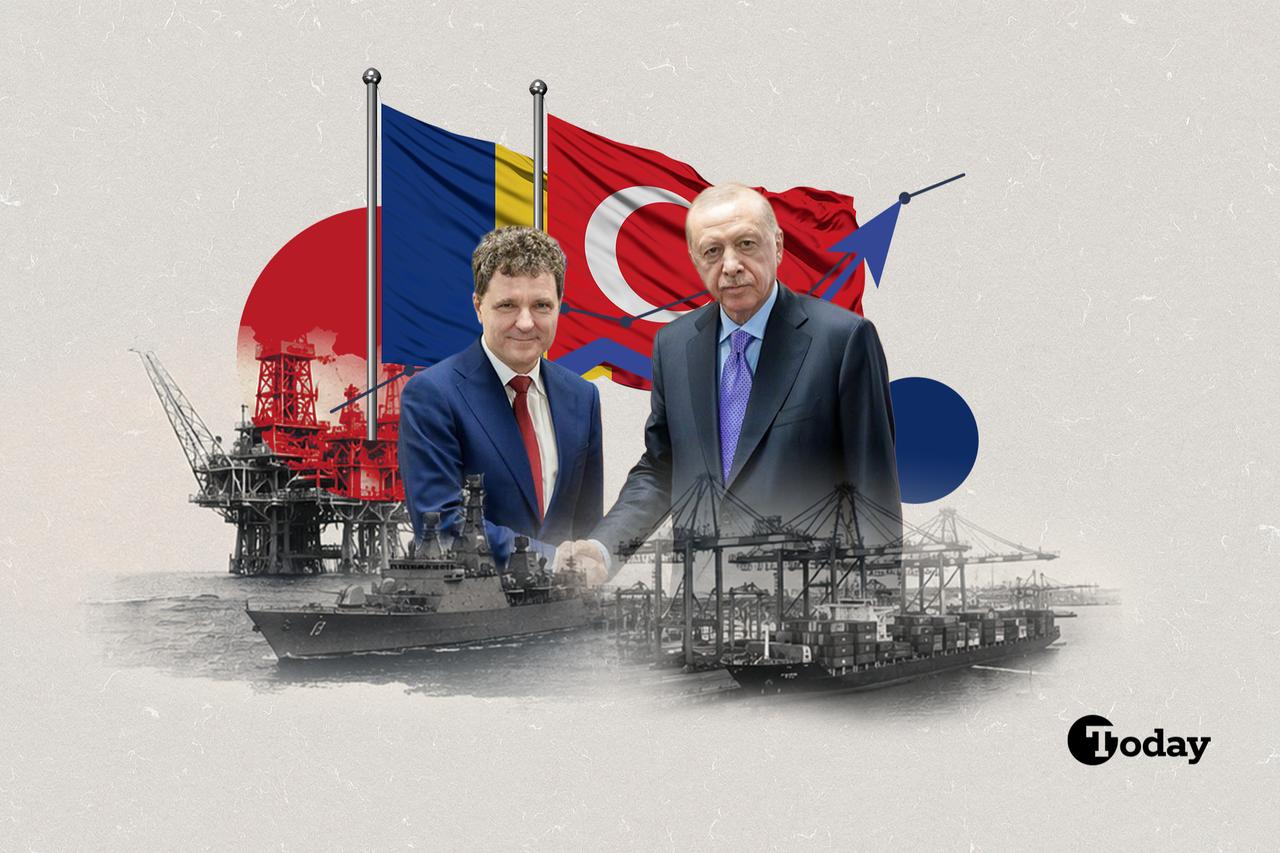
The strategic logic of this partnership can be reduced to a simple image. Türkiye holds the key. Romania is the gate.
Türkiye controls access to the Black Sea through the straits and the Montreux Convention. Romania provides the Black Sea’s most direct connection to the European Union through Constanța and the Single Market.
Neither role reaches its full strategic value without the other. Together, they form Europe’s southeastern gateway. Neither country can fully realize its strategic potential without the other.
The economic relationship already reflects this strategic logic. Bilateral trade has expanded from approximately $1.2 billion in 2003 to around $13.5 billion today, with both governments aiming to reach $20 billion by 2028.
More than 11,500 Turkish companies operate in Romania, while Turkish investment exceeds $7.5 billion. Supply chains reshaped by the pandemic and the war in Ukraine increasingly favor proximity, resilience and trusted partners.
Within this new economic geography, the Istanbul-Bucharest corridor is steadily developing into one of Europe’s most dynamic industrial and logistics axes.

The same dynamic is visible beneath the waters of the Black Sea. Türkiye’s Sakarya gas field and Romania’s Neptun Deep project are reshaping Europe’s energy map.
The drilling platform destined for Romania’s offshore fields entered the Black Sea through the Bosphorus, a reminder that the strategic futures of our two countries are already interconnected in very practical ways.
Europe’s long-term energy security will increasingly depend on cooperation across the Black Sea and on the infrastructure that links its two shores.
Washington has also adapted to this changing strategic environment. As the United States devotes greater attention to the Indo-Pacific, it expects capable regional partners to assume greater responsibility for stability within their own neighborhoods.
Türkiye has established itself as one of those indispensable partners. Romania should seek to become another, working alongside Türkiye rather than competing for attention. Such a partnership would strengthen NATO, reinforce the alliance’s southeastern flank and provide the transatlantic relationship with greater strategic depth.
In the decades ahead, Türkiye will help shape the future of the Black Sea. Romania’s strategic choice is whether to help shape that future alongside Türkiye.
Romania should also become one of the strongest European advocates for deeper economic integration between Türkiye and the European Union. A modernized Customs Union would strengthen Türkiye’s economy, improve Europe’s industrial competitiveness, reinforce resilient supply chains and accelerate investment across the Black Sea region. Romania is well positioned to support that objective and to benefit from its success.
There are occasions when geography and national interest point in the same direction. This is one of them. Geography made Romania and Türkiye neighbors. Shared security made them allies. The strategic environment now invites the two countries to become long-term partners.
The Ankara summit should be remembered as more than another meeting of allied leaders. It marked the moment when the strategic importance of the Romania-Türkiye relationship became unmistakably clear.
A new chapter in the history of the Black Sea has begun. The rising crescent has found Europe’s Eastern gate. Geography has already done its work. It is now the responsibility of statesmanship to do the rest.


 Set as preferred source
 Set as preferred source



 7 min read