Newsletters


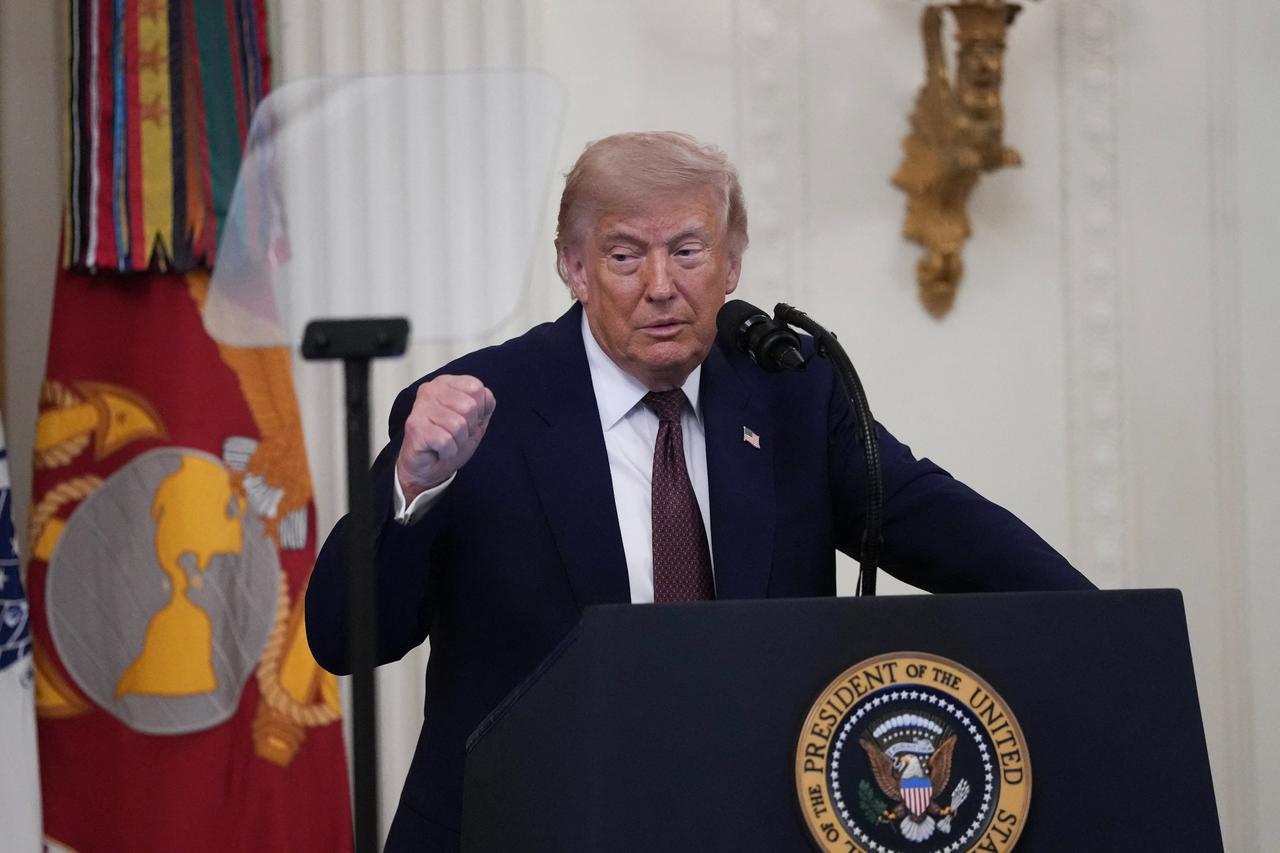


U.S. President Donald Trump said on Friday that there are "no limits" to his ability to exert power following the war with Iran.
He also rejected the notion that a scaled-back Memorandum of Understanding (MoU) with Iran, rather than the "unconditional surrender" he initially demanded, showed any constraint on American power.
"There are no limits. I haven't learned that lesson yet. I know there are, but there are no limits," Trump said in an interview with "The Axios Show."
"We defeated them totally militarily," he added.
Asked directly what he had learned about the limits of presidential power as a result of the conflict, Trump pointed to the naval blockade he ordered against Iran.
"We have the most powerful military in the world, by far. Who else could have done a blockade like that? I did a naval blockade where not one ship was able to get through. Some tried. It didn't last very long," he said.

Trump entered the war demanding Iran's "unconditional surrender."
He ended it instead with the limited Islamabad Memorandum of Understanding. Pressed by Axios' Marc Caputo on whether the agreement amounted to the surrender he had originally sought, Trump said: "Well, it really probably is unconditional surrender."
He pushed back on critics who argued he had not been tough enough on Tehran, framing further military action as counterproductive to American economic interests.
"The only way I can get tougher is if I go in there for another two or three weeks and continue to bomb the hell out of 'em. Right? But what does that get us? The Strait of Hormuz will not be open," he said.
"We wouldn't have oil for months. As long as you're dropping bombs, that thing is automatically closed," Trump said, adding: "This is the kind of thing that could cause a worldwide depression."
Trump acknowledged to Axios that he negotiated the agreement specifically to prevent the war from tipping into a global economic depression.
According to a source familiar with his thinking, Trump has privately expressed concern that global petroleum reserves were beginning to run low, and that a prolonged closure of the Strait of Hormuz could trigger a global oil shock.
That economic calculation helps explain why Trump accepted the more limited agreement rather than the maximalist outcome he had promised before the war began, according to Axios.
Despite the concession, Trump insisted he was not humbled by the experience and maintained that the war demonstrated the breadth of his power rather than exposing its limits.


 Set as preferred source
 Set as preferred source


 1 min read
 1 min read