Newsletters


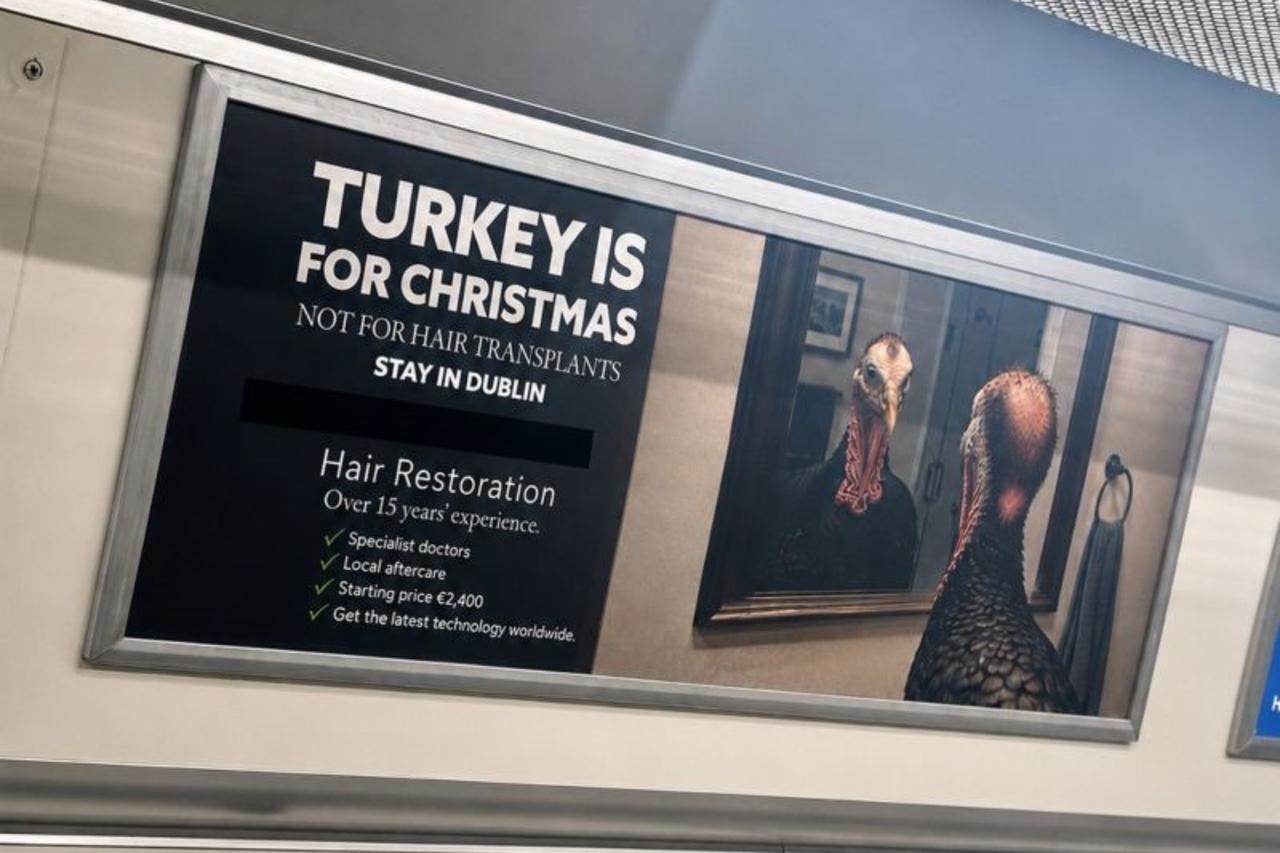


An advertisement seen on Ireland’s DART urban transport line has drawn criticism on social media after using a “Turkey” wordplay to promote local hair restoration services in Dublin.
The ad reads: “Turkey is for Christmas, not for hair transplants. Stay in Dublin.” It refers to “turkey” as a Christmas food while also playing on Türkiye’s former English name in the context of hair transplant tourism.
The campaign has sparked debate because the joke appears to turn a country’s name into the main point of the message rather than focusing only on the hair restoration service being advertised.
The ad promotes hair restoration in Dublin by highlighting more than 15 years of experience, specialist doctors, local aftercare and a starting price of 2,400 euros. However, the focus of the public reaction has been the use of the “Turkey” pun and its link to Türkiye, a major destination for health tourism.
The discussion is not limited to the advertiser’s choice of words. The fact that the ad appeared on DART, a public transport line used by people from different cultures and backgrounds, also raised questions about how such messaging was approved.
Public transport spaces are shared environments, and advertising in these areas is often judged not only by its ability to attract attention but also by how it addresses identity, culture and public sensitivities.
The ad also brought up another point: Türkiye has been officially recognized under its current name at the United Nations since 2022. For critics, the campaign’s reliance on the older English word “Turkey” reflects an outdated communication approach.
The controversy shows how offensive advertising can bring visibility, but also how quickly a brand message can turn into a wider debate when humor touches on national identity.


 Set as preferred source
 Set as preferred source


 2 min read