Newsletters


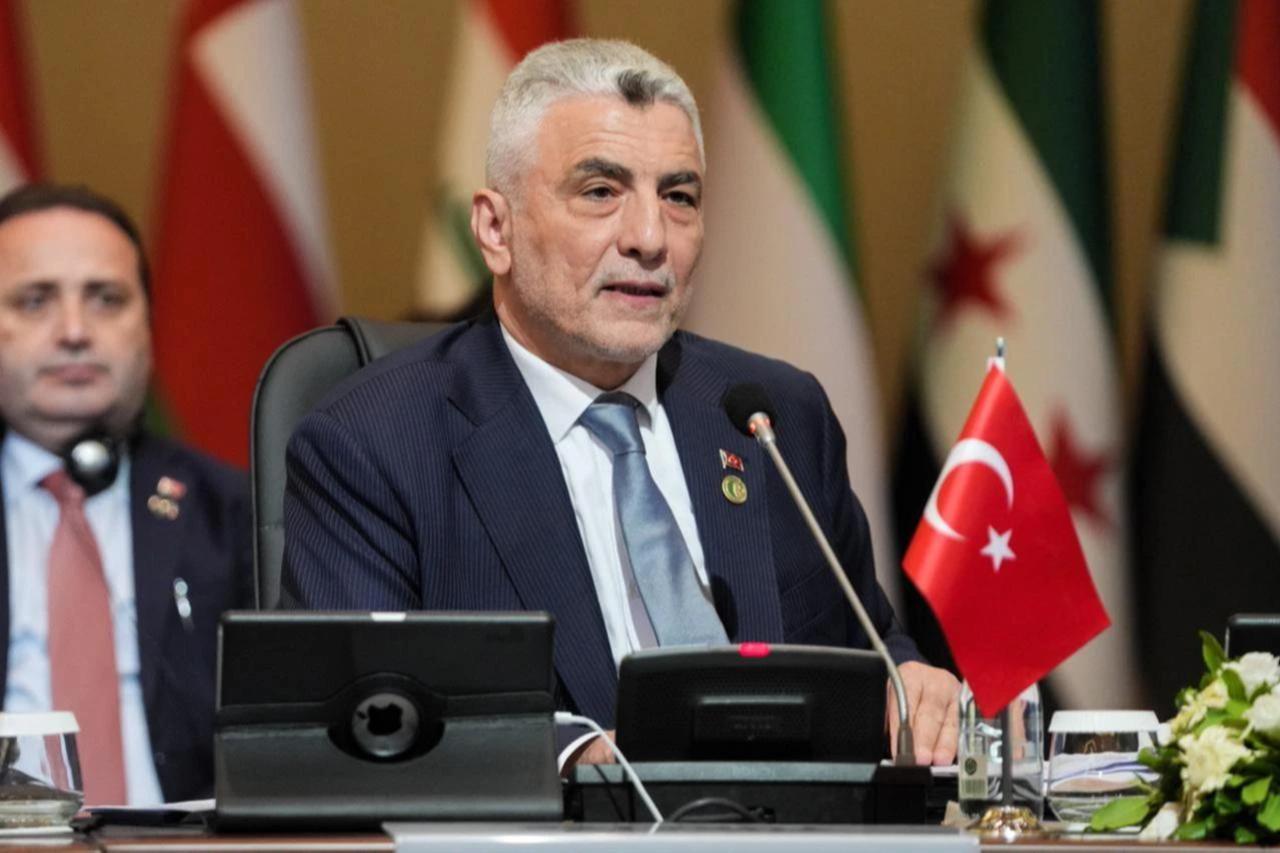


Trade Minister Omer Bolat said Türkiye is among the key countries contributing to NATO's economic resilience and supply chain security through its strategic location, logistics infrastructure, industrial capacity and entrepreneurship ecosystem.
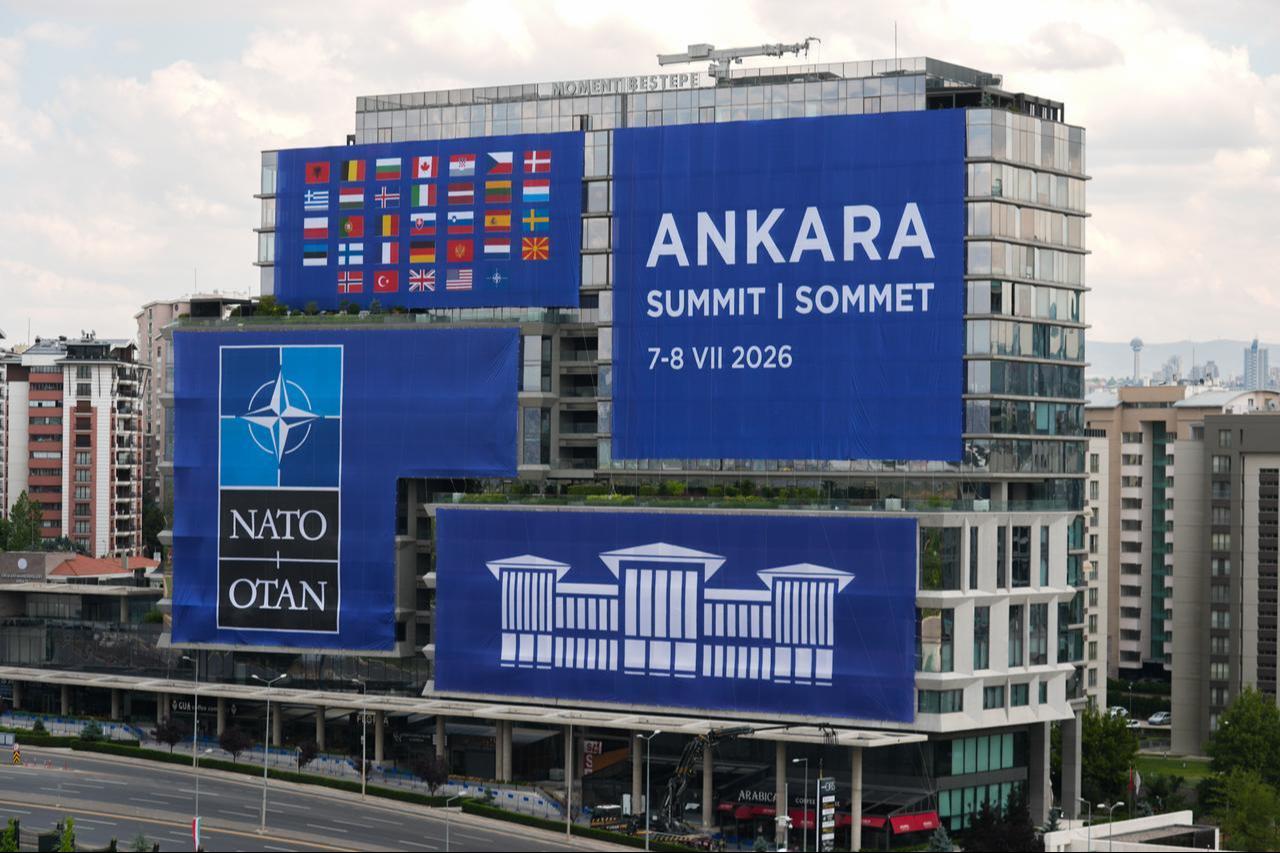
In a written statement on Türkiye-NATO trade and economic relations during the 36th NATO Heads of State and Government Summit in Ankara, Bolat said Türkiye has strengthened its position among NATO allies with its economy, foreign trade and defense industry.
"With its strategic location at the intersection of Europe, Asia, the Middle East and Africa, its developed logistics infrastructure, strong industrial capacity and dynamic entrepreneurship ecosystem, Türkiye is among the main countries contributing to NATO's economic resilience and the security of supply chains," Bolat said.
He said Türkiye's progress in defense and high-value-added sectors has further strengthened its strategic role in NATO's production and supply ecosystem.
Bolat said NATO countries had an economic size of $59.2 trillion last year, accounting for 50.1% of global gross domestic product (GDP).
He said Türkiye ranks as the eighth-largest economy among NATO countries in 2025, with an economy of about $1.6 trillion at current prices.
According to purchasing power parity, Türkiye ranks fifth among NATO countries with $3.8 trillion, he said.
Bolat said Türkiye was among the NATO economies that increased their economic size the fastest between 2002 and 2025.
"With its high growth performance during this period, Türkiye became one of the economies that increased its economic size the fastest among NATO countries," he said.
Türkiye's GDP rose from $238.7 billion in 2002 to $1.596 trillion in 2025, while income per capita increased from $3,616 to $18,040, Bolat said.

Bolat said NATO countries had a foreign trade volume of $23 trillion in 2025, corresponding to 44.7% of world trade.
He said NATO countries conducted 60.7% of their total exports and 56.7% of their total imports with other NATO members.
Türkiye's exports to NATO countries reached $150.3 billion last year, while imports from those countries stood at $139.3 billion, bringing total trade volume to $289.7 billion, Bolat said.
He said Türkiye recorded an $11 billion trade surplus with NATO countries.
NATO countries accounted for 55.9% of Türkiye's total exports and 35.9% of its imports last year.
Bolat highlighted the deep economic ties between Türkiye and its allies, noting that while Türkiye’s direct investment stock in NATO countries stood at $42.6 billion last year, inbound investment from NATO nations into Türkiye reached a commanding $150.6 billion.
This influx accounts for 67.5% of Türkiye’s total foreign direct investment (FDI) stock, firmly positioning the country as a net investment recipient within the alliance. The Netherlands, Germany, Spain, the United Kingdom, and France lead the pack as the top NATO investors in the Turkish market.
Turning to demographics, Bolat pointed out that NATO member states represent roughly 12% of the global population, totaling 988 million people. Within this bloc, Türkiye’s population of 86.1 million ranks second only to the United States—a position Bolat emphasized is further strengthened by the country's young, highly qualified workforce.
Bolat said Türkiye has significantly increased its production capacity over the past quarter-century, strengthening its competitiveness in areas including automotive, machinery, chemicals, electronics, defense, aviation and high-tech production.
He said NATO countries' total defense industry spending was estimated to have reached $1.64 trillion last year, while Türkiye's defense spending rose to $36.4 billion.
Türkiye's defense spending corresponded to 2.3% of GDP, above NATO's 2% target, Bolat said.
"Developments recorded especially in the defense industry and high-value-added sectors further strengthen Türkiye's strategic role in NATO's production and supply ecosystem," he said.
Bolat said Türkiye has also become an important defense industry exporter. As of 2025, Türkiye ranks 11th in global defense exports, with defense and aviation industry exports exceeding $10 billion and a 1.8% share in world defense exports.
He said the number of Turkish defense companies in the Stockholm International Peace Research Institute's list of the world's top 100 arms and military services companies has been increasing.
As of 2024, five Turkish companies are among the top 100: ASELSAN, TUSAS, BAYKAR, ROKETSAN and MKE, Bolat said.
Bolat said Germany is Türkiye's most important trade partner among NATO countries, with bilateral trade volume reaching $52.3 billion last year.
Germany was followed by the U.S. with $34.4 billion, Italy with $28.9 billion, France with $24.1 billion and the United Kingdom with $24 billion, he said.
Bolat noted that Türkiye exported $136.1 billion and imported $89.2 billion in the January-June period this year, while total foreign trade volume reached $325.2 billion. "In the first six months of the year, Türkiye's exports to NATO countries reached $75.9 billion, while imports from those countries stood at $68.3 billion," he said.
Türkiye's total trade volume with NATO countries reached $144.2 billion in the first half of the year, producing a $7.5 billion surplus, Bolat said.
As of last month, Türkiye's annualized exports to NATO countries reached $152.4 billion, while imports stood at $140.1 billion.
"This picture shows that NATO countries are not only a security alliance for Türkiye, but also one of its important trade partners," Bolat said.
Bolat said the Trade Ministry would continue policies aimed at increasing exports, supporting high-value-added production, improving competitiveness in global markets and strengthening Türkiye's position in international trade.
He said Türkiye would continue working toward sustainable growth and export-oriented development under President Recep Tayyip Erdogan's "Century of Türkiye" vision, and wished success for the NATO summit in Türkiye.


 Set as preferred source
 Set as preferred source


 1 min read
 1 min read