Newsletters


British Prime Minister Keir Starmer announced his resignation Monday as Labour Party leader after less than two years in office. He stated that he accepted his party's verdict that he was no longer the right person to lead Labour into the next general election, following a term damaged by policy U-turns and low poll numbers.
"I will resign as leader of the Labour Party. I have spoken to His Majesty the King this morning to inform him of my decision," Starmer said in a statement outside 10 Downing Street.
He said his decision came in response to a question his party had been raising. "The question my party is asking now is whether I am best placed to lead us into the next general election," Starmer said.
"I have heard the answer of my parliamentary party to that question, and I accept that answer with good grace. Every decision I have taken has been about putting the country I love first. That is why I will resign as leader of the Labour Party," he added.
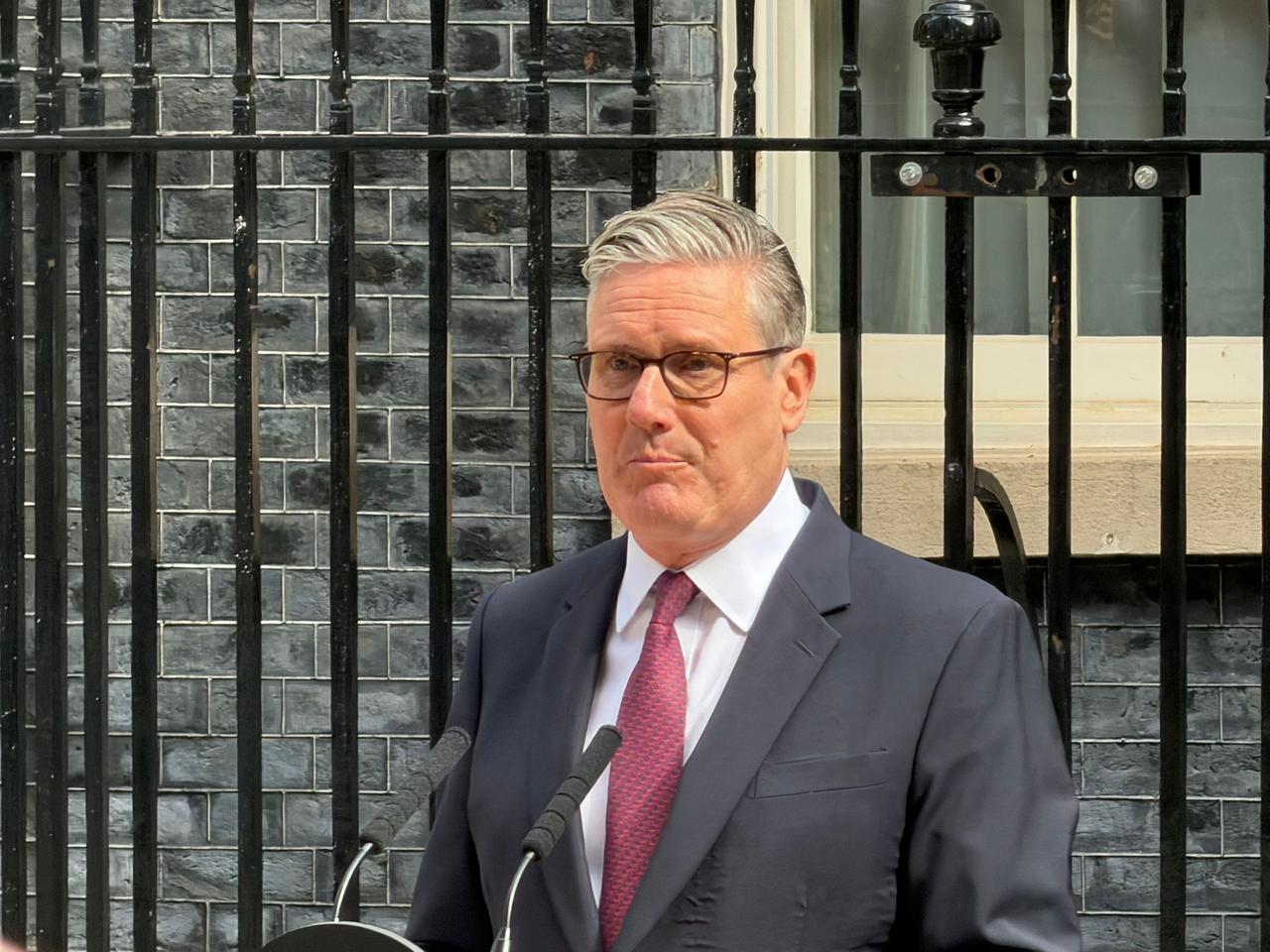

Starmer said he would ask Labour's National Executive Committee to set out a timetable for a leadership contest, with nominations opening July 9 and closing before the summer parliamentary recess, on July 16.
"In the case of a contest, this will ensure a new leader is in place before parliament returns in September. I will remain in post as prime minister until the contest is complete, and I will do everything I can to ensure an orderly handover of power," he said, adding that he would give his successor his "full and unequivocal support."
Starmer used part of his statement to defend his record in office.
"An economy that is stronger, going faster than our peers, wages rising faster than inflation in every single month since we came to power," he said.
"Investment secured, infrastructure being built, an end to austerity with the fastest fall in NHS waiting lists for 17 years, the biggest improvement in rights for workers and renters in a generation. The biggest uplift in defense spending since the Cold War. Small boat crossings falling, asylum hotels closing, protecting young people from social media and half a million children being lifted out of poverty because of the choices that I made," Starmer said.
He also reflected on entering the office two years ago.
"Walking up this street two years ago was the proudest moment of my life, a new Labour government, the first in 14 years, a page in our country's history turned after years of disappointment and despair," he said.
"The chance to change the lives of millions of people for the better. That's what I came into politics for," Starmer added.
Starmer recalled the state of the party when he became leader six years ago.
"Six years ago I inherited a Labour Party that was politically, financially and morally bankrupt," he said.
"I was told time and time again that my party was finished. That we were consigned to history. That a majority at the general election, let alone a landslide majority, was impossible. But we proved those people wrong. Because we changed our party. Ripping out the poison of anti-Semitism, restoring trust in the economy, defense and national security and becoming a party that once again stood proudly with not against our national flag," Starmer noted.
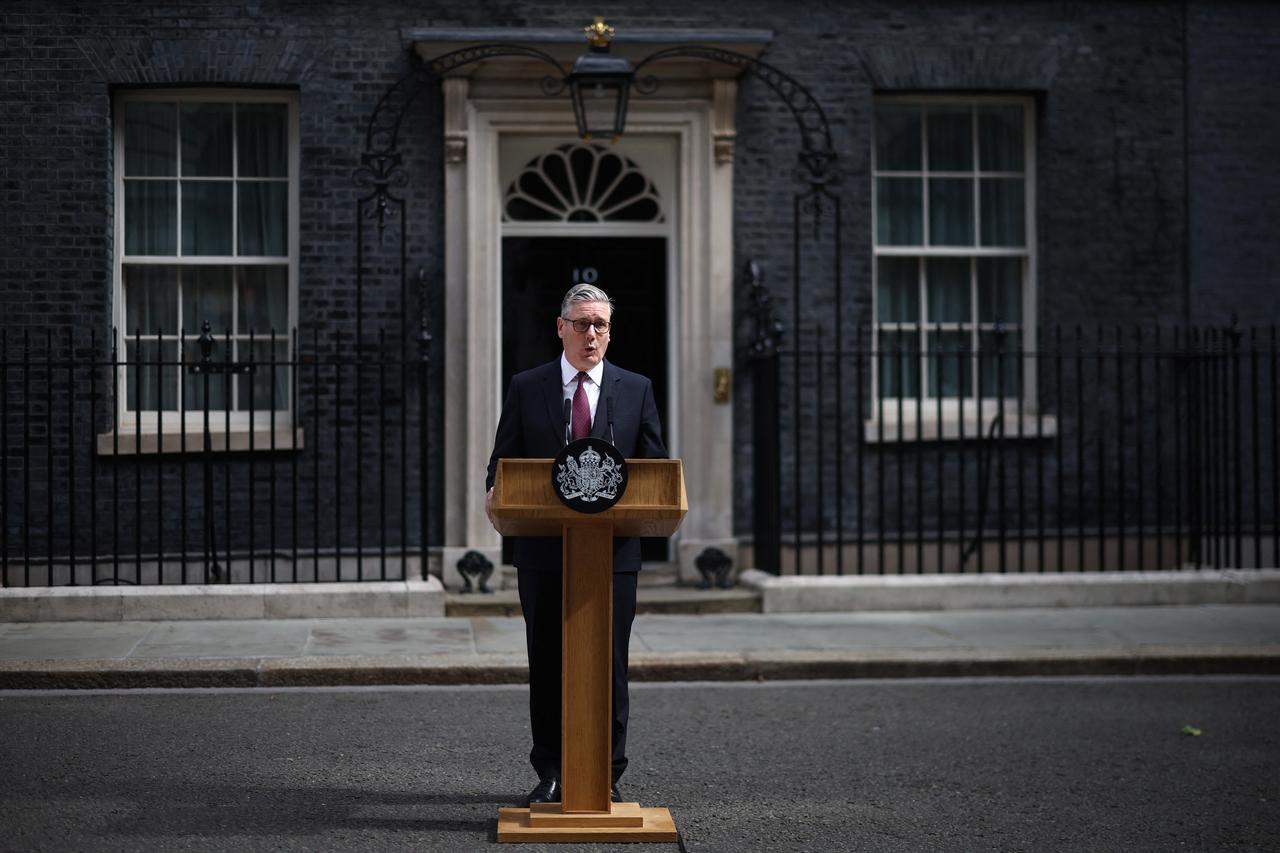
Starmer's voice broke as he closed his remarks with a tribute to his family.
"When I leave the biggest job in the country, I shall spend more time on the most important job, being the best husband I can to my fantastic wife, Vic, who has been a rock by my side through good times and bad, and being the best dad I can to my beautiful children, who are my pride and my joy," he said.
He also thanked his staff and colleagues.
"I want to thank all of those friends and colleagues who have been at my side for the last six years or so, for their incredible commitment, service and support. I want to thank the brilliant No 10 staff and our country's extraordinary Civil Service who dedicate their lives to public service," he said.
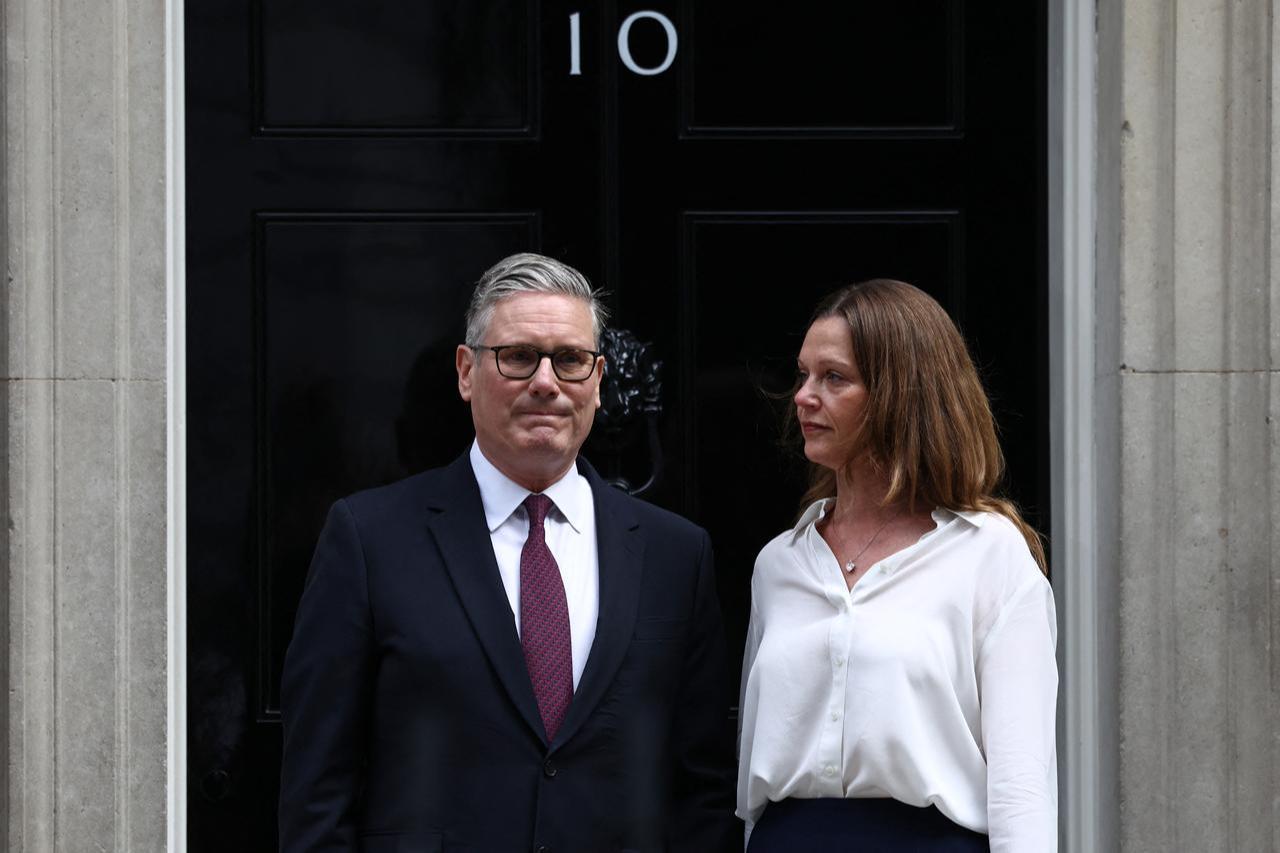
Starmer's lip quivered as he posed for a final photo outside No 10 before stepping back inside with his wife, Lady Starmer.
Andy Burnham, widely seen as the frontrunner to succeed Starmer, was on his way to Westminster to be sworn in as an MP following his decisive victory in the Makerfield by-election.
Britain will now have its seventh prime minister in 10 years.
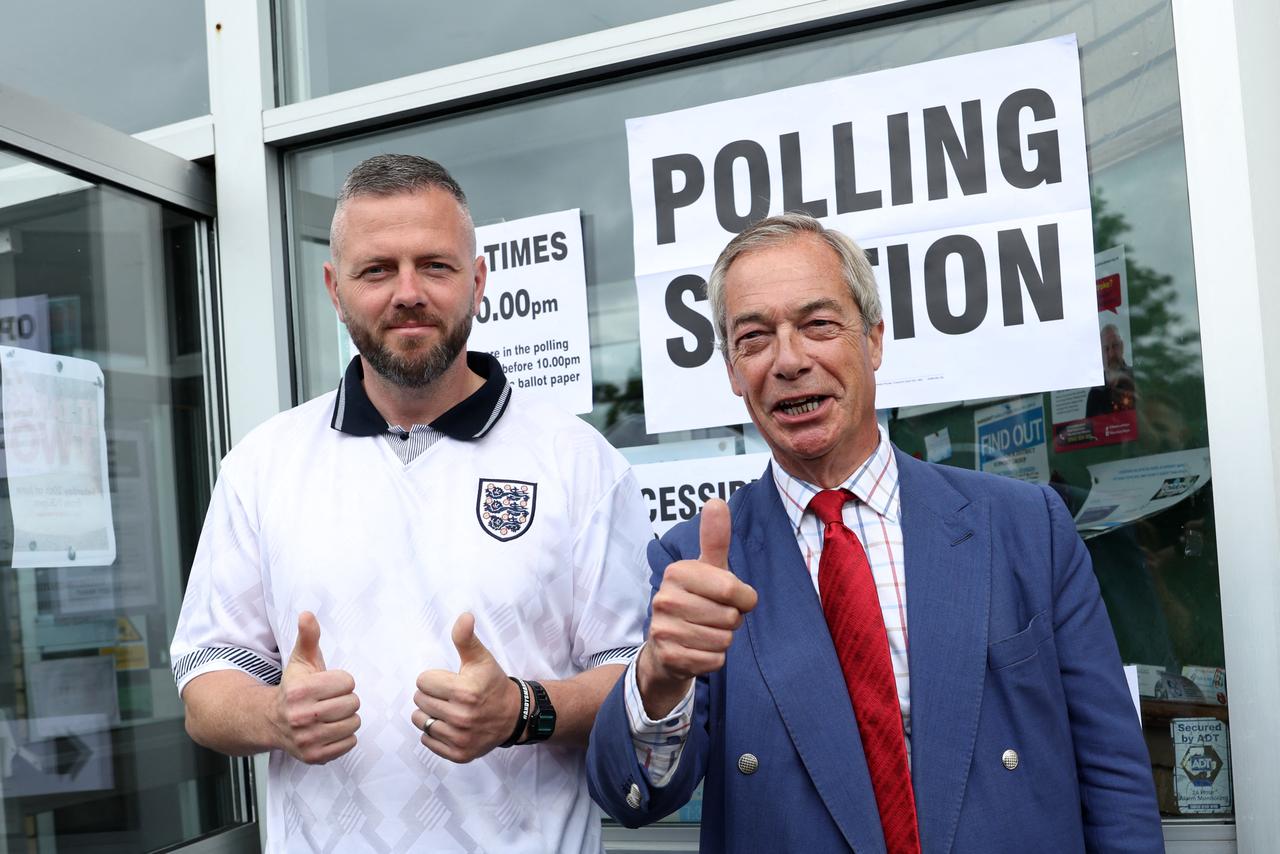
Reform UK leader Nigel Farage demanded a general election following Starmer's announcement. "Reform demands an election, and we are ready to deliver radical change," he wrote on X.
"If Labour thinks it can shove another professional politician into No 10, it has another thing coming," he added.
In a post on his Substack, Farage placed Starmer's departure in a longer pattern. "Starmer isn't the first prime minister I've deposed, and he won't be the last. David Cameron. Theresa May. Rishi Sunak. And next up, Andy Burnham. The reason each leader has failed is the same," he wrote.
"What the political class fails to understand is that the electorate won't accept being taken for fools. They cannot continue to take the votes of the people who supported them for granted, only to betray them upon having gained power. Politics is about trust. That is why I am calling for a general election at the soonest possible date. You know as well as I do that the country cannot afford to waste another week drifting from crisis to crisis. That's why millions of you turned out in the local elections to vote for Reform councillors, and it's why we have led in more than 300 opinion polls for well over a year," Farage said.
Liberal Democrat leader Ed Davey said Starmer's successor must bring Britain closer to Europe.
"Voters were sick of being let down by an endless merry-go-round of prime ministers," Davey said. "This time must be different," he added, saying, "it can't just be about changing who's in Number 10, it has to be about changing our broken politics so we can fix our country. That means tackling the cost of living with a bold new deal with Europe, fixing social care to end the NHS crisis, and giving power back to people by voting reform and giving communities more control. The next prime minister needs to show the ambition our country deserves."
Burnham has said he wants Britain to rejoin the European Union "in my lifetime," though not as an immediate priority.
Fellow leadership hopeful Wes Streeting has pledged to "one day" rejoin the EU.
Communities Secretary Steve Reed, one of Starmer's closest cabinet allies, paid tribute to the outgoing prime minister, saying Starmer had "brought Labour back from the brink" during his six years as party leader.
European Commission President Ursula von der Leyen also offered praise.
"It can take many leaders years to grow into the statesman you became in just two years. European and Ukrainian security is stronger because of you. Thank you, dear Keir," she said.


 Set as preferred source
 Set as preferred source


 4 min read