Newsletters




Former European Union (EU) Commissioner Joaquin Almunia stated that the United States has fundamentally shifted from being a key European ally to a hostile adversary, citing U.S. President Donald Trump's hostile stance toward the E.U. and support for far-right populist movements.
"Europe once had an ally, but today, unfortunately, the U.S. is our enemy," Almunia, a former vice president of the European Commission, told Spanish media on Thursday.
"The US has gone from being pro-European to anti-E.U. – and that should worry not only Europeans, but Americans too," he added.
Almunia emphasized that the threat stems from Trump specifically, not the American people as a whole. However, he warned that this shift poses a danger to liberal democracies worldwide.
"Trump considers the E.U. his main adversary and counts (Russian President) Vladimir Putin as a friend," Almunia said, noting, "When the strategic security document of the U.S. openly supports far-right populist parties, which Trump calls 'patriotic parties,' that really worries me."
Almunia noted that this represents a fundamental departure from the post-World War II era when the United States collaborated in launching European integration.
"In Europe we had an ally that collaborated in putting in place the process of European integration after the Second World War. Now, by misfortune, the United States is an enemy. We have a very strong adversary. The United States has gone from being pro-European to being anti-Union Europea," Almunia stated.

Almunia praised Portuguese Prime Minister Antonio Costa for criticizing Washington's new National Security Strategy, which claims that Europe faces "civilizational erasure" due to migration and overregulation.
"Allies don't threaten to interfere in each other's democratic choices," Costa said last month.
However, Almunia expressed concern about the lack of response from other European leaders on the topic, "I am very worried by the silence of some leaders of the E.U. It seems that only Antonio Costa has understood what Washington's security strategy entails."
He specifically mentioned being concerned about the silence from Ursula von der Leyen, the European Commission president, and other top E.U. officials.
"I fully agree with what Antonio Costa has said, as he seems to be one of the few European leaders who have carefully read Washington's national security strategy. By contrast, I am very worried by the silence of other leaders, including that of the Commission president," Almunia stated.
 1 min read
Almunia expressed deep concern about U.S. support for far-right populist parties and the potential consequences if such parties gain influence within E.U. institutions.
"I do not believe the will of all Americans is to interfere in European politics, but it is clear that this is Trump's opinion, who believes we are his maximum adversary. Trump has a friend who is Putin and an adversary who is the European Union. That worries me very much," Almunia said.
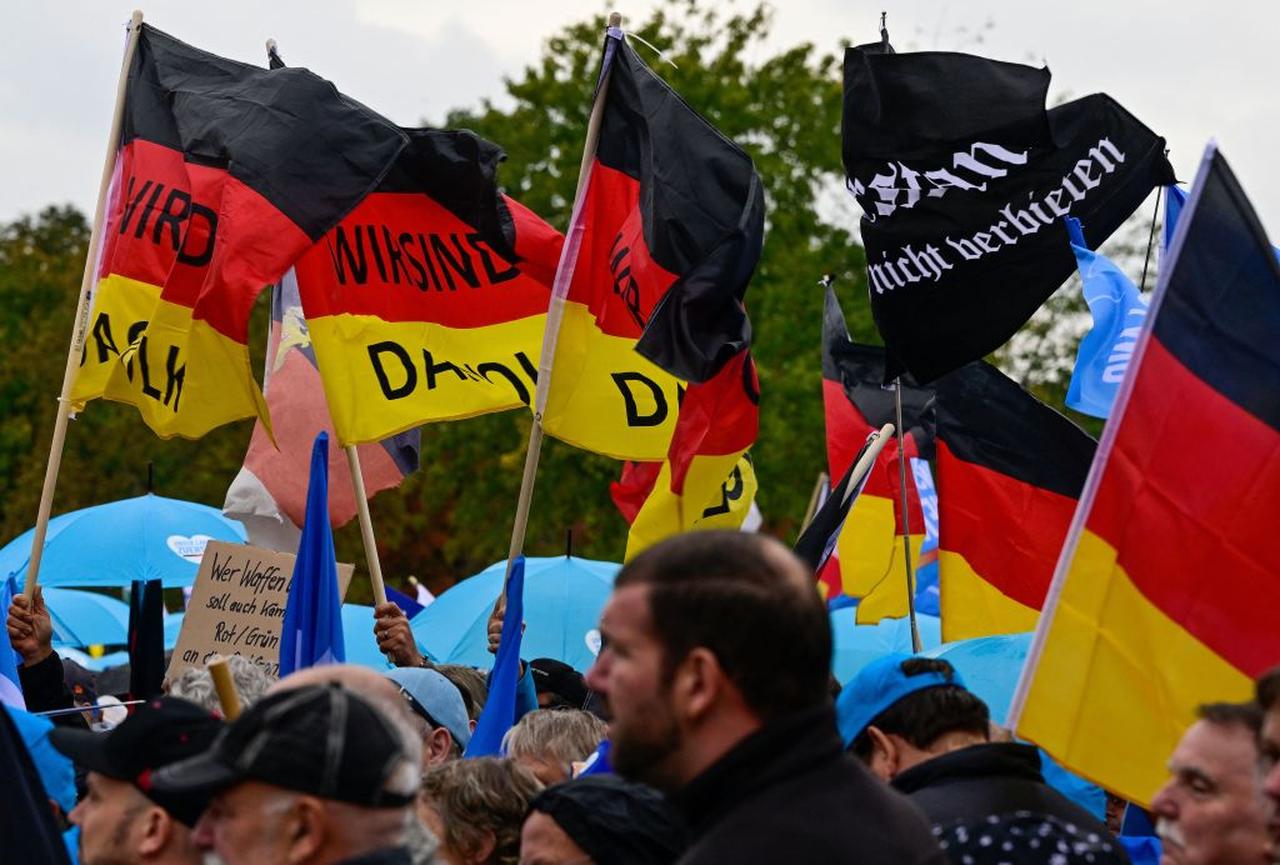
He warned about the implications of far-right parties like France's National Assembly gaining seats in the European Council.
"For now the government of France does not share this document. But yes, it would worry me very much if politicians like Marine Le Pen or Jordan Bardella come to sit in the Council," he said.
Almunia also criticized potential alliances between mainstream European parties and far-right groups, stating: "Alliances with the far right have very little to do with European values or the defense of human rights."
He expressed concern about whether the historic pro-European coalition in the European Parliament—comprising conservatives, social democrats, and liberals, now also greens—is weakening or breaking due to agreements between the Popular Party and far-right groups.
"This last one is a majority that existed to elect for a second time the president Ursula Von der Leyen. I am worried that from the presidency of the Commission or from the presidency of the European People's Party, Manfred Weber, seek another alternative majority that unfortunately they can find. Because that alternative majority has very little to do with European values or the defense of democracy or the principles of respect for human rights," Almunia said.
Almunia also criticized the European Union's response to Israel's military operations in Gaza, saying it lacks coherence and urgency.
"It cannot be said that the E.U. has a single and defined response with Israel that is lukewarm because the E.U. has not had and does not have a coherent, forceful, clear position capable of mobilizing those of us who defend the dignity and respect of human rights or respect for the laws and rules of war," Almunia stated.
"The attack on Hamas could have been justified as a first response after terrorist attacks, but we cannot overlook the amount of violation of basic principles of the international community in which we cannot be indifferent or lukewarm. We have to be forceful, whoever breaks those principles," he noted.
"If we witness fundamental human rights being violated, we must respond decisively. As Europeans, we must react when such principles are broken – not look the other way or make excuses," he added.
Almunia noted that some propose reconsidering the use of qualified majorities when making certain decisions, but he argued this misses the point. "In this case it is not about changing the rules so that it changes the way we see problems. If we see that basic human rights are being violated, we have to respond forcefully. If there is someone who violates human rights, there must be a response regardless of the majorities," Almunia stated.


 Set as preferred source
 Set as preferred source



 1 min read