Newsletters




A senior U.S. State Department official disclosed new details supporting Washington’s claim that China conducted an underground nuclear explosion in 2020 near its Lop Nur facility in the Xinjiang Uyghur Autonomous Region.
Christopher Yeaw, head of the State Department’s Bureau of Arms Control and Nonproliferation, said at an event at the Hudson Institute in Washington that the suspected test occurred on June 22, 2020, near the secretive Lop Nur site.
Seismic data recorded by a station in neighboring Kazakhstan detected a 2.76 magnitude event in the area, he said.
Yeaw argued the activity was not consistent with an earthquake or mining explosions.
“This is the kind of finding seen in nuclear explosive tests,” he said, adding that the explosion’s yield remains unclear due to what he described as Chinese efforts to conceal the test.
He said China had been preparing designated tests of hundreds of tons in yield and alleged Beijing used “decoupling” techniques, such as detonating devices deep underground, to muffle the blast and confuse monitoring systems.
Yeaw said it was “impossible” to determine the size of the explosion based on seismic data alone but described it as “pretty obvious” that it was at least “supercritical,” meaning it used limited nuclear material without producing a chain reaction.
The Comprehensive Nuclear-Test-Ban Treaty Organization said it detected “two very small seismic events, 12 seconds apart” during the same period but that the data were insufficient to assess the cause with confidence.
Independent experts have said seismic and satellite data alone would likely be inconclusive.

The renewed focus follows President Donald Trump’s earlier claim that China and Russia had undertaken nuclear explosive testing. Trump has pledged to resume U.S. nuclear explosive testing “on an equal basis.”
The last confirmed U.S. nuclear test was in 1992, Russia’s in 1990 and China’s at Lop Nur in 1996.
The United States, Russia and China signed the 1996 Comprehensive Nuclear-Test-Ban Treaty, but the United States and China never ratified it, and Russia rescinded its ratification in 2023.
China’s embassy in Washington previously rejected the allegations, saying China adheres to a nuclear testing moratorium.
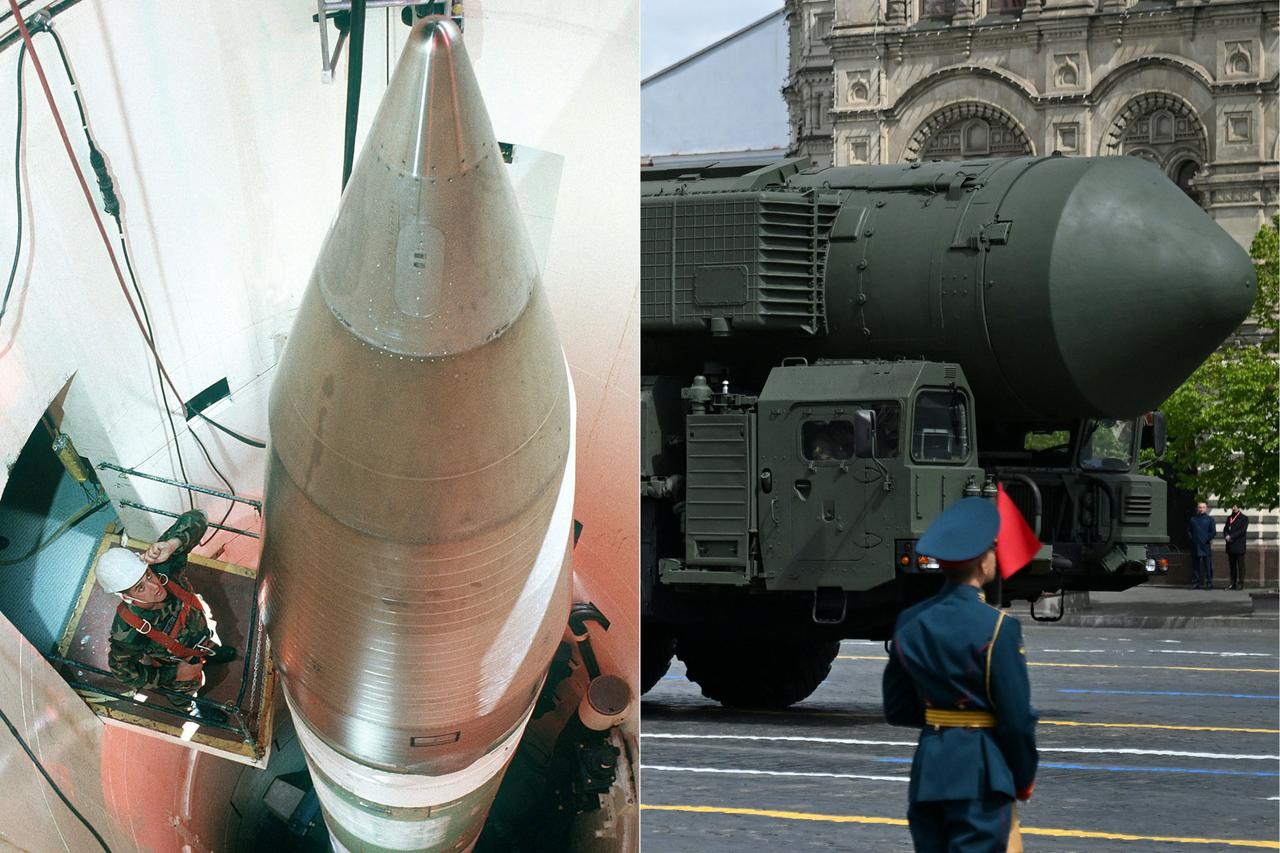
According to a Pentagon report, China has about 600 nuclear warheads. The Stockholm International Peace Research Institute estimates Russia has about 4,300 and the United States about 3,700 as of January 2025.
U.S. officials have not disclosed additional evidence, and analysts say it is difficult to reach a conclusive determination based solely on seismic data.


 Set as preferred source
 Set as preferred source


 1 min read
 1 min read