Newsletters




The U.S. moved against Microsoft and Adobe on Thursday, suspending the technology companies from a key visa program over alleged abuse of rules for hiring foreign workers, while opening investigations into nine U.S. universities.
U.S. Vice President JD Vance announced the measures as part of a broader fraud crackdown led by President Donald Trump’s administration. "Our message to Microsoft is: you’re a great American company, but you’ve got to hire great American workers," Vance told reporters at the White House.
Vance accused Microsoft of laying off 6,000 American workers while replacing them with 6,300 H-1B visa holders under a program designed for highly skilled foreign workers.
Microsoft disputed the allegations, stressing that the "vast majority" of its U.S. employees were Americans and that it was ready to provide the administration with further information.
The company also explained that 80% of the roughly 6,000 H-1B applications it filed during the last fiscal year were for extensions or changes in the status of existing employees, rather than new hires.
The remaining applications covered people already legally living in the United States who chose to join Microsoft. Those filings accounted for just 1% of the company's U.S. workforce, Microsoft said.
"They are not new arrivals to our country," the company added, noting that it paid H-1B employees the same as other staff performing comparable work.
Adobe also faced suspension from the visa program, Vance announced, alongside action against six other IT outsourcing firms.
The administration's measures included freezing green card processing for affected companies, blocking their path toward permanent residency while allowing current H-1B workers to retain their existing status.
An H-1B visa is initially valid for three years and can be extended to six. A green card allows an employer to retain a foreign worker beyond that period.
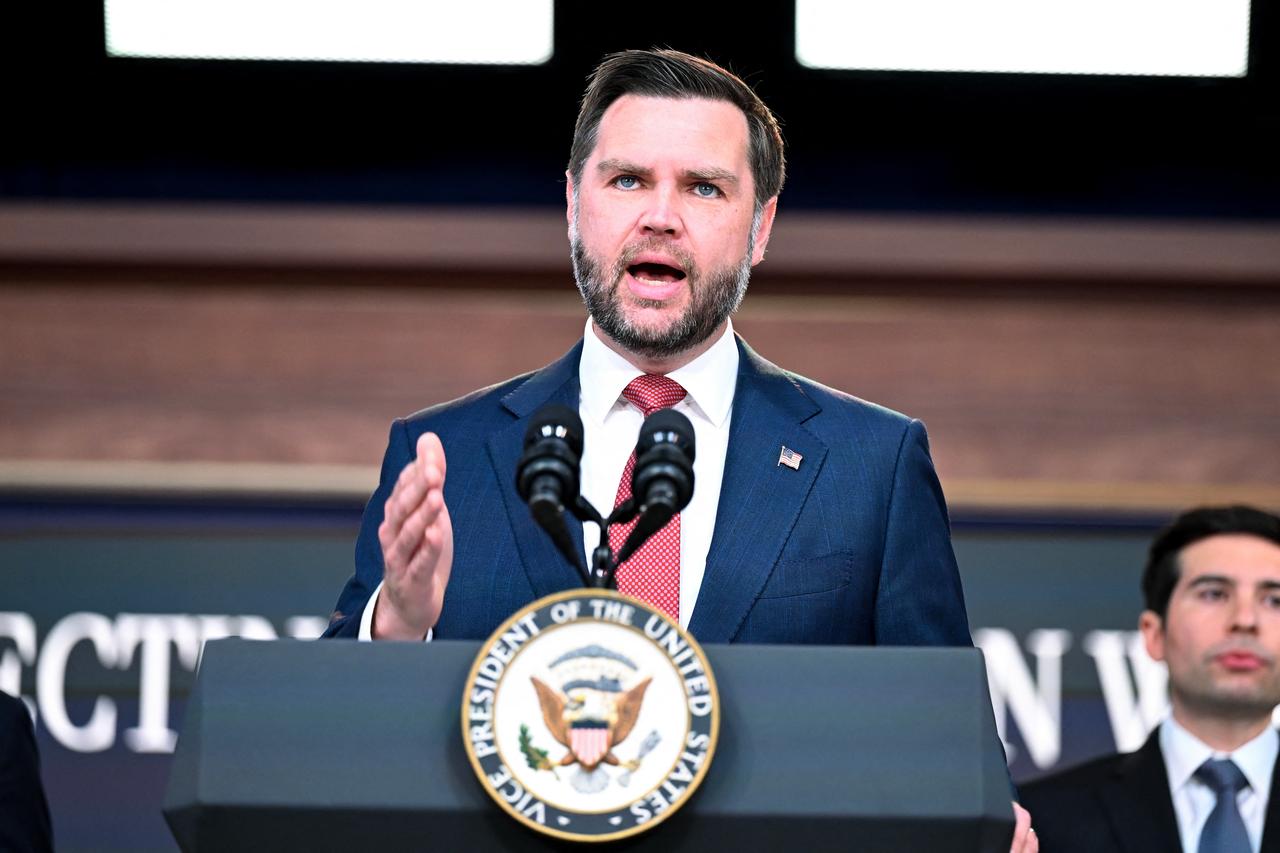

The crackdown extended to nine universities, including Harvard, Yale, Stanford and the Massachusetts Institute of Technology, over alleged misuse of a separate visa program for academic exchanges.
Vance accused the institutions of relying too heavily on the program to recruit foreign researchers at lower costs. "Something weird is going on at these universities, they’re using these visas way too much," he said.
The investigations added to the administration's ongoing campaign against major U.S. universities over alleged left-wing bias and antisemitism. Harvard remained a particular target, with the government moving to freeze billions of dollars in federal funding.
Trump appointed Vance to lead an anti-fraud task force earlier this year. The vice president subsequently oversaw investigations that frequently targeted Democratic-led states and migrant communities.
Trump compared Vance to Eliot Ness, the celebrated law enforcement agent who pursued organized crime during the 1920s.
The administration's latest measures also followed a broader push to tighten the H-1B visa system. A White House proclamation last year imposed a one-time $100,000 fee on new H-1B petitions for workers hired from abroad.
Vance said the suspension of permanent labor certification processing, known as PERM, would remain in place for as long as necessary to force the companies to change their hiring practices.
"The suspension of PERM is going to last as long as it needs to," he said. "We're not just punishing them to punish them, we're punishing them because we want them to change their behavior."
However, Vance did not outline specific steps the companies would need to take to regain access to the process.


 Set as preferred source
 Set as preferred source


 1 min read
 1 min read