Newsletters


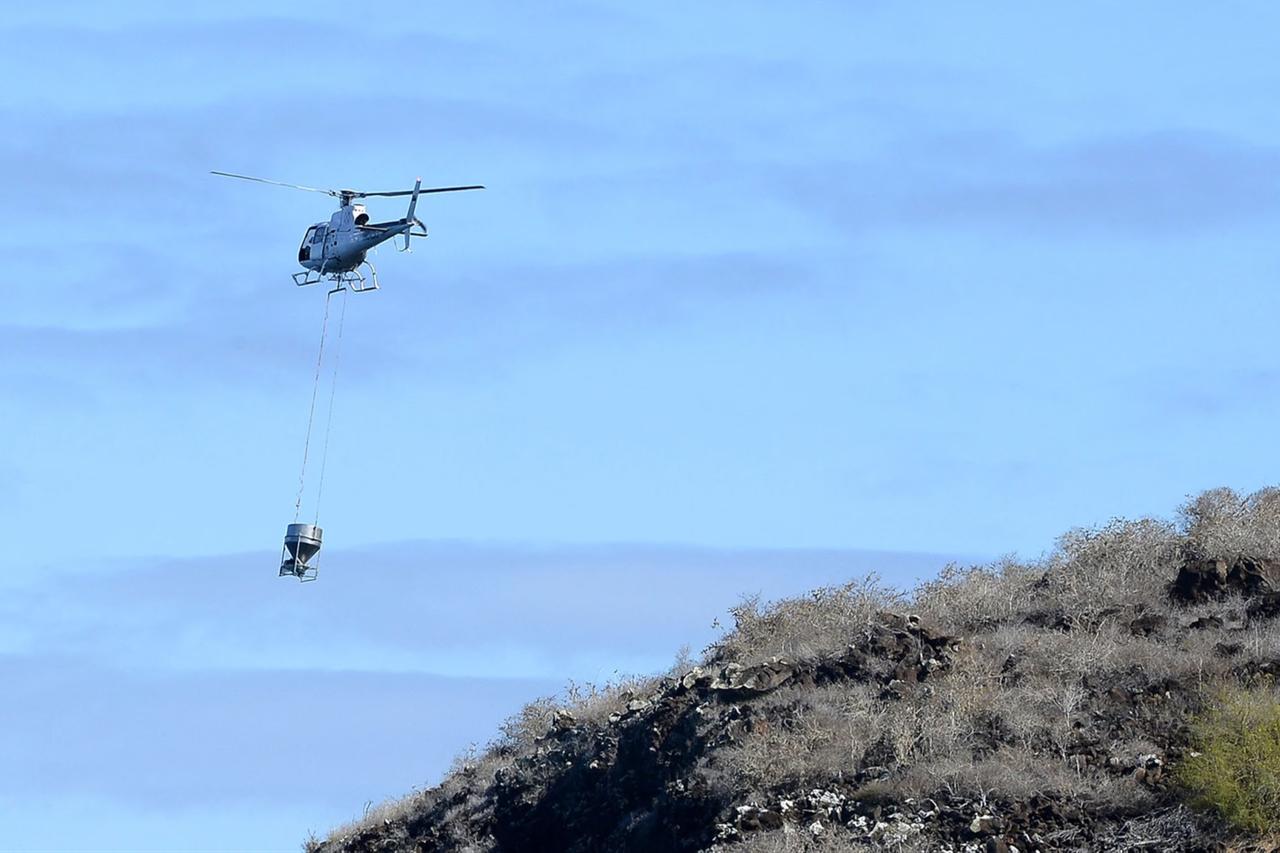


U.S. scientists are dropping dead mice containing paracetamol from helicopters over Guam's forests in an effort to bring down populations of invasive brown tree snakes that have devastated native wildlife and disrupted electricity supplies on the Pacific island.
The unusual method, developed by researchers working with the U.S. Department of Agriculture's Animal and Plant Health Inspection Service (APHIS), uses dead mice fitted with 80-milligram paracetamol tablets, a common painkiller that is toxic to the snakes.
The poisoned bait is released from helicopters using parachute-like devices designed to catch on tree branches, where the snakes live and hunt.
Brown tree snakes are believed to have arrived on Guam aboard cargo ships in the late 1940s or early 1950s, following World War II.
With few natural population controls on the island, the invasive species spread rapidly, wiping out most native forest bird species and contributing to declines in bat and lizard populations.
The snakes have also caused repeated electricity outages by climbing onto power lines, creating problems beyond the damage to Guam's ecosystem.
To reach the snakes in their natural habitat, researchers place a paracetamol tablet inside the body cavity of each dead mouse.
The bait is then attached to a long paper strip with cardboard pieces at both ends. Once dropped from a helicopter, the device opens up and catches on tree branches and vegetation, leaving the mouse suspended where the snakes can reach it.
The approach is designed to deliver poisoned bait directly into the trees rather than onto the forest floor.
The method has been tested in Guam's forests as part of a research program supported by the U.S. Department of Defense.
Researchers deployed 36 poisoned baits per hectare across two separate 55-hectare study areas. In some locations, four to five rounds of bait distribution were intended to reduce the snakes' consumption of poisoned bait by more than 80%.
Scientists believe the technique could help bring invasive snake populations under control and support efforts to restore Guam's native wildlife.
However, the aerial baiting program has not completely eliminated the invasive species from the island.


 Set as preferred source
 Set as preferred source



 3 min read