Newsletters


Ukrainian drone operators easily spotted and defeated U.S. Army troops and armored vehicles during a military exercise in Germany earlier this year, exposing vulnerabilities in American counter-drone defenses, the Wall Street Journal (WSJ) reported, citing people familiar with the events.
The exercise, called Combined Resolve, pitted around 3,500 U.S. personnel, primarily from the 3rd Armored Brigade Combat Team, 1st Cavalry Division, against an opposition force reinforced by Ukrainian troops from the 412th Regiment of Unmanned Systems Forces, known as Nemesis.
The drill, held in April and May, tested visiting troops' ability to operate and defend against the proliferation of smaller, front-line drones that have dominated the war between Russia and Ukraine.
The Ukrainian drone operators eliminated a U.S. armored brigade during the drill, according to U.S. officials briefed on the exercise and one participant, the Journal reported.
The rotating U.S. troops sent heavy armored vehicles into the field that threw up dust and were easy for Ukrainian reconnaissance drones to spot, according to a participant cited by the Journal.
"Those reconnaissance drones were followed by drones dropping explosives and first-person-view drones, which crash into targets in combat," the person said.
Live ammunition is rarely used in such exercises; drones typically hover above a vehicle or move close enough for an observer to award a "kill."
Ukrainian drones eliminated U.S. vehicles so quickly that units had to be sent back into the exercise as new units, or "re-spawned," to keep the drill going, a U.S. official briefed on it told the Journal.
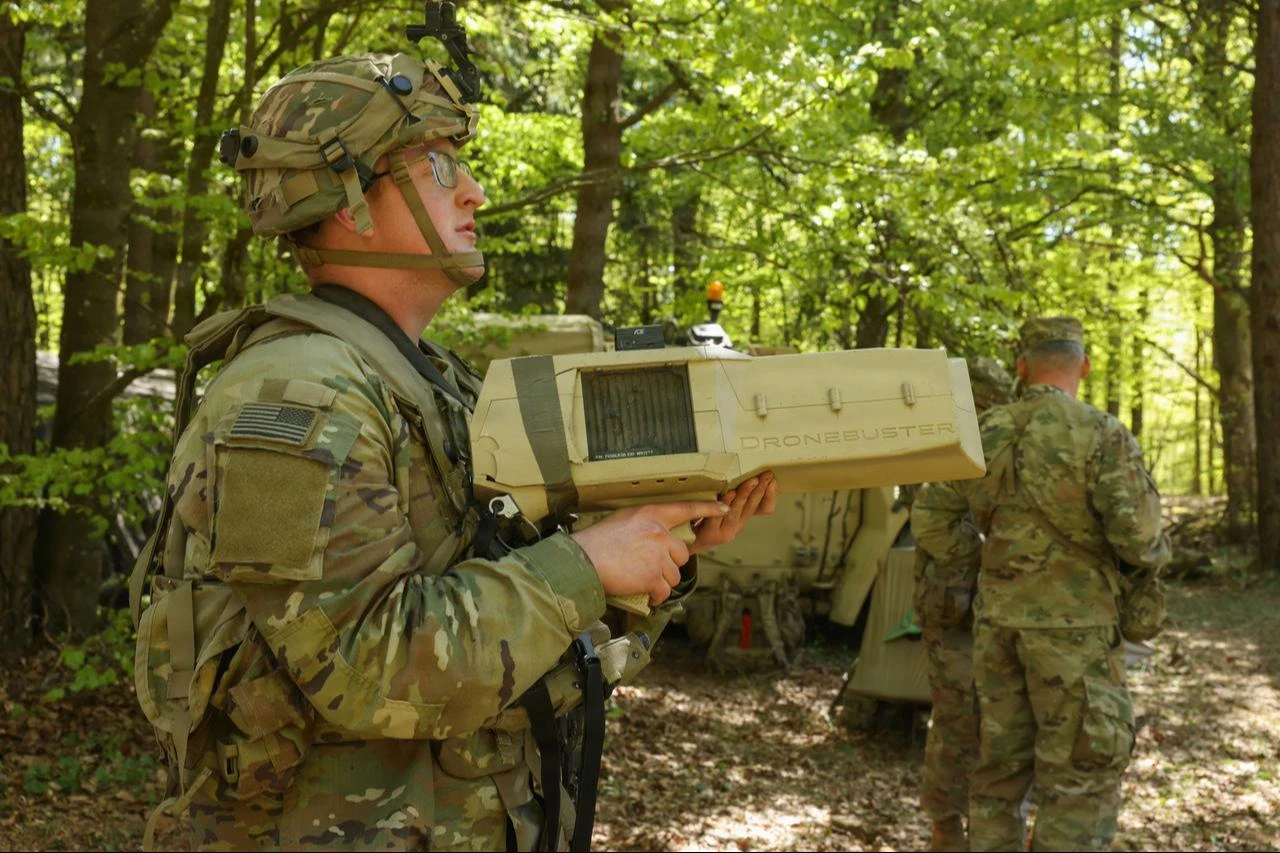
The rotating troops were equipped with standard electronic-warfare and counter-drone systems, according to an Army official cited by the Journal. Newer Mobile Brigade Combat Teams (MBCT), equipped with more advanced gear and tactics, have fared much better in similar exercises, the official said.
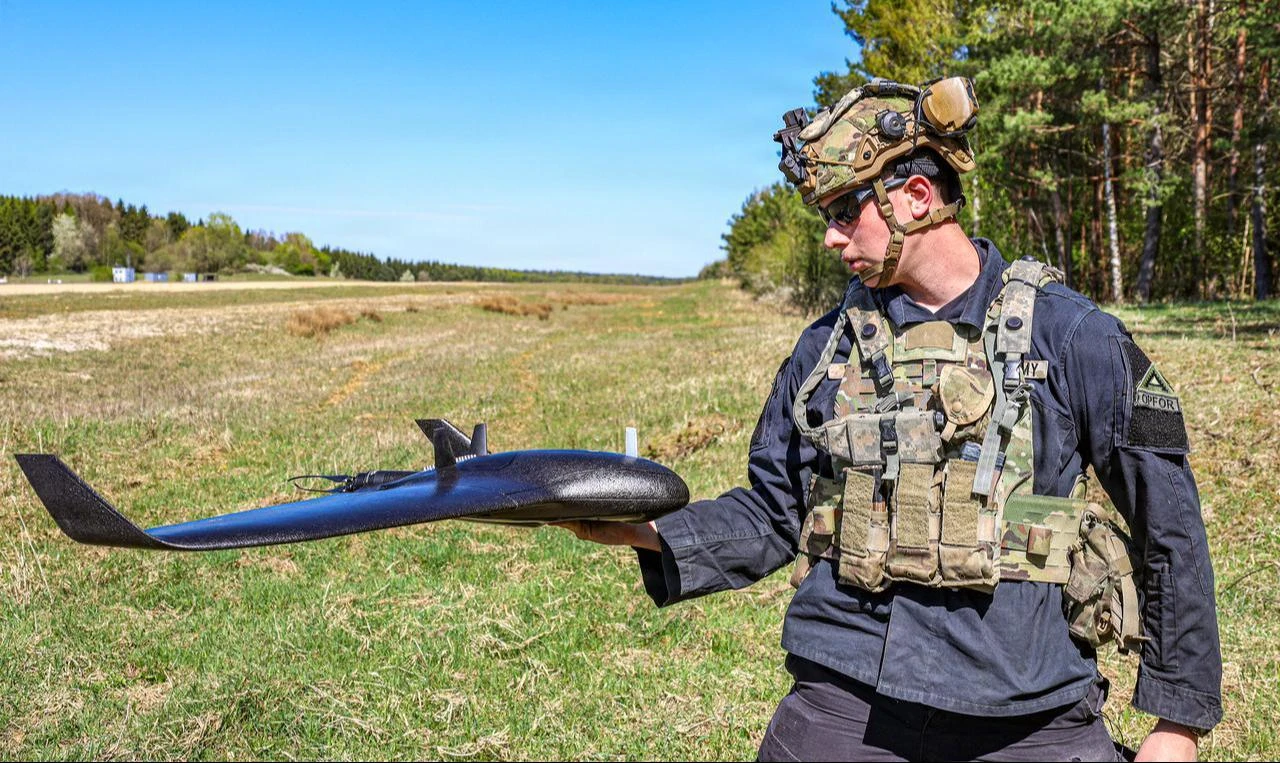

The U.S. reran the training scenario over the two-week engagement, and the rotating forces improved as they became more adept at dispersing and concealing themselves and using electronic warfare, according to the Army official.
The Ukrainians also switched sides midway through the exercise and helped the American troops use drone technology offensively, which they did effectively, the official told the Journal.
Ukrainian troops have become experts in drone warfare over nearly four and a half years of fighting Russia, with operators and support troops now skilled at continually repairing and adapting drones.
"American drone operators lack experience fixing and arming drones under fire," a person present at the exercise said.
In Ukraine, so many tanks and other armored vehicles have been destroyed in battle that large stretches of the country's front line are now almost free of armor.
Some U.S. military officers argue that drones have proven particularly deadly in the Russia-Ukraine war specifically because the conflict has reached a stalemate with little battlefield movement, and that in a more mobile war, tanks and other armor would regain their traditional value.
But Ukrainian military thinkers, including former commander-in-chief Valeriy Zaluzhniy, argue that drone technology has made traditional maneuver warfare unfeasible for now, which they say explains the largely static front line in eastern Ukraine. Both Russia and Ukraine are searching for technological and tactical breakthroughs to restore movement to the battlefield.
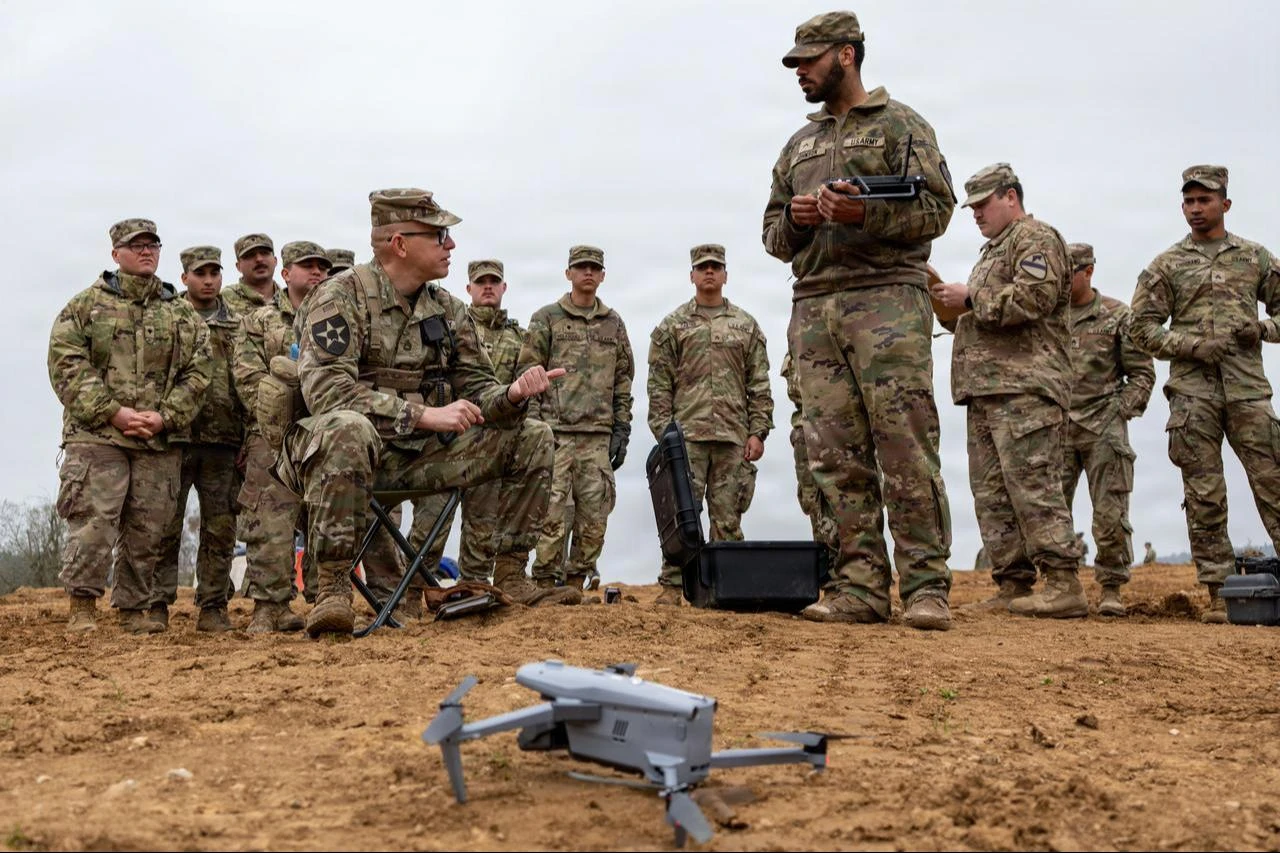
This was not the first time American drone proficiency has come up short against Ukrainian operators.
In May 2025, Ukrainian drone operators easily defeated British, Estonian and other NATO forces, including a U.S. contingent, during an exercise in the Baltic region, according to a person familiar with the matter.
This spring, Swedish forces led an exercise with NATO allies in which Ukrainian drone teams also outperformed them, Swedish officials told local media.
In 2023, a U.S. infantry officer helping train Ukrainian troops recognized that the U.S. needed to learn from them about drone warfare and designed a training program that other army units later adopted, according to a U.S. official.
The German exercise, coupled with U.S. casualties in Iran, illustrates American vulnerabilities to drones years after the U.S. made uncrewed systems an essential part of warfare.
The U.S. pioneered the use of long-range drones in war and has recently spent billions of dollars acquiring new drone and counter-drone technology and forming specialized units to operate it.
Still, this year in the Middle East, the U.S. has struggled to defend against Iran's long-range drones, which have killed and injured soldiers and destroyed aircraft.
Despite a sometimes prickly relationship with Kyiv, the Trump administration has been reaching out to Ukraine.
The U.S. is currently testing Ukrainian drones for potential purchase and has used counter-drone systems tested in the Russia-Ukraine war to help defend its forces in Iran.
Defense Secretary Pete Hegseth told senators in May that he has increased the number of U.S. personnel sent to Ukraine to study drone warfare.
Speaking to WSJ, Eliot Cohen, a scholar at the Center for Strategic and International Studies, said recent battlefield experience shows how drones of all kinds have become essential to modern warfare.
"It is vital that the U.S. military master that, and thus far, unfortunately, that does not seem to be the case," Cohen said.


 Set as preferred source
 Set as preferred source



 5 min read