Newsletters





A surge of online video advertisements featuring artificial intelligence-generated characters who appear to have Down syndrome is pulling in millions of views. These ads market products by exploiting public empathy for historically disadvantaged groups.
Advocates and researchers warn that this practice perpetuates negative stereotypes and harms the livelihoods of real creators.
Across TikTok, YouTube, and Instagram, the artificial intelligence characters claim they are being bullied for selling crafts, often appearing against a backdrop of manufactured insults using disparaging language about people with disabilities.
Nathan Rowe, program director at Down Syndrome International, told Agence France-Presse (AFP) that the videos feed into the stereotype that people with the genetic condition need to be pitied.
"They're preying on people who have maybe a bit sympathetic, slightly paternalistic view of Down syndrome," Rowe said.
The automated accounts link to suspicious online storefronts. One shop touts multiple five-star reviews that all feature identical filler text. AFP discovered that some of the featured pottery products originally appeared in content from real creators before being stolen.
Additionally, one featured crochet bag design appears for sale on Shein, suggesting it is not handmade. Shein is a popular platform for drop-shippers, who are online retailers operating digital storefronts without maintaining any physical inventory.
The videos "crowd-out" posts from actual entrepreneurs with Down syndrome, potentially siphoning away business, Rowe said.
"There are lots of really talented people with Down syndrome out there who are making things, but it kind of reinforces the narrative that people with Down syndrome can't (do it), and it must be AI," he said.
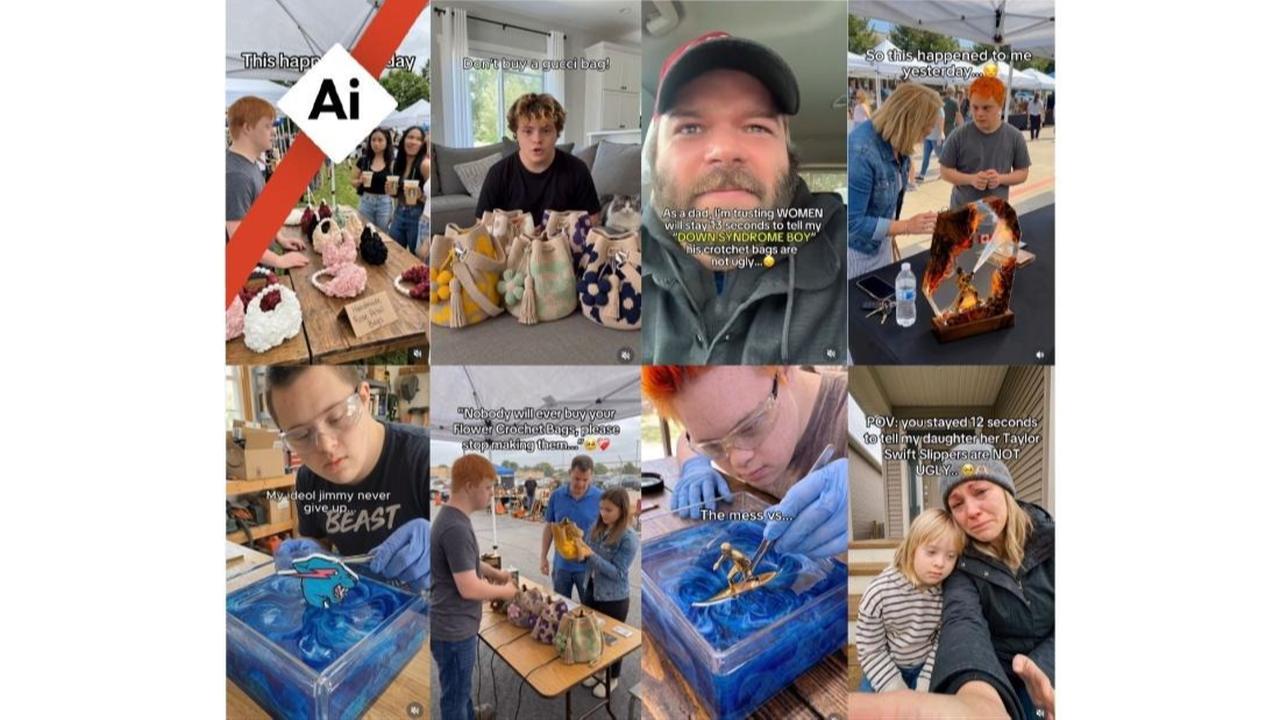

This is not the first online trend to exploit disadvantaged groups for digital attention or profit. Down Syndrome International previously complained to Meta about sexualized deepfakes—highly realistic, manipulated synthetic media—depicting people with Down syndrome, which led to the removal of numerous videos.
However, Rowe emphasized that social media corporations must become more proactive to stop this type of material from circulating.
AFP contacted Meta regarding the new product-marketing trend but received no response.
TikTok's community guidelines explicitly prohibit accounts from engaging in discrimination or deceptive and manipulative activities, while YouTube enforces similar restrictions against misleading spam.
Although many of the videos have been taken down, active accounts continue to share AI-generated clips to redirect viewers to online storefronts.
"The people behind the scenes are probably motivated by profit and have no regard for the damage they do in the process," Rowe said.
Jeremy Carrasco, co-founder of the AI research firm Riddance, said the number of accounts pushing this type of content indicates that the videos are working as a profit-making scheme.
"A lot of system-wide failures are compounding to make this worse," he said, pointing out that the videos are exceedingly easy to create and difficult to keep track of.
"It's why these have exploded to the degree that they have."
He said there were countless videos featuring AI-generated figures with Down syndrome and said the same accounts had been trying to sell identical products using elderly synthetic characters.
In a previous investigation, AFP found a multilingual trend of videos stealing seniors’ identities to bait users into sympathetic purchases of slippers and dog collars.
"It feels like we're hitting kind of the bottom of what is permissible, and if they keep going further, I think something's going to happen," Carrasco said.


 Set as preferred source
 Set as preferred source


 1 min read


 1 min read