Newsletters




The combined wealth of the world’s billionaires rose by 16%, or $2.5 trillion, in 2025 to a record $18.3 trillion, a gain equal to the total wealth of the poorest 4.1 billion people and, according to Oxford Committee for Famine Relief (Oxfam), enough to eradicate extreme poverty 26 times over.
The report, published on the opening day of the World Economic Forum in Davos, found that the annual surge was more than triple the average pace observed over the previous five years.
Since 2020, billionaire wealth has risen by 81%, even as nearly half of the global population continues to live in poverty and one in four people face regular food insecurity.
The report, Resisting the Rule of the Rich: Protecting Freedom from Billionaire Power, argued that the accumulation of wealth among the super-rich is contributing to a global decline in political rights, economic fairness, and civil freedoms.
The number of billionaires worldwide exceeded 3,000 for the first time last year. Elon Musk became the first individual to amass wealth surpassing half a trillion dollars.
The report highlighted the disproportionate political influence of the super-rich, claiming that billionaires are 4,000 times more likely to hold political office than the average person.
A World Values Survey conducted across 66 countries found that almost half of respondents believe the wealthy regularly purchase election outcomes in their countries.
"The widening gap between the rich and the rest is at the same time creating a political deficit that is highly dangerous and unsustainable," Amitabh Behar, Executive Director of Oxfam International, warned.
The report connected the acceleration in wealth inequality with policies pursued by the Trump administration in the U.S., such as tax cuts for the rich and deregulation of large corporations. It also links the recent spike in AI-related stock gains to the increasing fortunes of billionaire investors.
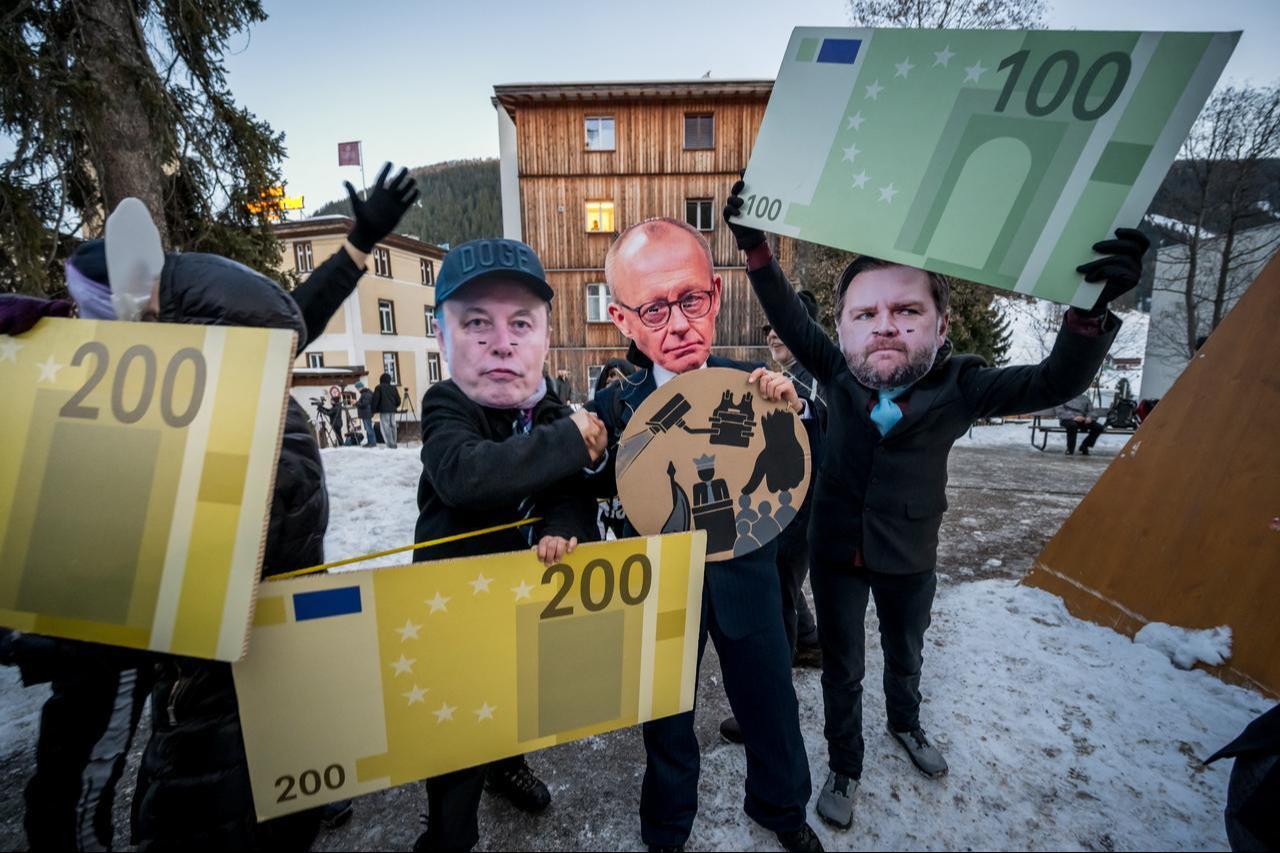

The report raises concerns about media concentration, noting that billionaires now control more than half of the world’s largest media outlets and all major social media platforms.
Among the examples cited are Elon Musk’s acquisition of X (formerly Twitter), Jeff Bezos’ ownership of the Washington Post, and a billionaire consortium’s stake in The Economist.
Oxfam also highlighted how media ownership can undermine freedom of expression, recalling a study by the University of California that found that hate speech rose by approximately 50% in the months following Musk’s takeover of X.
“Being economically poor creates hunger.
Being politically poor creates anger,” said Amitabh Behar, Executive Director of Oxfam International, pointing to the rise in civil unrest. In 2024 alone, there were over 142 major anti-government protests across 68 countries, many of which were met with violent crackdowns.
In response, the report called on governments to adopt national inequality reduction plans with measurable targets, tax the ultra-wealthy at effective rates, and curb the influence of money in politics.
It also urged stronger media independence, a ban on hate speech, and reinforced protections for civil liberties, civil society groups, and trade unions.
"No country can afford to be complacent," Behar warned, emphasizing that unchecked economic inequality can quickly undermine democratic norms and individual rights.


 Set as preferred source
 Set as preferred source


 1 min read
 1 min read