Newsletters


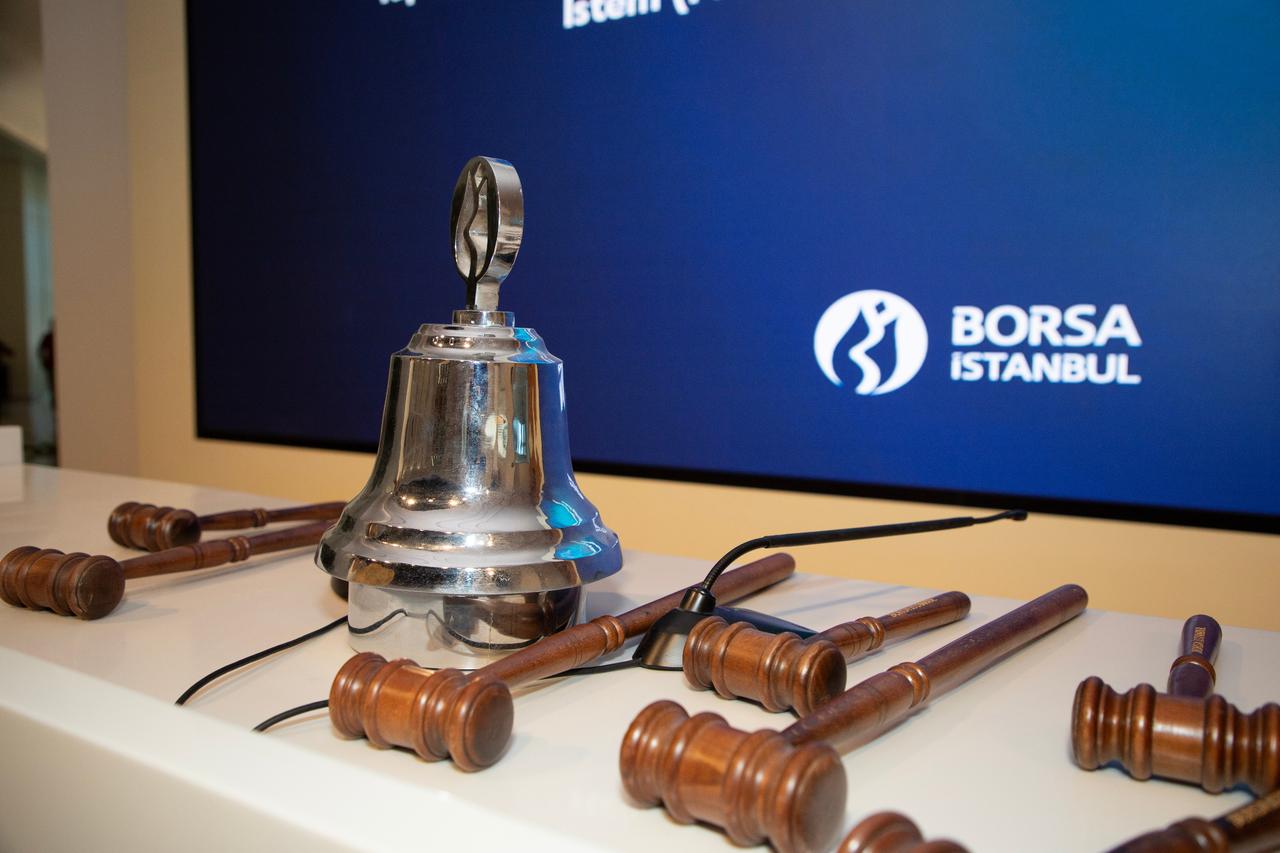


Türkiye’s benchmark stock index BIST 100 slid further on Friday as investors weighed the fallout from global index provider MSCI’s decision to freeze certain changes to Turkish equity indexes, which raised concerns over market transparency and the country’s emerging-market status.
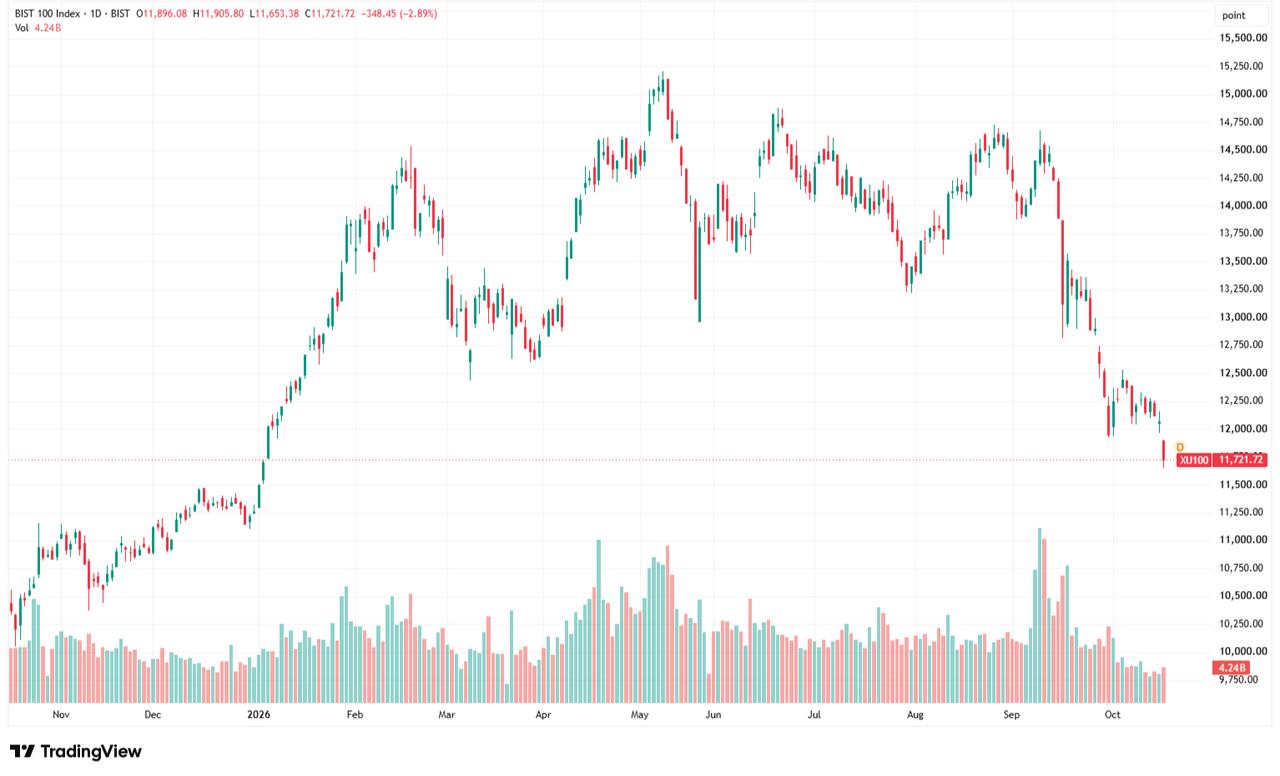
The BIST 100 closed down 2.9% at 11,721.72 points, shedding 348.4 points from the previous close, while the trading volume reached ₺116.2 billion. The index lost 4.4% over the week, extending its monthly decline to 15.5%.
The banking index dropped 1.9%, and the holding index fell 2.5%. All sector indexes ended lower, with financial leasing and factoring posting the steepest decline at 5.7%.
Only four companies in the BIST 100 finished in positive territory. Transformer manufacturer Astor Enerji, power generation company Odas Elektrik and renewable energy producer Zorlu Enerji led the losses.
The sell-off followed MSCI’s decision to freeze certain changes to Turkish stock indexes, citing concerns about possible coordinated trading through investment funds linked to smaller listed companies.
MSCI warned that such trading could distort calculations of how many company shares were available to the public and undermine confidence in the market. The freeze blocked increases in foreign-investment measures, the addition of new stocks to certain indexes and moves to higher index categories.
The index provider acknowledged that Turkish authorities had taken steps to address these concerns but stressed that investors needed to see stronger enforcement and clearer information about who owned the shares.
"Investors will need to see credible and sustained enforcement against coordinated trading," MSCI said, adding that companies also needed to disclose enough information for investors to independently verify the shares available for public trading.
MSCI said it needed more time to determine whether the measures would deliver the changes investors expected. It continued to monitor the market and gather feedback from investors.
The institution warned that if Türkiye failed to make sufficient progress by June 2027, it could consider moving the country from emerging-market status to frontier-market or standalone-market status, which would change how international investors classified its stock market.

In response, Treasury and Finance Minister Mehmet Simsek said Türkiye planned to introduce new legislation by early 2027 to strengthen the fight against capital markets crimes, including coordinated trading through investment funds.
Simsek highlighted recent measures introduced by the Capital Markets Board (CMB) to improve transparency, including weekly portfolio disclosures by free funds, reporting requirements for certain changes in shareholdings, concentration limits and mandatory collateral for borrowing on organized markets.
The CMB had earlier introduced new rules on Aug. 28 to tighten limits on investment funds’ holdings in listed companies, setting lower caps for companies with smaller free floats.
Simsek said authorities would monitor the impact of the measures and take further steps if needed. "Our priority is to complete the liquidation of troubled funds and protect investors’ rights," he said, referring to the winding-up of funds following September’s market rout.
The downturn followed several investment funds’ failure to meet investor redemption requests, prompting the CMB to order the forced liquidation of 131 funds managed by seven portfolio companies.
Meanwhile, HSBC Global Investment Research viewed MSCI’s decision as a warning to Türkiye but noted that the index provider had given the country more time to address its concerns before considering a downgrade.
Despite the risks, HSBC maintained its "Overweight" recommendation, citing the potential benefits of further regulatory action.
Alongside Türkiye, Indonesia came under pressure after MSCI raised concerns over market transparency and warned that the country could lose its emerging-market status.
The Jakarta Composite Index plunged 11.6% on Friday, marking its steepest daily decline since January 1998, as investors rushed to sell shares.
The sell-off triggered a 30-minute trading halt after the index opened down 8%. The rupiah also weakened to 18,070 per dollar, its weakest level since late July.
The index provider launched a formal consultation on moving Indonesia directly from emerging-market to standalone-market status, bypassing the frontier-market category.
Such a change could force funds tracking MSCI indexes to pull out of Indonesian equities, putting further pressure on share prices and liquidity.
UBS estimated that the reclassification could trigger about $4 billion in passive investment outflows, with active investors potentially adding another $15 billion.
MSCI set April 30, 2027, as the deadline for market participants to submit feedback and said it planned to make a final decision by June 30. It left open the possibility of reconsidering the proposal if Indonesia made sufficient progress on market transparency and governance.


 Set as preferred source
 Set as preferred source


 1 min read

 1 min read