Newsletters




Türkiye’s economy is expected to expand by 4% in 2026, reflecting stronger momentum after a year of solid domestic demand and easing financial pressures, according to the European Bank for Reconstruction and Development (EBRD).
The forecast marks an upward revision from the bank’s earlier 3.5% estimate, following faster output growth in 2025 and clearer signs of stabilization in markets and capital flows, the latest Regional Economic Prospects report showed.
Türkiye’s economy expanded by an estimated 3.7% in 2025, up from 3.3% in 2024, supported by strong private consumption and investment activity. These factors offset weaker net exports, while subdued agricultural output was balanced by solid performance across other sectors, the report highlighted.
Financial markets in Türkiye showed signs of recovery in the second half of 2025, as increased access to international capital markets helped stabilize funding conditions and strengthen investor confidence. The EBRD noted that the improvement in financial stability supported economic activity despite tighter monetary and fiscal policies aimed at controlling inflation.
Türkiye’s annual inflation slowed to 30.65% in January, while the Central Bank of the Republic of Türkiye (CBRT) kept a cautious stance in its easing cycle, delivering a limited 100-basis-point rate cut that lowered the policy rate to 37% at its January meeting.
The bank added that Türkiye’s stabilization program is keeping growth on track while lowering inflation, with the economy expected to expand further to 4.5% in 2027.

Across the EBRD’s operating regions, economic growth is expected to rise from an estimated 3.4% in 2025 to 3.6% in 2026 and 3.7% in 2027. The bank assessed that economies have remained resilient despite ongoing global trade tensions, supported by continued disinflation, infrastructure investments, and adjustments in supply chains.
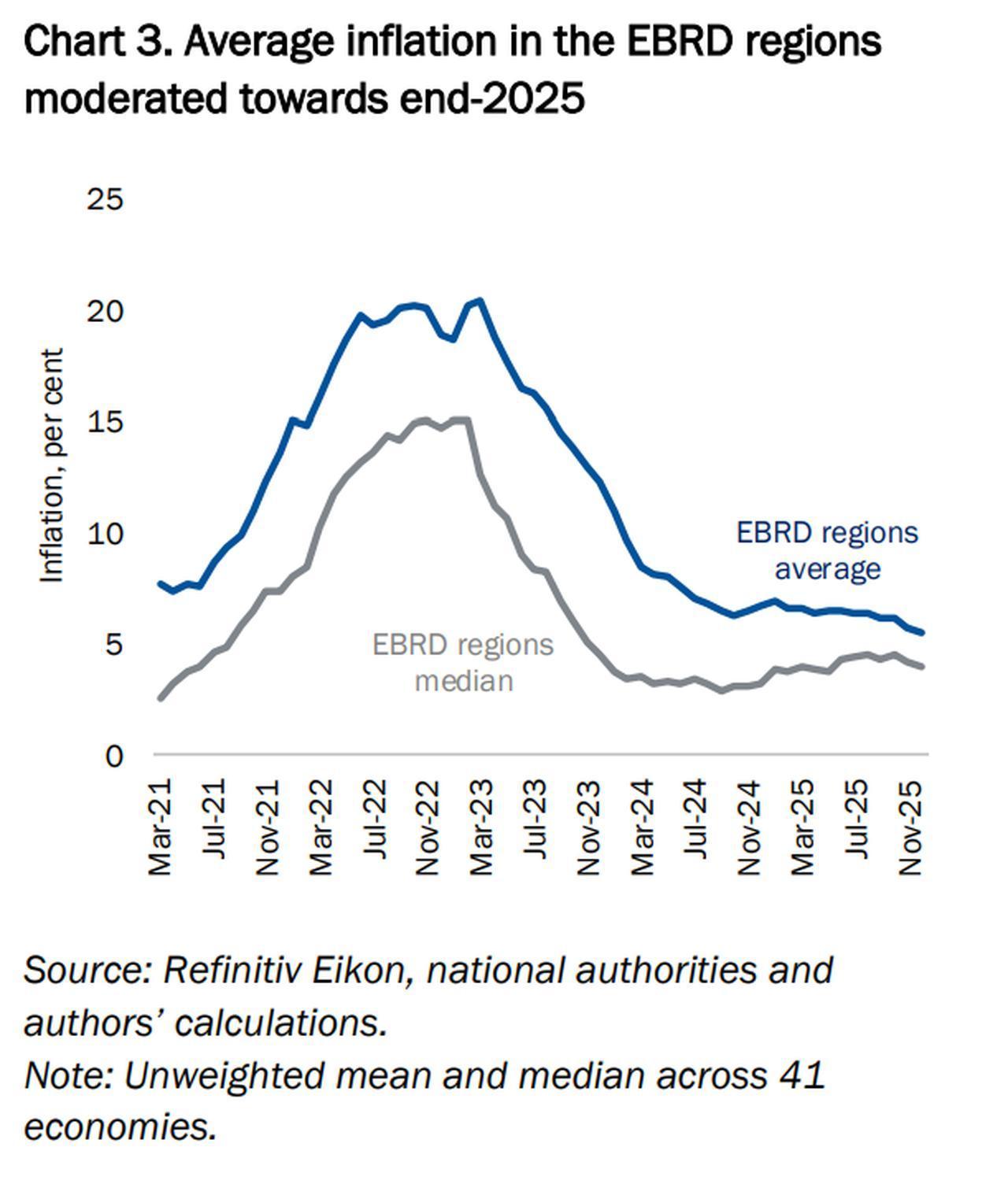
Inflation across EBRD regions moderated to 5.5% in December 2025, supported by slower wage increases and financing conditions characterized by positive real interest rates, even as fiscal policies remained expansionary in some economies.
EBRD Chief Economist Beata Javorcik said economies across the bank’s regions had demonstrated adaptability amid geopolitical and trade-related uncertainty. She noted supply chains were evolving and creating diversification opportunities, particularly in emerging sectors such as artificial intelligence, while maintaining macroeconomic stability would remain essential to sustaining growth momentum.
The report also drew attention to broader shifts in global trade patterns, noting that exports from several EBRD economies to the United States increased in categories such as computers, phones, and precious metals as supply chains adjusted to geopolitical developments.


 Set as preferred source
 Set as preferred source


 1 min read
 1 min read