Newsletters


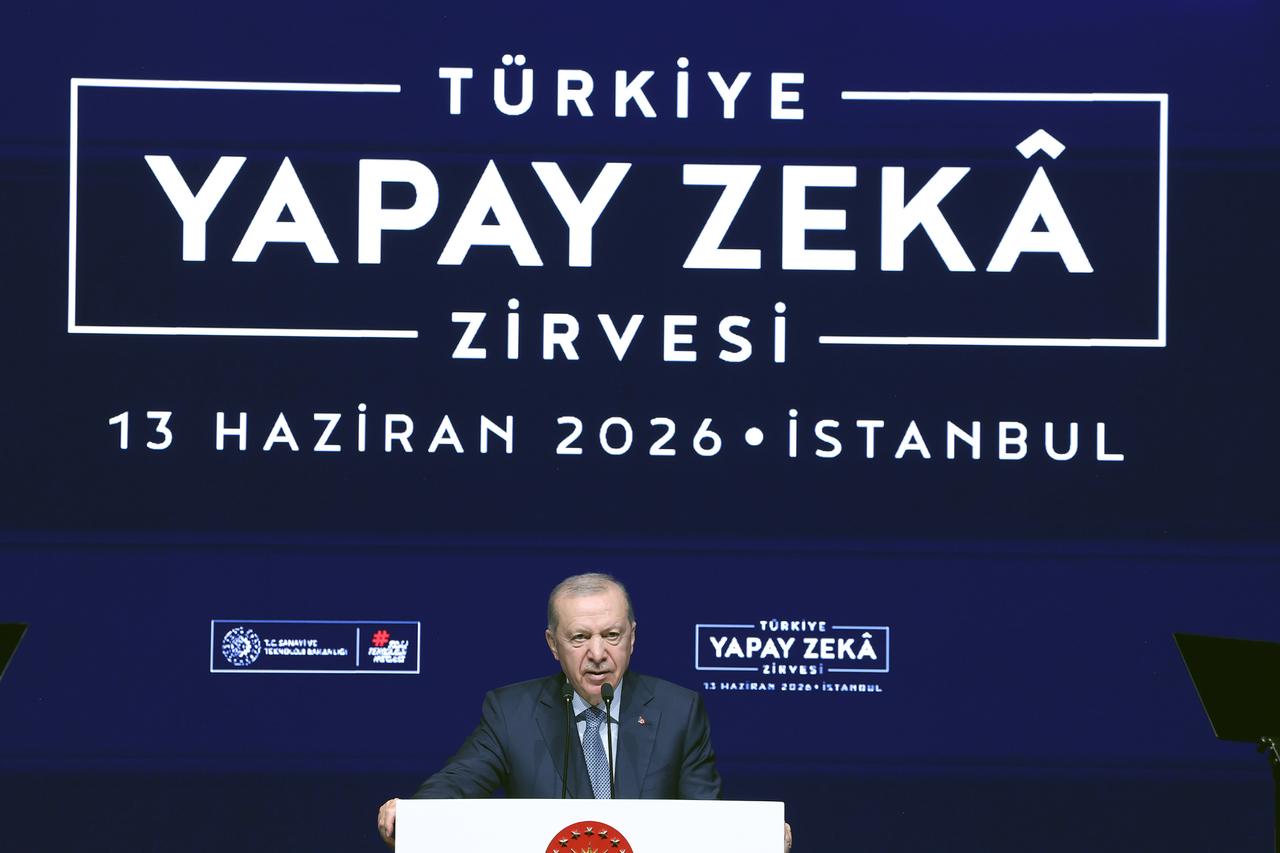


President Recep Tayyip Erdogan announced a sweeping national artificial intelligence strategy on Saturday, committing at least $10 billion in largely private-sector investment and positioning Türkiye as a contender in the global race for digital supremacy.
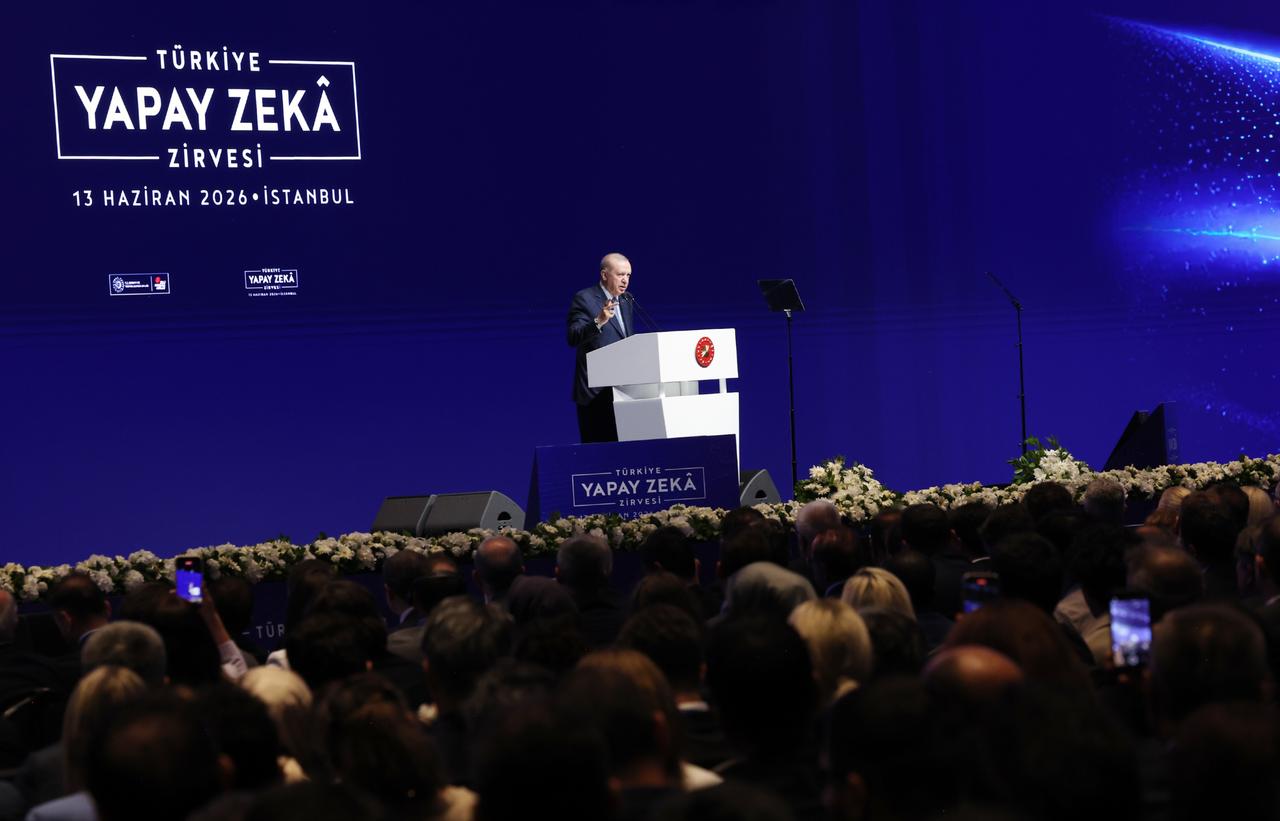
Speaking at the Türkiye Artificial Intelligence Summit at Tersane Istanbul, a historic shipyard complex whose origins trace back to the reign of Ottoman Sultan Mehmed II, Erdogan unveiled the country's AI Action Plan for 2026-2030, a four-pillar framework built around the principles of discovery, use, production, and governance. The setting was deliberate. A venue rooted in centuries of statecraft and maritime power served as the backdrop for a plan Erdogan cast as equally consequential for the nation's future. "We will carry Türkiye among the leading countries of the artificial intelligence age," he said.

The centrepiece of the plan is an infrastructure push to scale Türkiye's installed data center capacity to at least one gigawatt by 2030, from a base that lags well behind major technology powers.
The $10 billion mobilization, drawn primarily from the private sector, is intended to fund data centers, cloud computing, and AI infrastructure. Legal regulations will be introduced requiring data centers to meet international standards and energy efficiency requirements, Erdogan said.
At least two percent of public investment programs will be directed to AI projects, with the government acting as an early adopter and reference customer for domestic AI solutions.
Small and medium-sized enterprises, particularly in health, energy, and smart manufacturing, will receive support through a new AI voucher program. E-government will also be treated as a front-line showcase, enabling citizens to experience AI-supported public services directly.
The plan sets firm numerical targets for human capital. Türkiye will produce 10,000 advanced AI specialists and 100,000 AI application professionals under the new framework.
Beyond the specialist pipeline, the government will roll out AI literacy workshops across all 81 of the country's provinces, aiming to train five million citizens within two years. "We will launch the National Artificial Intelligence Literacy Program to ensure that people of all ages understand artificial intelligence correctly and use it safely," Erdogan said.
To underpin research and commercial applications, Türkiye will establish a National Data Library offering at least 2,000 public datasets drawn from health, agriculture, defense, and e-commerce. A new regulatory framework, built on a proportional and risk-based approach, is designed to protect user rights while providing the predictability that investors require.
Erdogan pointed to a cluster of domestic large language model projects already underway as evidence that Türkiye is moving in that direction. He cited TUBITAK's Bilge model, an initiative by state-backed scientific research body TUBITAK; the T3 AI model, developed jointly by the T3 Foundation and Baykar, the drone manufacturer that last year launched a beta version of its open-source model on the TEKNOFEST social platform; and HAVELSAN's nine-billion-parameter model running on the MAIN platform, a defense-sector enterprise AI system designed to operate in secure, closed environments.
Türkiye, Erdogan argued, had been building toward this moment for more than two decades. He cited a national innovation base comprising over 1,700 research, development, and design centers, 114 technoparks, and more than 13,000 technology companies accumulated over 23 years.
He also listed recent milestones in digital independence, including the commercial launch of 5G services on March 31, the creation of a Cybersecurity Presidency, and the 2024 deployment of Turksat 6A, the country's first domestically produced communications satellite, which made Türkiye one of eleven countries capable of building its own satellite.
Erdogan said political, military, and economic power can no longer be separated from digital sovereignty, describing digital capacity as a force multiplier in contemporary statecraft.
On the governance and diplomacy front, Istanbul will serve as Türkiye's international AI showcase and investment hub, with Terminal Istanbul designated as a venue for entrepreneurs and global investors.
Erdogan said Türkiye intends to take an active role in shaping human-centered AI governance standards at the OECD, the G20, the United Nations, and other multilateral platforms.
Perhaps the most ambitious multilateral dimension of the plan is a proposal to develop a joint large language model spanning the Turkic language family in cooperation with the Organization of Turkic States, an intergovernmental body whose members include Azerbaijan, Kazakhstan, Kyrgyzstan, and Uzbekistan.
The proposed model would cover the three major branches of the Turkic linguistic tree, the Oghuz group, which includes Turkish, Azerbaijani, and Turkmen; the Kipchak group, encompassing Kazakh and Kyrgyz; and the Karluk group, which includes Uzbek.
Such a model, if realized, would come as one of the few multilateral AI language projects organized along ethno-linguistic rather than national lines.


 Set as preferred source
 Set as preferred source


 1 min read


 1 min read