Newsletters




President Recep Tayyip Erdogan said Wednesday that strategic cooperation between Türkiye and the United States is expanding across every field, urging American businesses to translate political alignment between Ankara and Washington into stronger trade and investment ties.
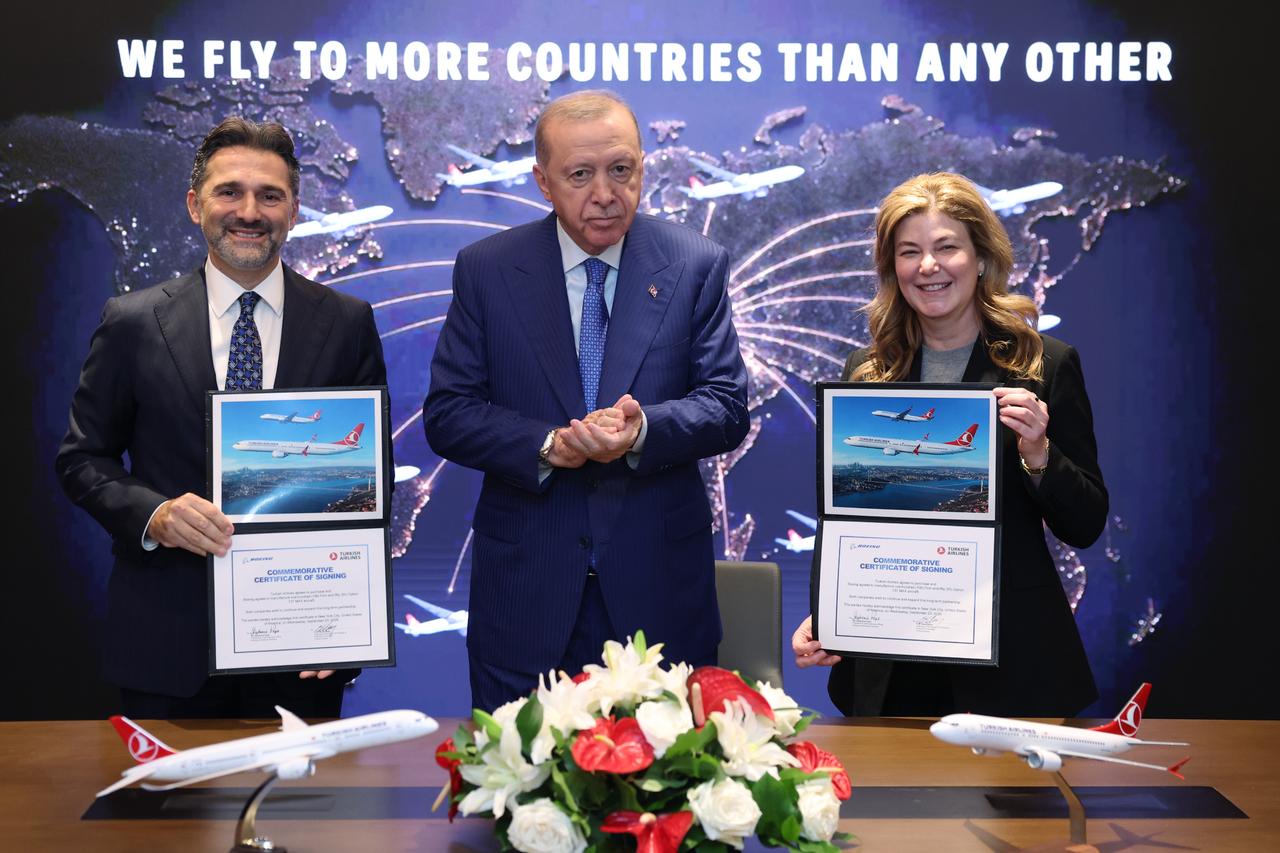
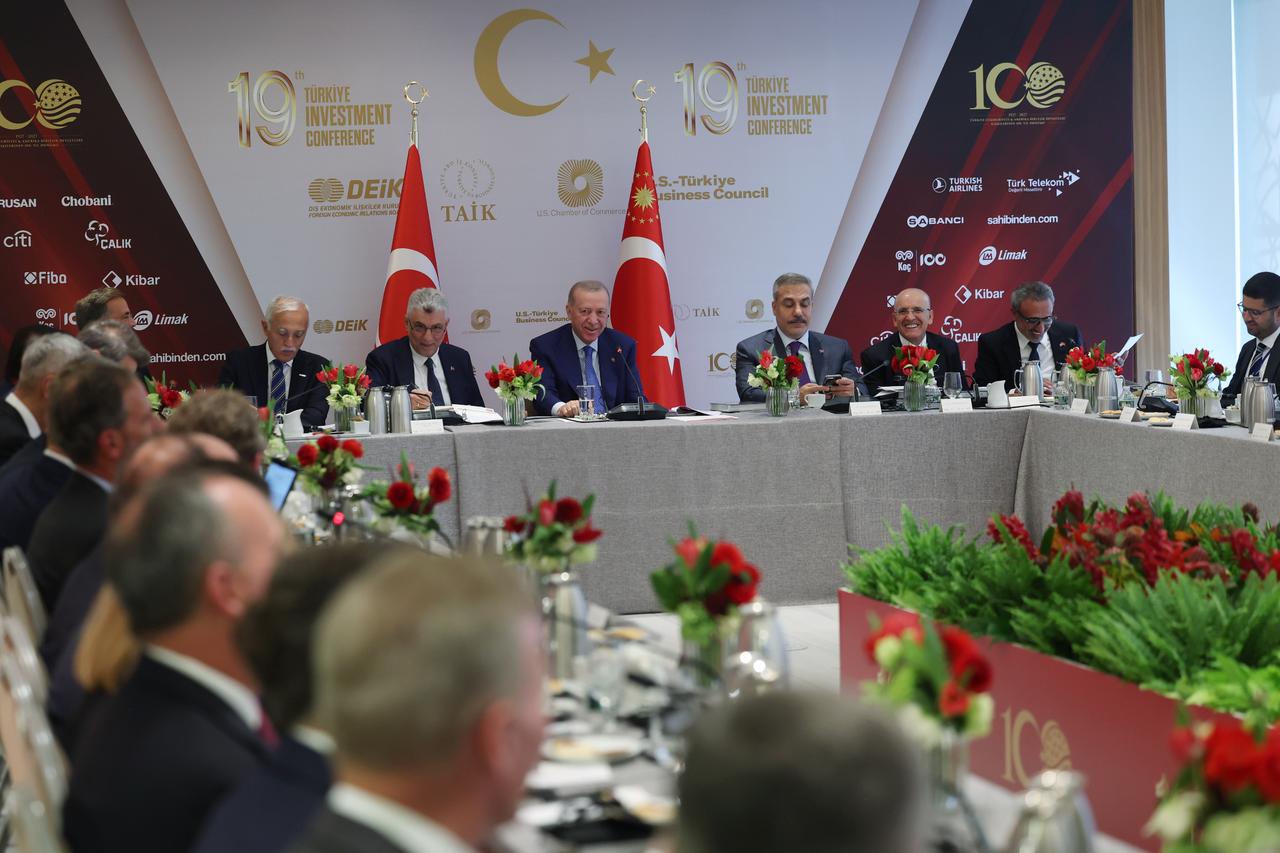
Speaking at a Türkiye-US Business Council meeting at Turkish House in New York, Erdogan said Türkiye had recently concluded major agreements with the United States in energy, aviation and other sectors, and thanked the American Chamber of Commerce, business councils and the Foreign Economic Relations Board, known as DEIK, for organizing the event.
"Our strategic cooperation with the US is developing in every area," Erdogan told the gathering of businesspeople. "We want to reflect the harmony we have achieved in our political relations in our economic and trade relations as well."
Erdogan said the United States has become Türkiye's leading supplier of liquefied natural gas, positioning Türkiye among the top European countries relying on American energy resources. He said Ankara wants to broaden that cooperation across the energy sector, including nuclear power.
The president argued that the two countries' economic relationship should not be measured by trade figures alone, saying that as the global economic order is reshaped, a new strategic economic cooperation model is needed between Türkiye and the United States.
Responding to questions about Türkiye's economic program, Erdogan said it rests on four pillars: price stability, fiscal discipline, a sustainable external balance and structural transformation, and that the country had made progress on all four over the past year despite regional wars.
He said core goods inflation had fallen to its lowest level since 2020 and rent inflation to its lowest in four years. Without the direct and indirect effects of the war, he said, Türkiye would have closed 2026 with inflation in the low 20% range; under current conditions, the government expects to end the year at around 28%, with 2027 expected to bring stronger disinflation.
On the budget, Erdogan said Türkiye had introduced tax cuts to shield citizens and businesses from rising fuel prices while still outperforming its fiscal targets, projecting a budget deficit equivalent to 3.1% of gross domestic product this year, against an average approaching 6% in comparable economies.
He put Türkiye's public debt at below 22% of GDP, compared with roughly 78% on average across developing countries, and said the current-account deficit and external debt indicators had stayed below their 20-year averages despite higher energy prices.
Erdogan said productivity was the central challenge and that structural transformation had been placed at the heart of the economic program. He said Türkiye is pursuing what he called an ambitious green transformation agenda, noting that Antalya is set to host the COP31 climate conference in November.
The president said Türkiye is applying targeted, selective policies to raise value added in industry, accelerating infrastructure investment in artificial intelligence and digital transformation, and offering incentives to healthcare investors through a new industrial zone in Ankara.
He also linked economic goals to what he described as Türkiye's push toward becoming "terror-free" in order to unlock regional potential, saying the country is shifting from merely reacting to shocks toward building resilience, productivity and economic security.
Erdogan said the region is heading toward five major economic and strategic shifts as conflicts subside, with Türkiye positioned to play a central role. He said global supply chains are being reshaped as companies weigh reliability alongside cost, a trend he said benefits Türkiye's industrial base and its trade links with Europe.
He said energy routes are also being redrawn, pointing to Türkiye's role in the Baku-Tbilisi-Ceyhan pipeline and the Trans-Anatolian Natural Gas Pipeline, known as TANAP, two existing corridors that carry Caspian oil and gas to European markets via Turkish territory.
Erdogan also cited new trade corridors taking shape, including the Middle Corridor linking Asia and Europe and the Development Road connecting the Gulf to Europe through Türkiye.
Erdogan said anticipated reconstruction of roads, ports, power plants, housing and factories across the region would create opportunities for Turkish companies, particularly in construction, and pointed to the growing importance of defense and advanced technology, saying Türkiye's NATO-standard defense industry has reached the capacity to contribute to the supply security of its allies.


 Set as preferred source
 Set as preferred source


 1 min read
 1 min read