Newsletters




The European Central Bank (ECB) raised its three key interest rates by 25 basis points on Thursday, delivering its second-rate hike of 2026 after a similar increase in June as the ongoing conflict in the Middle East keeps inflation pressures elevated.
The increase takes the deposit facility rate to 2.50%, the main refinancing operations rate to 2.65%, and the marginal lending facility rate to 2.90%, effective Sept. 16, 2026.
"The conflict in the Middle East continues to generate inflation pressures, and inflation is set to remain well above target for an extended period," the bank said in its statement, adding that the decision reflects its commitment to bringing inflation back to its 2% target in the medium term.
The ECB’s new staff projections put headline inflation at an average of 3.0% in 2026, 2.5% in 2027, and 2.1% in 2028. For inflation excluding energy and food, the baseline projection stands at 2.5% in 2026, 2.6% in 2027, and 2.3% in 2028.
Compared with the June projections, the outlook for headline inflation in 2026 is unchanged, while forecasts for 2027 and 2028 have been revised higher. That means price growth is now expected to remain above the ECB’s 2% target throughout the projection period.
The central bank has also raised its growth forecasts for the euro area. It now expects the economy to expand 0.9% in 2026, 1.4% in 2027, and 1.5% in 2028. The upgrades for 2026 and 2027 mainly reflect what the ECB describes as greater-than-expected resilience in the euro area economy.
"The outlook remains highly uncertain, with risks to the upside for inflation and to the downside for economic growth," the bank said.
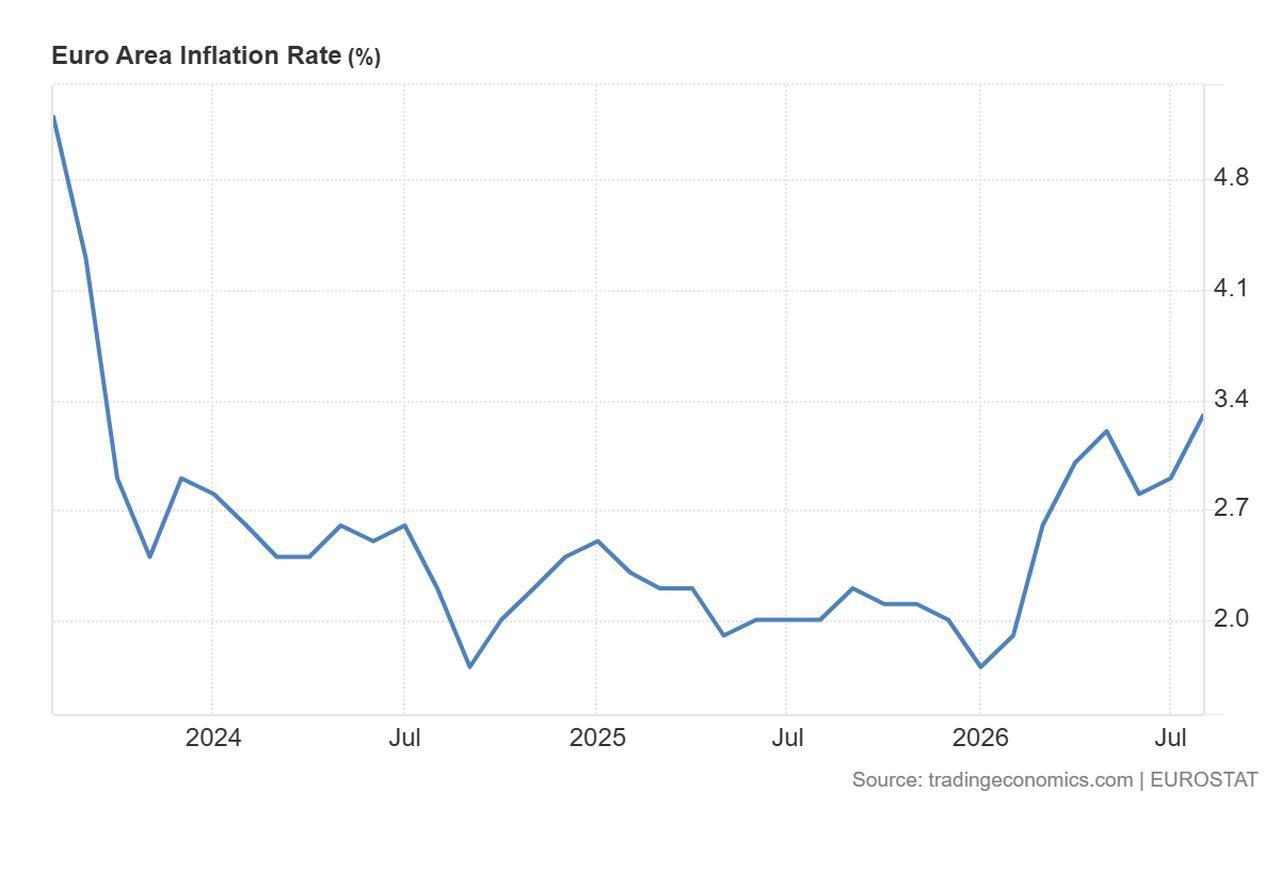

The ECB’s latest move comes after euro area inflation rose to 3.3% in August, its highest level in three years, from 2.9% in July, with the increase driven largely by a sharp rise in energy prices.
Energy costs rose 2.9% month on month in August, pushing their annual increase to 14.3%, up from 10.3% in July.
The broader inflation picture was less severe. Core inflation, which excludes energy, food, alcohol, and tobacco, eased to 2.4% from 2.5%, while services inflation fell to 3% from 3.3%.
The jump in headline inflation had already fueled expectations for another ECB hike before Thursday’s decision. The bank’s move now delivers that increase, following its June hike, which was its first rate increase in nearly three years.


 Set as preferred source
 Set as preferred source


 1 min read

 1 min read