Newsletters




A French appeals court has suspended enforcement of a $383 million arbitration award requiring Georgia to compensate Turkish contractor ENKA for losses related to the canceled Namakhvani hydropower project, delaying payment until the country’s legal challenge reaches a final outcome.
The Paris Court of Appeal ruled on Dec. 9, 2025, that the compensation granted under an International Chamber of Commerce (ICC) arbitration decision cannot be enforced immediately while annulment proceedings remain ongoing. The court also declined ENKA’s request to require Georgia to secure the funds in an irrevocable escrow account.
The original arbitration ruling, issued in December 2024, ordered Georgia to pay $383 million in damages. The award accrues interest at a rate based on a U.S. benchmark interest rate plus an additional 4 percentage points, increasing the total amount owed to more than $450 million as of now, according to Georgian news outlet bm.ge.
ENKA sought enforcement of the award in France in early 2025, while Georgia’s Ministry of Justice moved to overturn the arbitration outcome through the French legal system. A French court had already indicated in September 2025 that payment would not be enforced before a final decision, and the December ruling confirmed that position.
Legal representatives for Georgia said enforcing a payment exceeding $400 million before the appeal concludes would expose the country to financial risk.
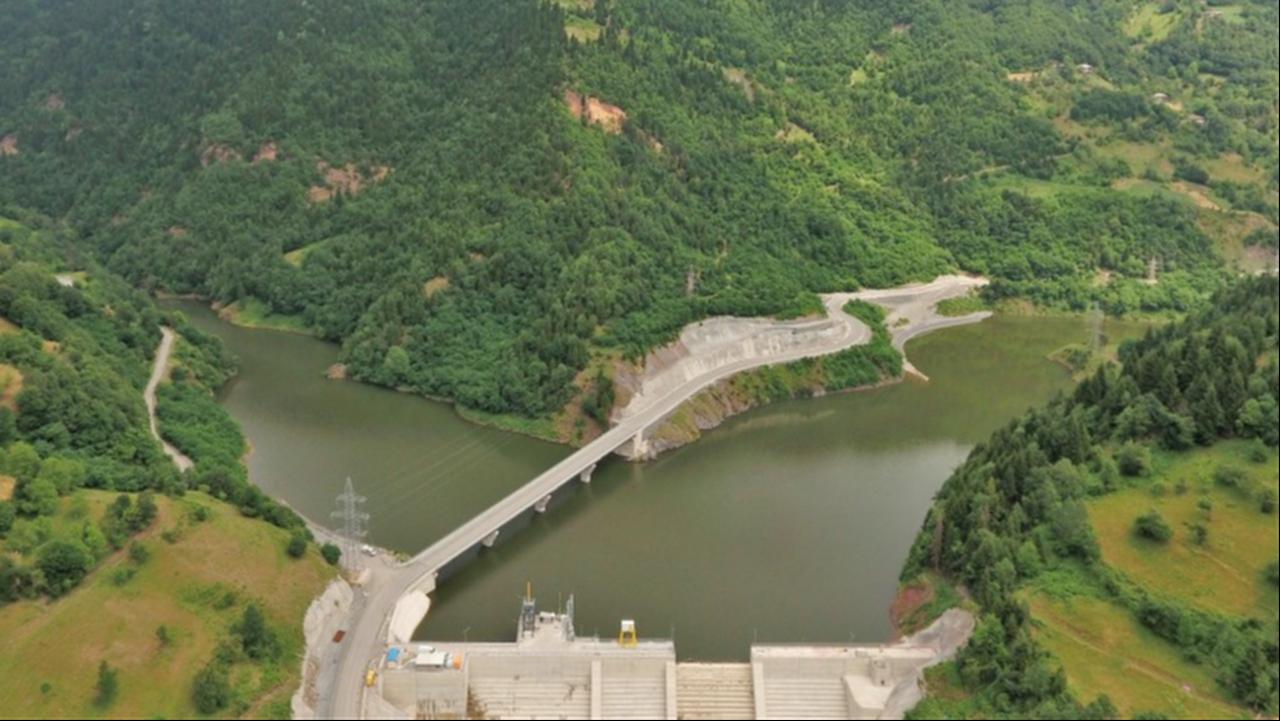

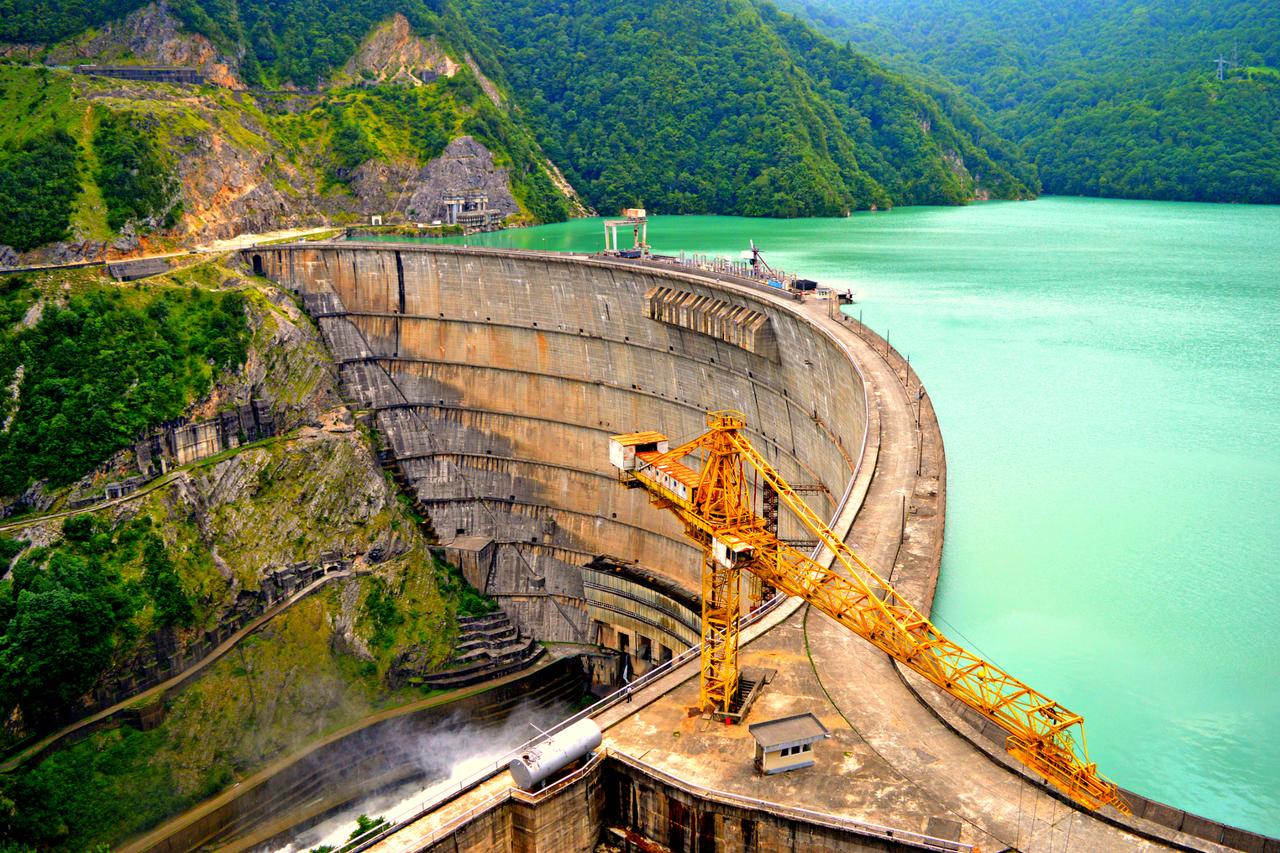
The Namakhvani Hydropower Plant was a planned $800 million hydroelectric project in western Georgia, developed by Türkiye-based ENKA through its subsidiary Enka Renewables under a long-term agreement signed with the Georgian government in April 2019.
Located on the Rioni River near Kutaisi, Georgia’s third-largest city, the project spanned the municipalities of Tskaltubo and Tsageri and was designed as a two-plant cascade combining the 333-megawatt Namakhvani-Joneti facility and the 100-megawatt Tvishi plant. With total installed capacity of 433 megawatts, it was expected to generate 1,500 to 1,514 gigawatt-hours annually, enough to supply roughly 12% of Georgia’s domestic electricity demand.
Structured under a Build-Own-Operate model, the project allowed ENKA to finance, build, and operate the facility long term. The company had already invested up to $100 million in early development, and operations were scheduled to begin in 2025–2026.
The project was canceled in 2021 after months of protests, environmental opposition, and contract disputes, leading to arbitration in October 2021. Then-Prime Minister Irakli Garibashvili said it would not proceed in its existing form, and ENKA later terminated the agreement, citing contract breaches and force majeure linked to prolonged protests and uncertainty.


 Set as preferred source
 Set as preferred source


 1 min read
 1 min read