Newsletters




Rising security risks along key Middle Eastern transport corridors are pushing global freight operators to reroute shipments through Türkiye, reshaping regional logistics networks as the Iran conflict disrupts traditional supply routes across the Gulf, sector representatives said.
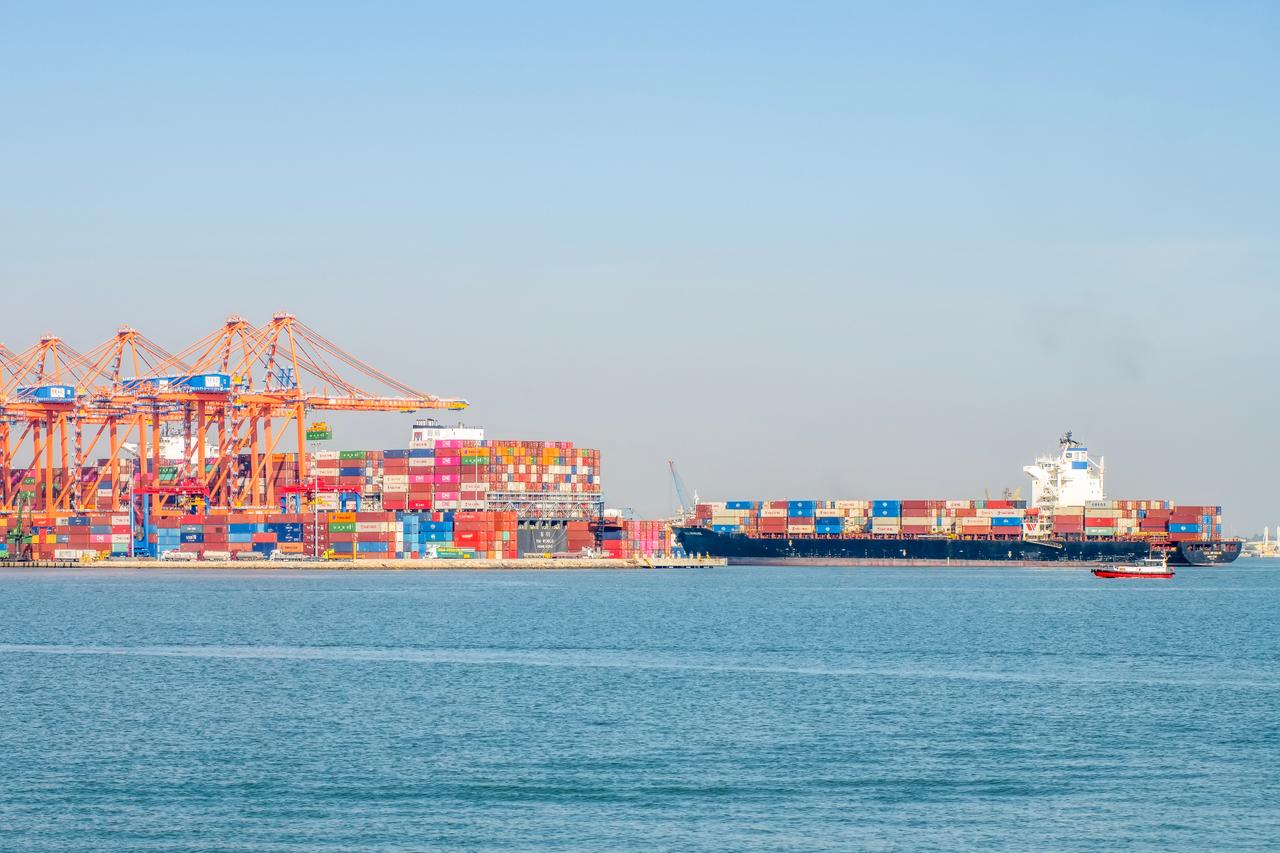
Container traffic bound for Iraq is increasingly moving through Turkish ports as shipping companies avoid direct calls to the Gulf due to security concerns around the Strait of Hormuz. Despite U.S.-led efforts to provide insurance guarantees for vessels after maritime insurers withdrew war-risk coverage, the disruption continues to weigh on the strait, which has effectively been closed to most commercial traffic.
One example is a logistics model implemented by Mediterranean Shipping Company (MSC), one of the world’s largest container carriers. Under this approach, cargo departing from Asia is first delivered to ports in Türkiye before continuing by road to Iraqi cities including Erbil, Mosul and Baghdad.
"All lines cannot call at Basra ports because of the problems in the Strait of Hormuz. For this reason, the corridor built through the ports of Mersin and Iskenderun comes into play," Dilek told business-focused ekonomim.com. He noted that the route itself is not new and has already been operating, adding that recent developments in the region are expected to increase demand for the corridor.
The ports of Mersin and Iskenderun are key logistics gateways on Türkiye’s Mediterranean coast serving trade with the Middle East. Mersin, one of the country’s largest container hubs, has an annual capacity of about 2.6 million TEU (twenty-foot equivalent units, a standard measure equal to one 20-foot shipping container), while the Iskenderun port complex handles roughly around 1 million TEU.


The broader escalation of the Iran conflict in the Middle East is forcing companies to rethink supply chains, with transportation flows increasingly shifting toward land routes.
Aysem Ulusoy, vice president of the Service Exporters Association (SEDEFED), said alternative logistics corridors are being activated quickly as air and sea transport face growing restrictions. Freight passing through Türkiye has increased noticeably as cargo owners seek more reliable transit routes, she added.
"Due to problems in air and sea transportation, cargo has started shifting to road transport. There is serious demand accumulation through Türkiye," Ulusoy noted.
She pointed out that new overland routes are emerging through Syria toward Jordan and Saudi Arabia, extending further to the United Arab Emirates, Qatar and Kuwait. Transit times on these routes currently range between 12 and 14 days.
Ulusoy emphasized that ongoing conflicts in the Middle East are highlighting Türkiye’s stability and logistics capacity for international freight operators. "Under the shadow of conflicts in the Middle East, Türkiye maintains its claim to be a safe and predictable hub for the region with its stability, state capacity and logistics strength," she added.


 Set as preferred source
 Set as preferred source


 2 min read
 1 min read