Newsletters




Global natural gas demand increased by 1.7% in 2025 compared with the previous year, reaching an all-time high of 4.202 trillion cubic meters, according to the “Global Gas Report 2026.”
According to information compiled by Turkish news agency Anadolu from the report, prepared by the International Gas Union (IGU) and Snam, demand, supply, and liquefied natural gas (LNG) trade all reached record levels in the global natural gas market last year.
Global natural gas supply increased by 52 billion cubic meters in 2025 compared with the previous year, reaching an all-time high of 4.147 trillion cubic meters.
North America led the supply increase with a rise of 54 billion cubic meters, followed by the Middle East with 11 billion cubic meters, Asia with 6 billion cubic meters, and South America with 2 billion cubic meters.
Global natural gas demand increased by 69 billion cubic meters, reaching 4.202 trillion cubic meters.
Asia, the Middle East and Europe stood out in the increase.
Natural gas demand rose by 25 billion cubic meters in Asia, 18 billion cubic meters in the Middle East and about 10 billion cubic meters in Europe.
Demand increased by 6 billion cubic meters in Africa, 5 billion cubic meters in North America, 4 billion cubic meters in South America and 3 billion cubic meters in Russia.
Oceania was the only region where demand declined.
By sector, residential and commercial consumption increased by 32 billion cubic meters, recording the highest absolute growth in global natural gas demand.
Cold winter conditions in North America were particularly effective in the increase.

Natural gas demand in Asia increased by 25 billion cubic meters in 2025 compared with the previous year.
The rise in electricity generation and residential and commercial consumption accounted for about 64% of the increase in the region’s total natural gas demand.
A significant portion of the increase took place in East Asia and Southeast Asia.
In Europe, natural gas demand increased by about 10 billion cubic meters, or 2.3%, last year.
Cold winter conditions, especially at the beginning of the year, and low wind power generation during the winter months increased the use of natural gas in electricity generation.
The increase in natural gas demand from electricity generation in Europe was 9 billion cubic meters.
In North America, natural gas demand rose by 5 billion cubic meters.
Residential and commercial consumption in the region increased by 21 billion cubic meters, while industrial consumption rose by 2 billion cubic meters.
Natural gas demand in electricity generation, however, fell by 18 billion cubic meters.
In the Middle East, one of the regions where global natural gas demand growth stood out, consumption increased by 18 billion cubic meters in 2025, rising 2.9% year-on-year.
Natural gas demand in the industrial and electricity sectors was particularly decisive in the region’s growth.
The industrial sector’s natural gas demand rose by 15 billion cubic meters last year, increasing by 9.5%.
Natural gas demand in the electricity sector rose by 11 billion cubic meters, or 4.2%.
Türkiye’s natural gas demand increased by 4 billion cubic meters in 2025 compared with the previous year.

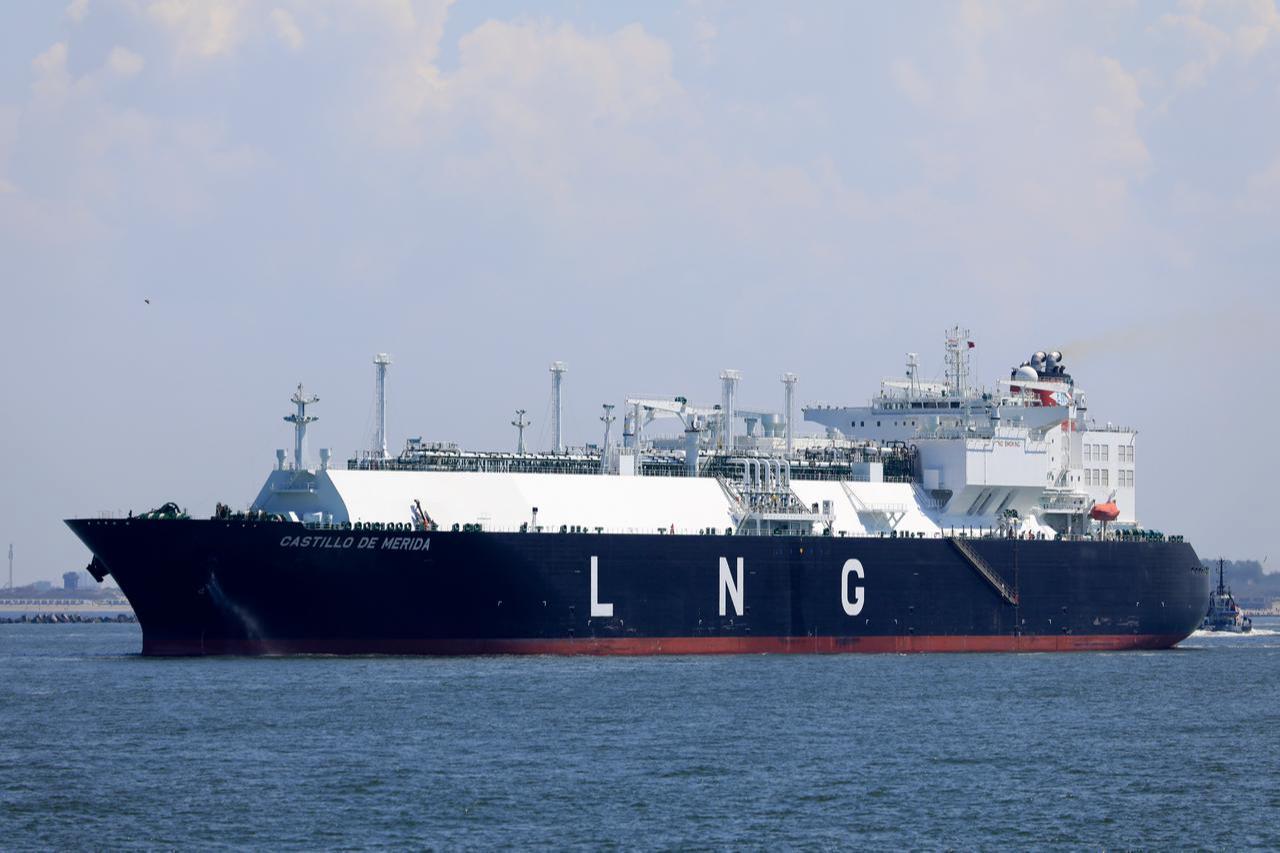
LNG trade also reached an all-time high in the global natural gas market in 2025.
Global LNG trade increased by 43 billion cubic meters compared with the previous year, reaching 580 billion cubic meters.
The report pointed to LNG’s growing role in the global energy system and said countries’ focus on energy supply security had also strengthened.
Although China’s LNG imports decreased by 10 billion cubic meters compared with 2024, it maintained its position as the world’s largest LNG importer.
China was followed by Japan with 91 billion cubic meters and South Korea with 67 billion cubic meters.
Europe’s LNG imports increased by 32 billion cubic meters in 2025.
The report said this reflected Europe’s structural shift away from pipeline gas supplied by Russia and its increasing turn toward LNG.
More than 50% of Europe’s LNG imports were met by the United States.
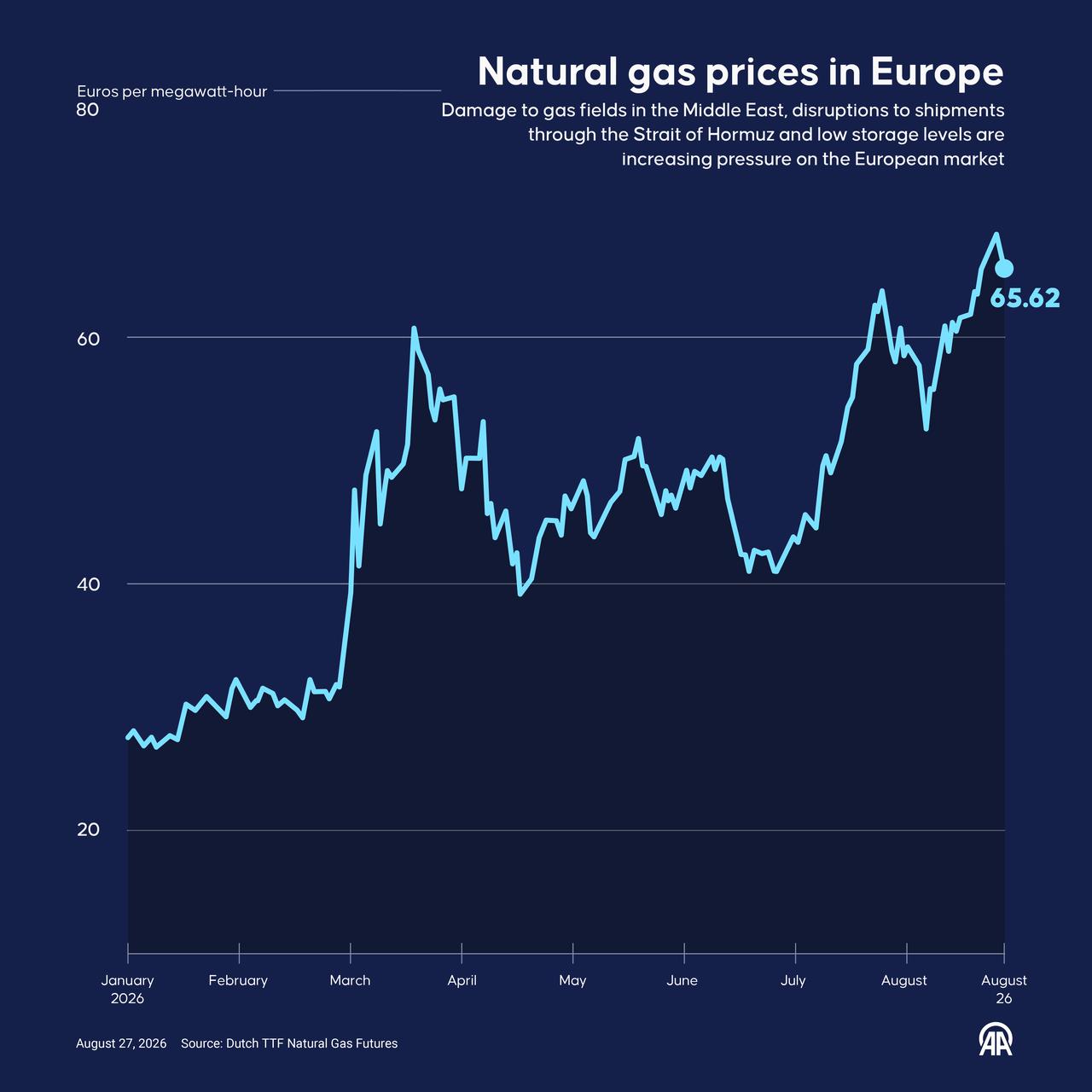
According to the report, global natural gas demand, which reached an all-time high in 2025, is projected to decrease by 7 billion cubic meters in 2026.
The decline was said to be driven by the Strait of Hormuz crisis reducing natural gas demand in the first half of 2026, particularly in price-sensitive markets such as developing Asia and Africa.
The report also included Türkiye through digital technologies used in its natural gas infrastructure.
It said digitalization in the natural gas and LNG sector has accelerated significantly in recent years.
Different applications, ranging from artificial intelligence-supported systems to digital twins, predictive maintenance, and remote operation technologies, are being used at various stages of the sector.
Digital twin technology is used in different areas, from the development of natural gas processing facilities to the management of large natural gas transmission networks.
Türkiye’s Trans-Anatolian Natural Gas Pipeline (TANAP) was shown as one of the current applications of this technology.
With digital twin technology used at TANAP, the pipeline’s operations and integrity under different operating scenarios are evaluated.
The report said the application supports timely and data-based risk management.


 Set as preferred source
 Set as preferred source


 2 min read

 1 min read