Newsletters





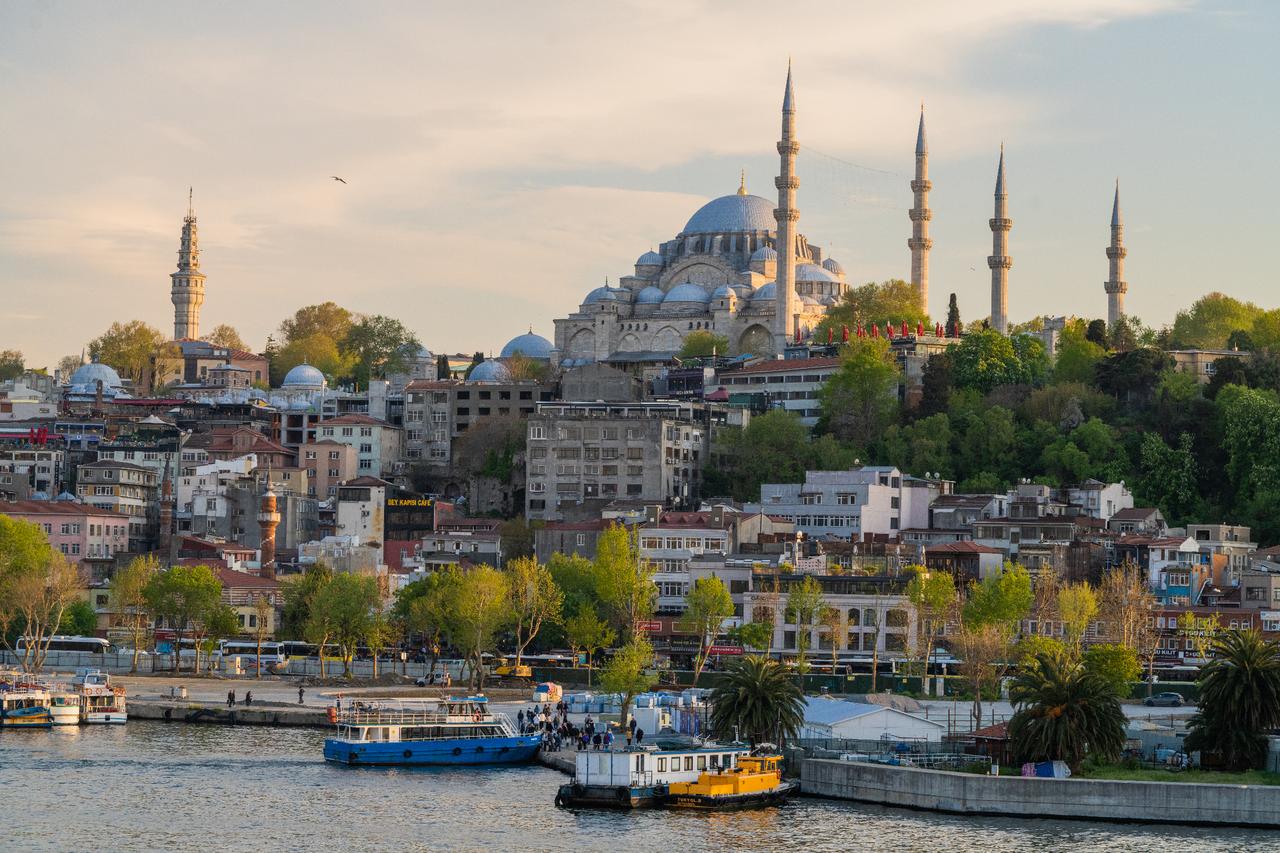
Europe's largest city, Istanbul, is among the world's costliest places to buy both a Volkswagen Golf and Apple's latest iPhone, Deutsche Bank's Mapping the World's Prices 2026 shows, as high taxes and the Turkish lira's long-term decline continue to drive up consumer costs.
Türkiye tops the study's ranking of 41 economies for after-tax iPhone prices, with the iPhone 17 Pro (256 GB) selling for $2,592, about 2.2 times the U.S. price.
Istanbul also comes in fourth among 69 global cities for the cost of a new Volkswagen Golf 1.5 at $49,121, roughly 39% more than in New York and behind only Singapore, Tel Aviv and Copenhagen.
While Istanbul ranks near the top for the cost of imported consumer goods, it trails most major financial centers when it comes to incomes.
Average monthly net salaries in Istanbul reached $1,173, ranking the city 56th globally and amounting to about 21% of New York's $5,654. Even so, dollar-denominated wages have climbed 133.9% since 2019. Istanbul also ranked 56th for disposable income after housing costs, leaving households with an estimated $377 a month after rent, compared with $10,482 in Zurich.
Zurich led the global salary rankings at $8,363 a month, followed by San Francisco ($8,298), Geneva ($7,487), Boston ($7,214) and New York ($5,654).
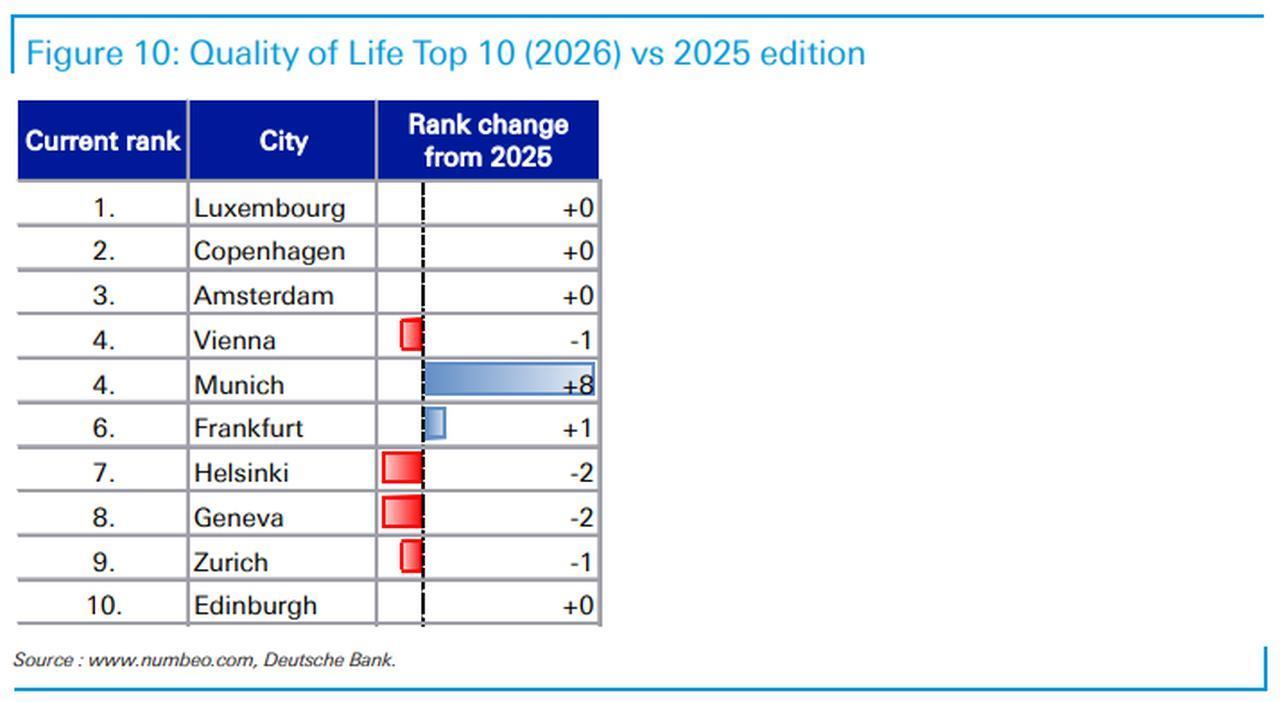
Luxembourg retained the highest quality-of-life ranking, ahead of Copenhagen, Amsterdam, Munich and Vienna, while Paris (43rd), New York (46th), London (47th) and Hong Kong (55th) ranked lower because of expensive housing, longer commutes and higher pollution levels.

Deutsche Bank said currency movements have become the biggest driver of changes in global price rankings over the past decade, with inflation, taxes and exchange rates increasingly shaping what consumers pay across markets.
The report pointed to the Turkish lira's long-term depreciation as a major reason imported goods have become significantly more expensive in Türkiye, helping push the country to the top of its iPhone price rankings.
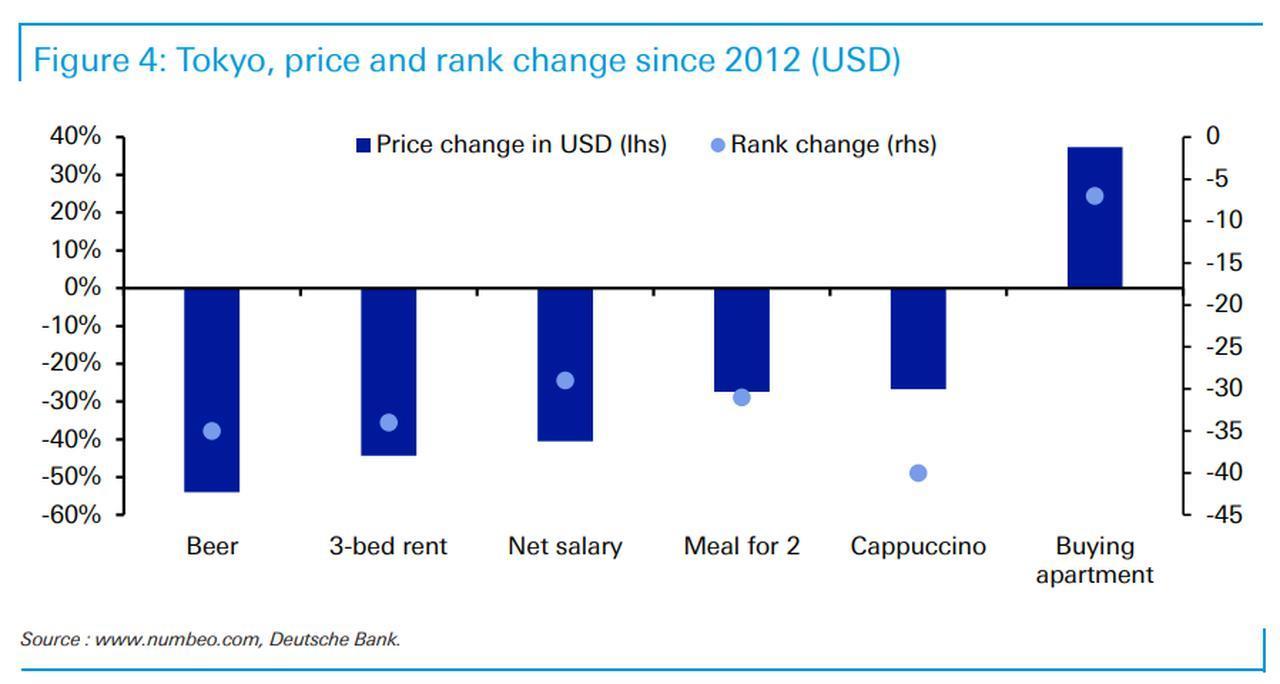
By contrast, Japan has undergone what Deutsche Bank calls a "remarkable structural repricing," with a weaker yen and relatively low inflation turning Tokyo from one of the world's most expensive cities into one of the cheapest among developed economies.
Japan is now the world's cheapest place to buy an iPhone after taxes, while meals, rents and property have all become much cheaper in U.S. dollar terms than a decade ago. South Korea is the only other economy where an iPhone costs less than in the U.S., the report noted.
Beyond individual products, Zurich retained its position as the world's most expensive city overall, followed by Geneva, Tel Aviv, New York and San Francisco.
New York also remained the world's most expensive city for both one- and three-bedroom apartment rents, while U.S. cities continued to dominate salary rankings despite signs that consumer prices have begun to stabilize.
Elsewhere, Tel Aviv climbed to third in the overall city rankings and now tops the world for McDonald's prices while placing among the top five for utilities, gasoline, cars, clothing and dining. Deutsche Bank attributed the surge to a stronger shekel, resilient technology and defense sectors, regional shortages and the impact of regional conflict.
The report also highlighted Central Europe's rapid convergence with Western Europe. Prague, Warsaw and Budapest are no longer the low-cost destinations they once were as stronger wage growth, tighter labor markets, EU-related investment, post-pandemic inflation and rising property prices pushed costs steadily higher.
Salaries in Budapest have surged 161.1% over the past decade, followed by Prague (121%) and Warsaw (120.2%), among the fastest increases in the survey.


 Set as preferred source
 Set as preferred source


 1 min read
 1 min read