Newsletters





U.S.-based investment bank JPMorgan closed a Turkish lira overnight indexed swap (OIS) position after slowing inflation in July improved sentiment toward lower short-term interest rates.
The strategy generated a net return of 242 basis points, the lender said in a note, although it warned that lingering energy price risks are likely to keep the Central Bank of the Republic of Türkiye (CBRT) cautious about the pace of interest rate cuts over the medium term.
JPMorgan opened the position on July 16, betting that cooling inflation would allow the Central Bank of the Republic of Türkiye (CBRT) to begin easing monetary policy, driving down short-term interest rate expectations more quickly than medium-term ones.
The bank implemented the strategy by taking opposite positions in December 2026 and 2y1y overnight indexed swap (OIS) contracts.
The strategy, however, ran into headwinds as escalating tensions in the Middle East and rising energy prices fueled concerns that inflation could remain elevated for longer. That pushed rates in the 2y1y OIS segment up by about 200 basis points from mid-July, reducing the likelihood of faster monetary easing.
Even after oil prices eased, the gap between the two parts of the curve failed to narrow as expected. With the position already in profit, JPMorgan decided to lock in gains, unwinding the trade at -300 basis points after entering at -520 basis points.
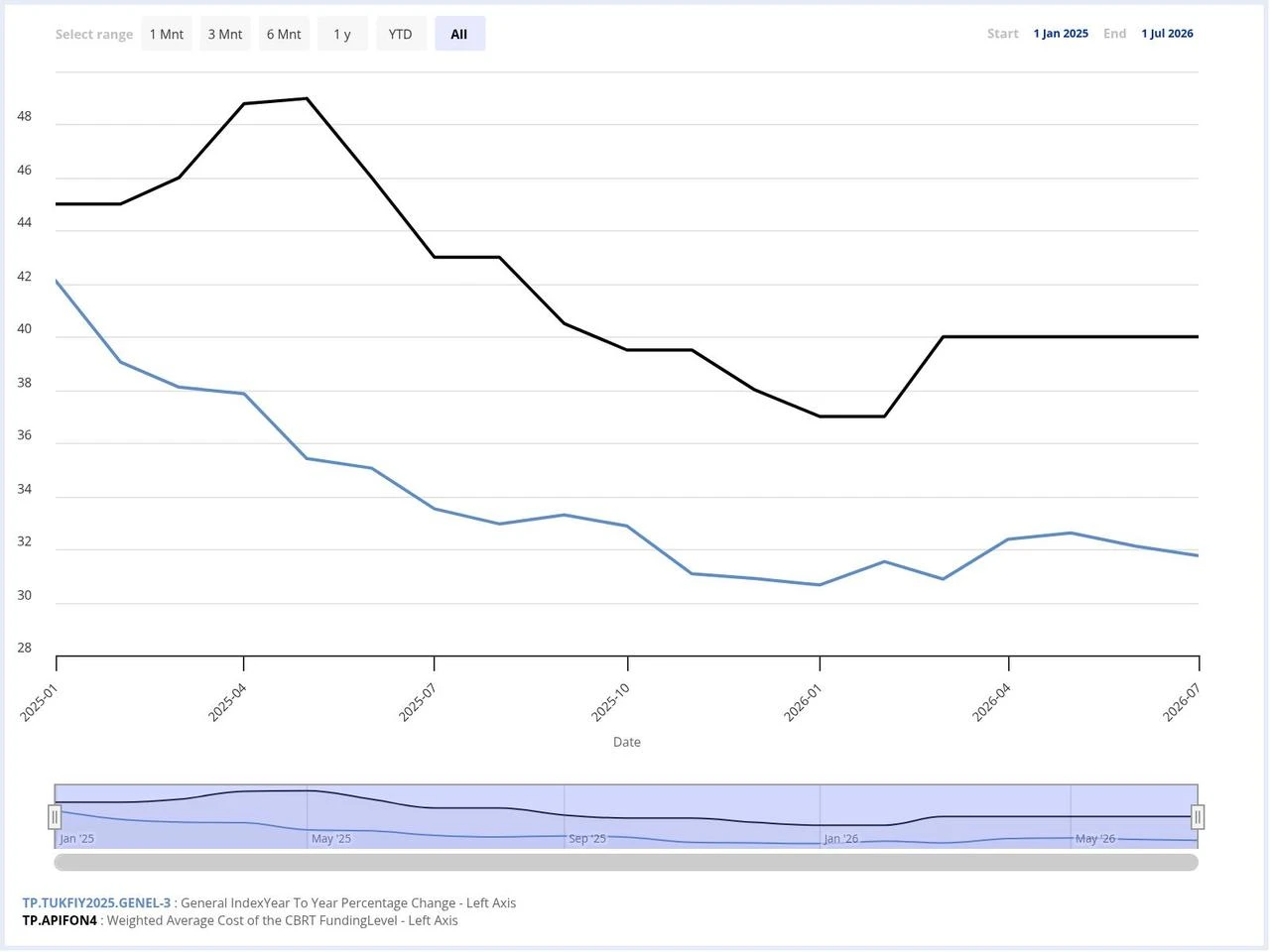

Türkiye's annual consumer inflation slowed to 31.8% in July from 32.1% in June, while monthly inflation accelerated to 1.8%, coming in slightly below market expectations.
The figures reinforced expectations that the CBRT could effectively resume its easing cycle by returning funding to the 37% policy rate, though renewed energy price risks and geopolitical uncertainty are expected to keep the pace of subsequent rate cuts gradual.
Despite keeping its benchmark policy rate at 37%, the CBRT has funded the market at around 40% through its overnight lending rate since early March, effectively maintaining tighter monetary conditions.


 Set as preferred source
 Set as preferred source


 1 min read

 1 min read