Newsletters





Several global banks reaffirmed positive views on the Turkish lira in recent research as the Central Bank of the Republic of Türkiye (CBRT) signaled it would take a measured approach to any shift in monetary policy.
Their outlooks come as policymakers weigh when to begin easing monetary policy, with forecasts ranging from cuts later this year to no change through the end of 2026.
U.S.-based JPMorgan left its outlook for the Turkish lira unchanged, despite growing pressure on emerging-market currencies from stronger demand for the U.S. dollar and rising global risk aversion.
The bank noted that movements in the dollar/TL exchange rate have remained broadly in line with its projected path of gradual depreciation, adding that foreign exchange sales by state-owned banks have helped contain volatility.
U.K-based Barclays expects the CBRT to lower the policy rate by 300 basis points this year to around 34%, citing easing inflation and lower oil prices following the de-escalation of tensions between the U.S. and Iran. It also maintained that the current exchange-rate policy could remain sustainable as long as oil prices continue to decline and domestic demand for foreign currency remains subdued.
Lower policy rates are expected to support short-term government bonds, although Barclays identified global oil prices and the stability of financing Türkiye's current account deficit as the main risks to its outlook.
The bank expects the current account balance to improve by November 2026, largely because of seasonal factors. However, if energy prices remain elevated, it warned that the deficit could widen significantly between November 2026 and April 2027.
Both JPMorgan and Barclays continue to base their core forecasts on presidential and parliamentary elections taking place in late 2027, although Barclays noted that its confidence in a November 2027 election has weakened compared with three months ago.

French lender Societe Generale expects the Turkish lira to outperform levels currently implied by forward contracts, arguing that seasonal foreign currency inflows, persistent real yields and a cautious monetary policy path should continue to support the currency.
The bank noted that Türkiye is entering the busiest period of the tourism season, when service exports typically generate strong foreign currency inflows that help ease pressure on the current account created by high energy import costs.
At the same time, it expects sticky inflation to keep the CBRT from moving quickly on interest rate cuts, with the easing cycle likely to begin only in the autumn.
Reflecting that view, the bank recommended a three-month short position on the U.S. dollar against the Turkish lira, targeting a return of 4.5%. While forward markets imply USD/TRY will climb above 50 by September, Societe Generale expects the pair to stabilize around 48 over the same period.
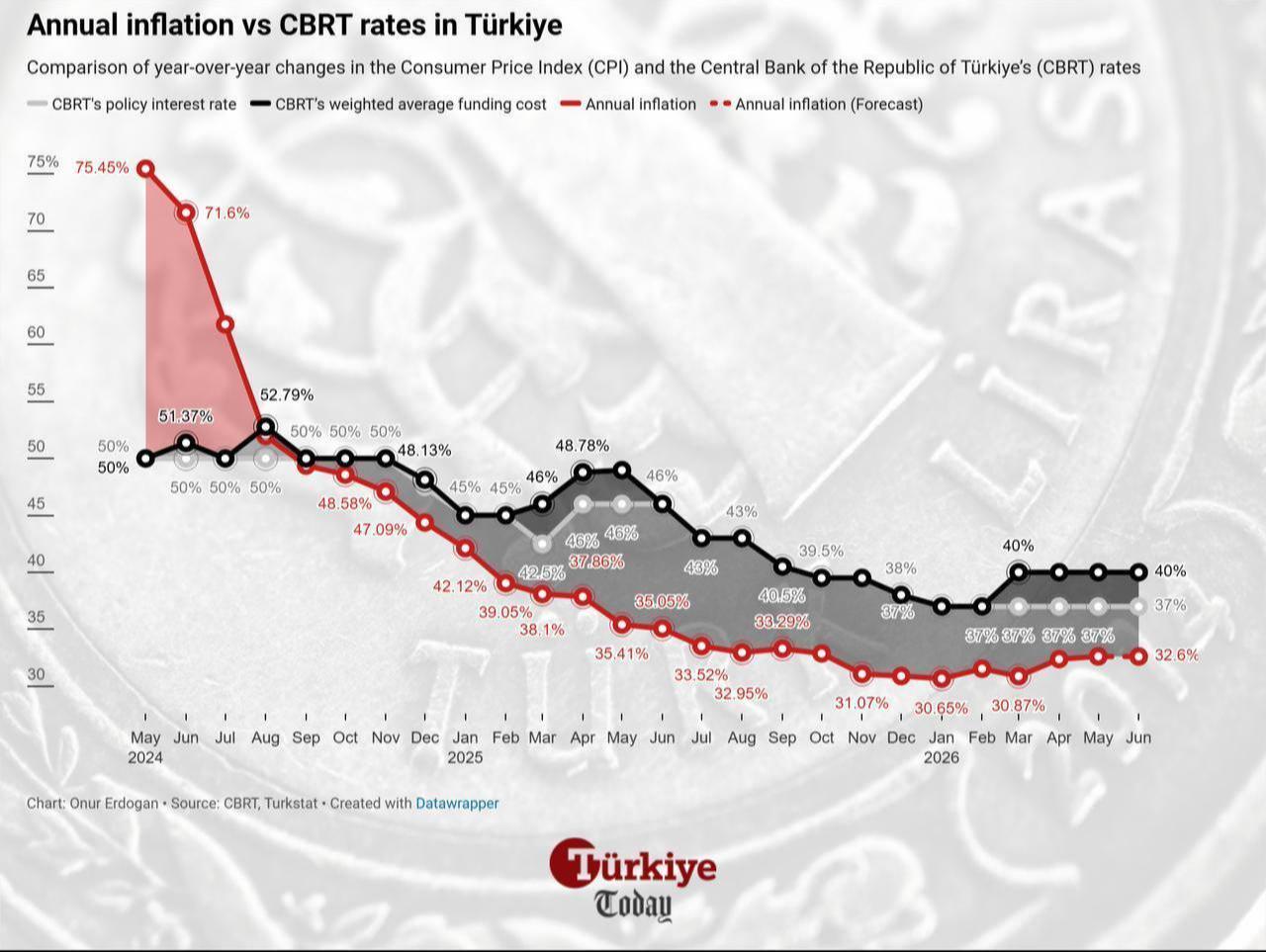
Unlike Barclays and Societe Generale, Garanti BBVA Yatirim does not expect the CBRT to begin cutting interest rates this year. The investment arm of the local lender forecasts the policy rate will remain at 37% through the end of 2026, with the average funding cost gradually moving closer to the benchmark rate from September as the inflation outlook improves.
It also forecasts USD/TRY at 52 by year-end, while projecting the Turkish lira to deliver a 6.9% real appreciation against the U.S. dollar and a real interest rate return of 5.4%.
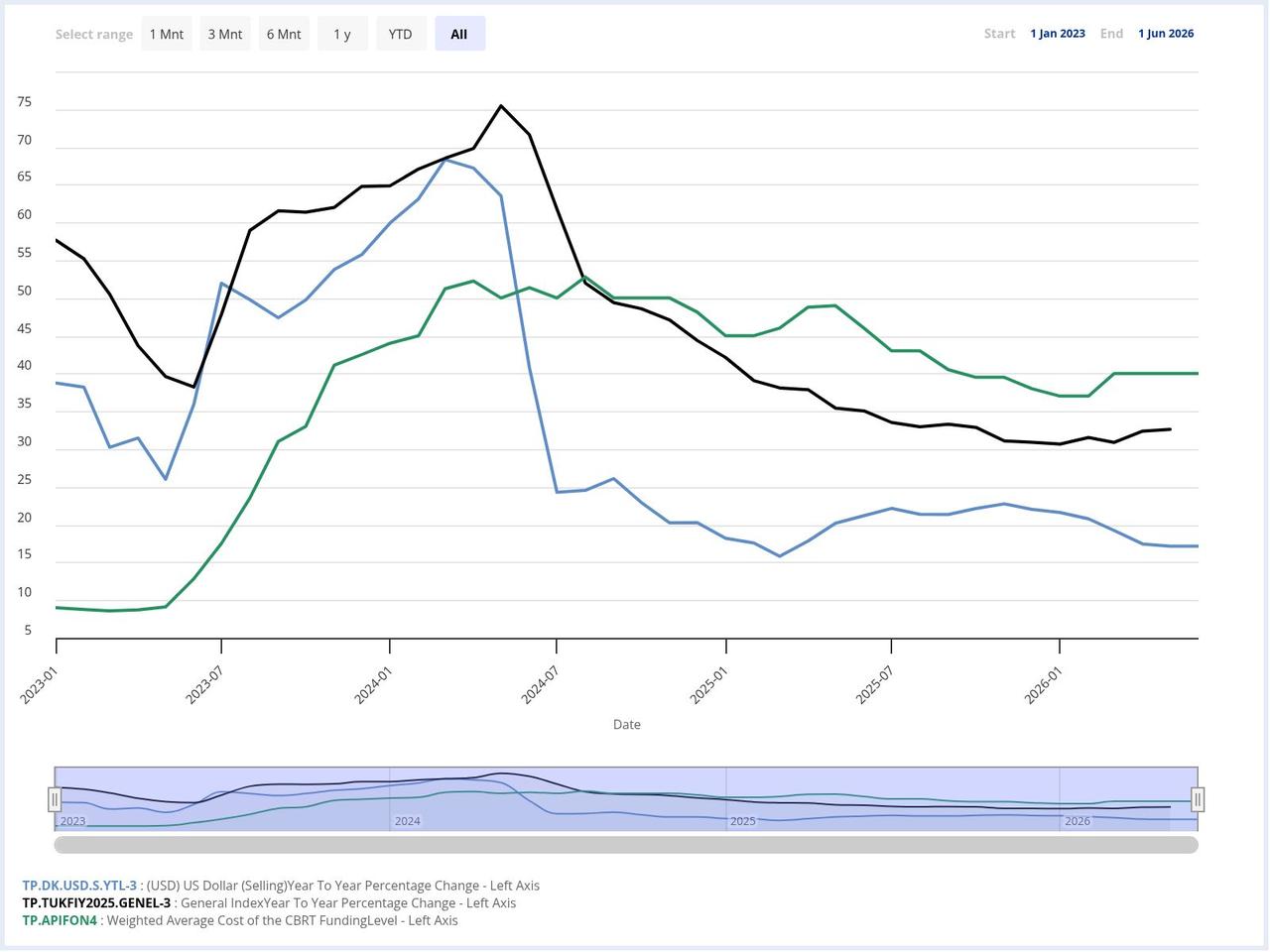
The CBRT left its benchmark policy rate unchanged at 37% at its early June Monetary Policy Committee (MPC) meeting, marking a third consecutive hold. The central bank had previously shifted from one-week repo funding to overnight funding, effectively raising borrowing costs to 40% in early March as a preemptive measure following the outbreak of the Iran war.
Türkiye, a major importer of crude oil and natural gas, faced higher energy costs after the Strait of Hormuz was effectively closed during the conflict, pushing annual inflation to 32.6% in May.
Bloomberg reported, citing people familiar with the matter, that CBRT Governor Fatih Karahan told investors during meetings in London this week that officials were in no rush to restart one-week repo auctions before the next MPC meeting, despite easing oil prices following the U.S.-Iran agreement to end the conflict.
According to the participants, Karahan indicated that policymakers wanted to review another round of inflation data before deciding whether to resume weekly repo funding. The CBRT declined to comment on the report.
The CBRT's June Survey of Market Participants showed respondents expect the central bank to keep its policy rate unchanged at 37% at the July MPC meeting before delivering its first rate cut in September.
The survey also projected the policy rate at 34.7% by year-end, while forecasting monthly inflation of 1.5% in June, year-end inflation at 29.1% and the USD/TRY exchange rate at 51.4692 by the end of 2026.


 Set as preferred source
 Set as preferred source


 1 min read
 1 min read