Newsletters


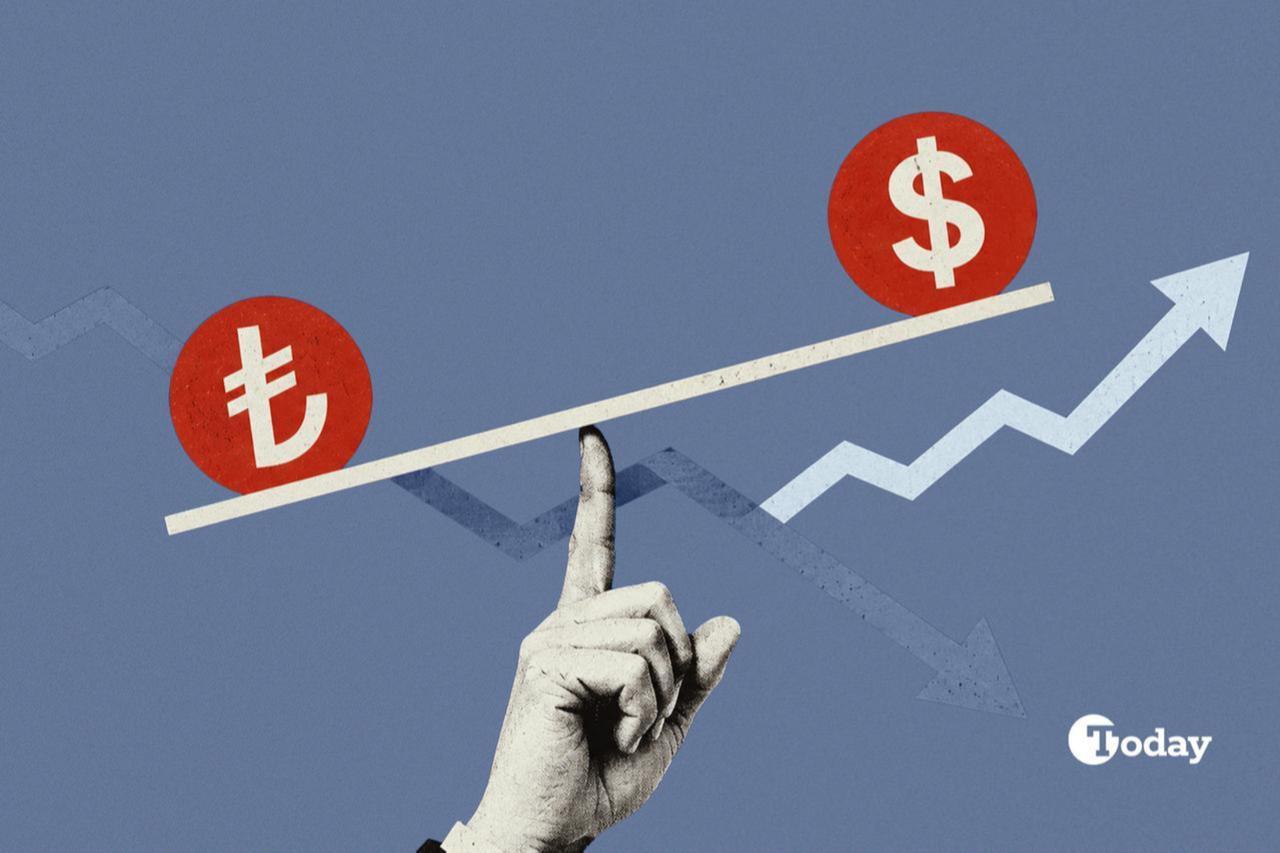


For international investors looking for returns beyond the dollar, Türkiye has long offered an appealing proposition: exceptionally high interest rates that can compensate for the gradual depreciation of the Turkish lira.
That proposition has helped the country attract foreign capital, support demand for local-currency assets and maintain a degree of exchange-rate stability during its disinflation program.
But the conditions underpinning that strategy are changing once again.
The Central Bank of the Republic of Türkiye (CBRT) has resumed interest rate cuts in October, while the Federal Reserve is moving toward another tightening phase as inflation proves more persistent than policymakers had hoped.
At the same time, major global institutions continue to flag the impact of September’s fund scandal on confidence in domestic financial markets.
The scandal affected more than 455,000 investors across 131 funds with an estimated combined value of around $20 billion, while declining reserves and foreign portfolio outflows have emerged as focal pressure points for the Turkish lira.
The CBRT cut its benchmark interest rate by 100 basis points to 36% in October, ending five consecutive meetings without a change. It cited a continued slowdown in underlying inflation but warned that elevated energy prices and geopolitical uncertainty remained upside risks.
The Fed, meanwhile, raised rates by 25 basis points in September before holding them at 3.75%-4% in October. The diverging paths matter for Türkiye, where the appeal of lira-denominated assets depends heavily on their yield premium over dollar investments.
A more hawkish Fed can make U.S. assets more attractive and prompt investors to reassess emerging-market exposure.
The lira’s annual depreciation against the dollar accelerated from 17.9% in September to 18.8% in October. The dollar also rose 1.9% month-on-month to ₺49.95, marking its largest monthly increase since July 2025.
Meanwhile, Türkiye Today's calculations show that the dollar-based real-return indicator for lira-denominated assets, calculated using the TCMB's policy rate, fell from 12.1% in September to 10.4% in October. The comparable U.S. real interest rate, based on the Fed's key rate, stood at 0.15%.
The divergence recalls October 2021, the most recent turning point, when the TCMB cut interest rates by 200 basis points to 16% despite rising inflation, while the Fed kept its policy rate near zero. At the time, the same indicator stood at -4.4%, just 1.3 percentage points above the Fed's real rate of -5.8%.
The lira subsequently came under mounting pressure, with its annual depreciation accelerating from 14.3% in October 2021 to 69% in November and 81.1% in December, before reaching 118.9% in August 2022.
Today, however, the lira offers a much larger yield advantage than it did in 2021. While the two central banks are again moving in opposite directions, the broader economic and financial backdrop has changed considerably.
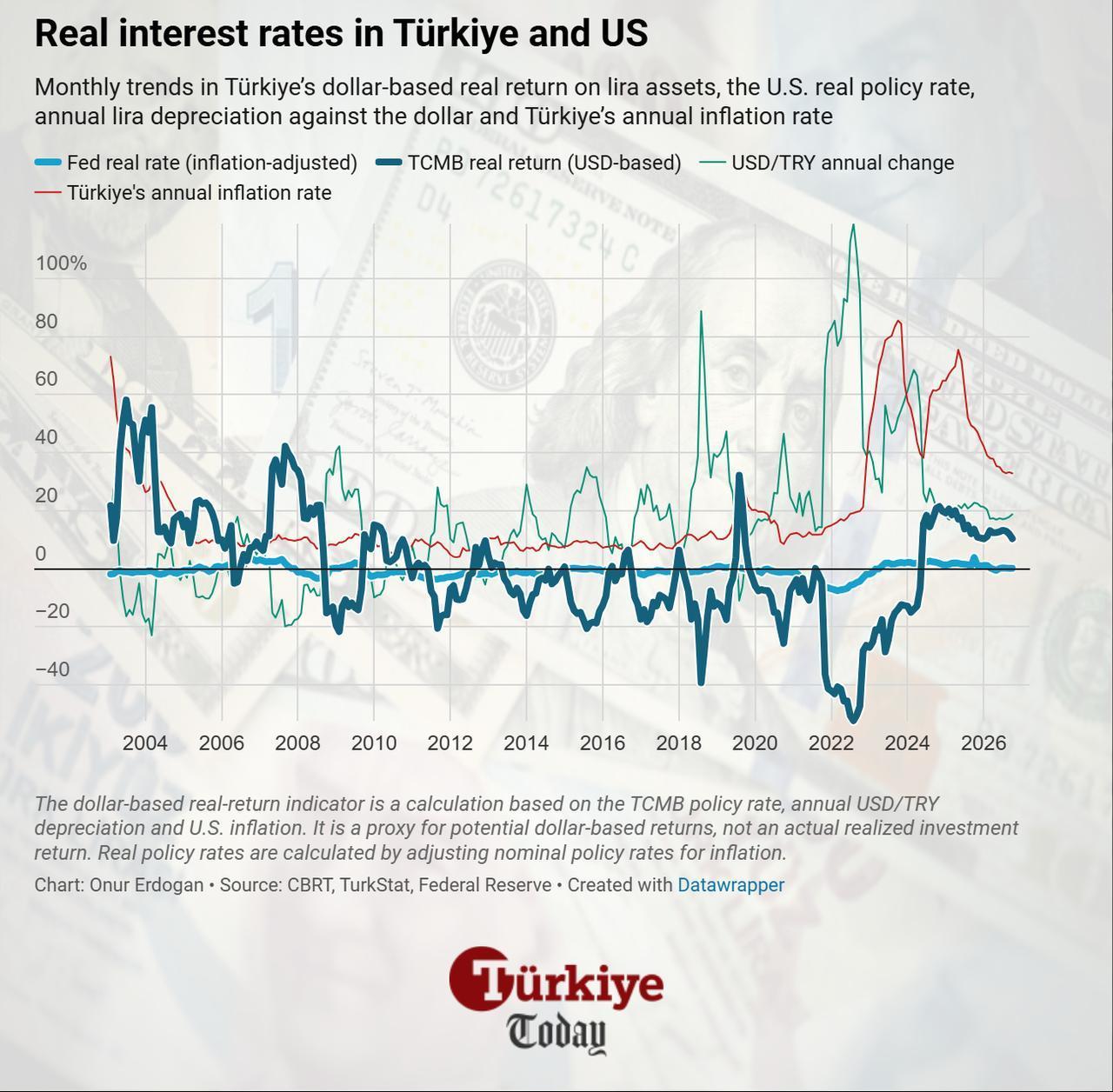

The first and most notable difference is that Türkiye’s disinflation process remains on track, even though inflation is still elevated. Annual consumer price inflation stood at 29.8% in October 2026, compared with 19.9% in October 2021.
Crucially, CBRT is now maintaining a substantially higher funding rate: at 36%, it stands more than 6 percentage points above annual inflation, whereas the 16% rate in October 2021 was nearly 4 percentage points below inflation.
This positive real interest rate gives investors a stronger incentive to hold lira-denominated assets, helping sustain demand for the currency despite its gradual depreciation against the dollar.
In an analysis published in October, Tufan Comert, BBVA’s MENA and Türkiye credit strategist, noted that the daily rise in USD/TRY had accelerated from around 170 pips to 250 pips. This translated into monthly lira depreciation of roughly 1.5%, or about 20% annually on a compounded basis.
Even at that faster pace, however, the lira was still appreciating in real terms, as nominal depreciation remained below inflation.
"A gradual adjustment today may be preferable to maintaining an increasingly difficult exchange-rate path," Comert said, arguing that a faster pace of nominal depreciation could ease pressure on exporters and businesses that have lost price competitiveness after a prolonged period of real lira appreciation.
So far, the faster pace of depreciation has not triggered an immediate retreat from lira positions. Comert estimated broader lira carry-related exposure at around $56 billion, with domestic investors potentially accounting for roughly half, although the exact breakdown depends on how such positions are defined.
"Domestic demand for these strategies has been supported not only by attractive returns but also by restricted access to credit and relatively high domestic funding costs," he said.
"Foreign leveraged investors may prove more sensitive to changes in expected returns, but we would expect any reduction in aggregate carry exposure to be gradual through to the end of the year rather than a disorderly exit," Comert added.
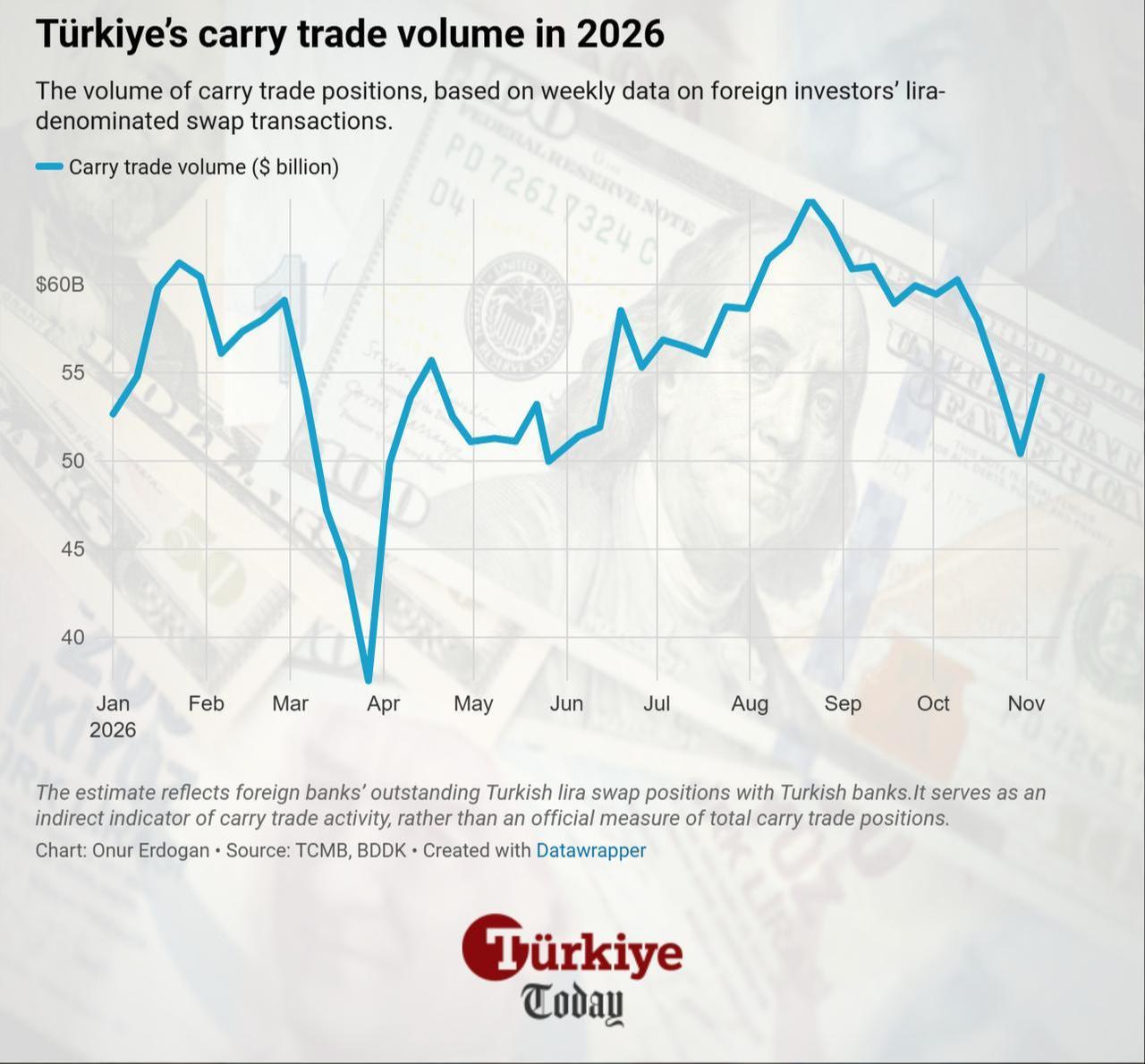
While the fund scandal has shaken confidence in Türkiye’s financial markets, it has yet to trigger a broad exit from lira-denominated assets.
Central bank data and international investment bank estimates suggest much of the money withdrawn from funds has moved into bank deposits, particularly lira accounts.
According to the CBRT's latest Inflation Report, money market funds and similar funds lost approximately ₺1.1 trillion ($21.9 billion) in combined balance between Aug. 28 and Nov. 4, falling from ₺3.6 trillion to ₺2.5 trillion. Domestic investors accounted for around 80% of the decline.
Yet lira deposits increased by ₺1.1 trillion, while foreign-currency deposits rose by $3.5 billion in nominal terms. The lira’s share of total deposits reached 61.8% on Oct. 30 and remained around 61% when investment funds were included as of Nov. 4.
Speaking on Nov. 12, Central Bank Governor Fatih Karahan said fund outflows had largely moved into bank deposits.
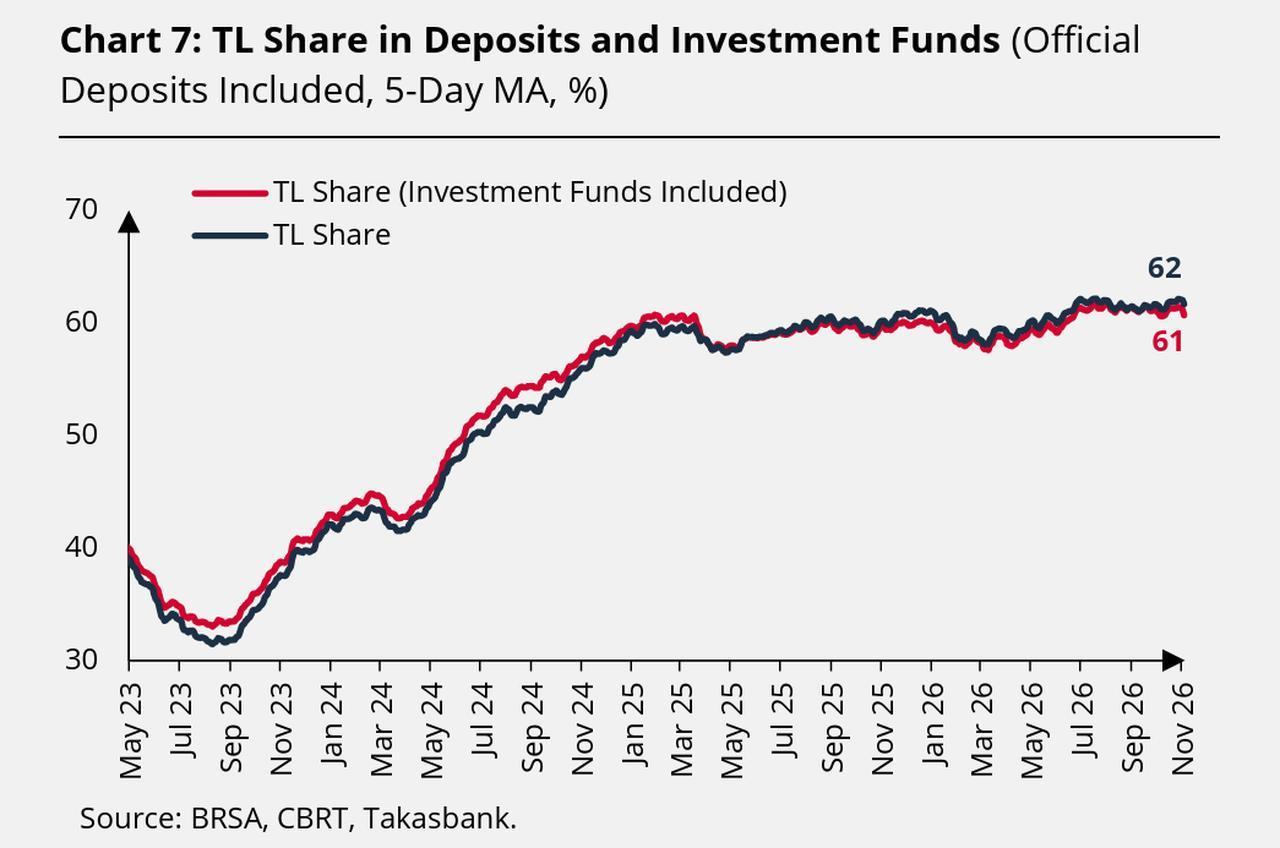
"We see that the currency composition of the shift toward deposits is consistent with the current share of the Turkish lira," Karahan said. "In fact, the share of the Turkish lira remains stable, both including and excluding mutual funds."
Gross reserves, meanwhile, fell by around $49 billion from Feb. 27 to Nov. 6, reaching $161 billion. Karahan attributed $28 billion of the decline to lower gold prices. Net reserves excluding swaps dropped by $50.4 billion to $28 billion.
Karahan said tight monetary policy continued to support demand for lira savings, while the pace of depreciation could vary with market conditions and inflation dynamics. He added that the central bank had seen no deterioration in demand for lira assets over the previous two months.
The central bank will announce its final rate decision of the year on Dec. 10, with markets expecting a 100-basis-point cut to 35% from 36%.
In contrast, markets have fully priced in a Fed rate hike at its Dec. 9 meeting. CME FedWatch data shows a 90% probability of a 25-basis-point increase and a 10% chance of a 50-basis-point move as of Nov. 13, potentially further narrowing the rate differential and weakening the lira’s yield advantage for foreign investors.


 Set as preferred source
 Set as preferred source


 1 min read

 1 min read