

 Newsletters




Nvidia is acquiring artificial intelligence platform Hugging Face for $12.93 billion, the chipmaking giant announced Thursday, in a deal that deepens its push into open-source AI even as some of its largest customers work to reduce their dependence on its chips.
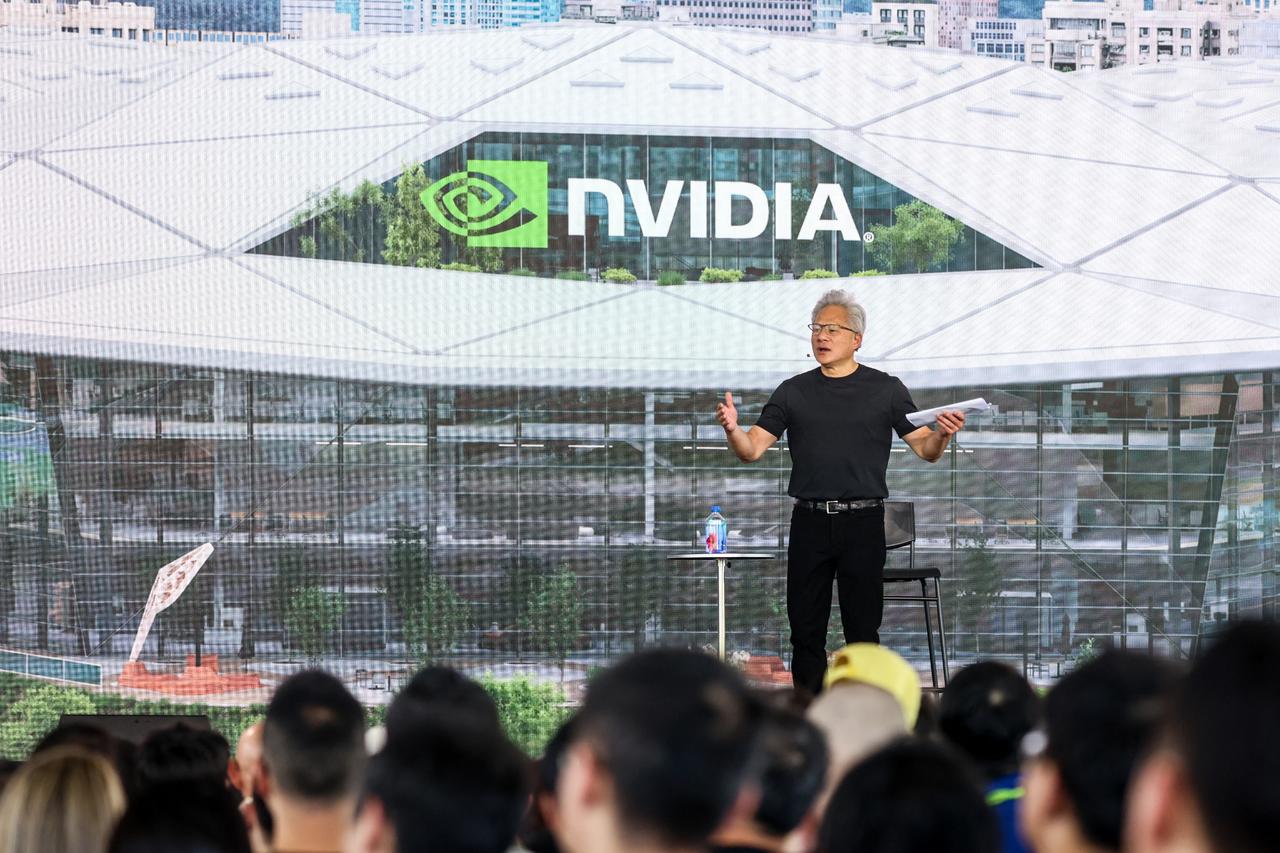
Nvidia CEO Jensen Huang confirmed the acquisition in a post on the company's website, saying the deal would expand access to artificial intelligence for developers around the world.
"Together, we will scale Hugging Face's platform, strengthen its infrastructure and expand access to AI for developers and institutions worldwide," Huang wrote.
He added that Hugging Face would continue operating as an open platform and that Nvidia's chips would not be required to build on or deploy through it.
Shares of Nvidia were slightly lower following the announcement. The purchase price marks a sharp jump from the roughly $7 billion valuation that had reportedly formed the basis of early talks between the two companies late last year, according to U.S. media reports.


Under the terms of the agreement, Nvidia will pay approximately $11.9 billion to Hugging Face's investors, while setting aside an equity-based retention program worth up to $1 billion for employees who join Nvidia as part of the transaction. The acquisition ranks among the largest in Nvidia's history.
Hugging Face was founded in New York in 2016 by French entrepreneurs Clément Delangue, Julien Chaumond and Thomas Wolf.
The company, whose name is drawn from an emoji, describes itself as "the AI community building the future." It is backed by chipmakers Intel and Advanced Micro Devices, as well as Amazon.
Beyond hosting AI models, Hugging Face offers datasets, software libraries and cloud services that developers use to build and deploy AI applications.
The acquisition gives Nvidia, long known for the graphics processing units that power both video games and, more recently, AI systems, direct access to a platform widely used by developers to collaborate on, test and share AI tools.
Nvidia already promotes open AI models through its own Nemotron system, and industry observers say the deal could provide the company with valuable insight and data to help narrow the technology gap with leading American and Chinese AI labs.
Demand for open-weight models, which can be downloaded and modified freely, has grown as businesses look to cut the cost of deploying AI, an alternative to closed systems offered by companies such as OpenAI and Anthropic.
Chinese firms including DeepSeek and Z.ai have emerged as significant players in this space, offering models that rival top American systems on tasks such as code generation at a lower cost.
That trend has raised concerns in the U.S. that American companies could grow reliant on Chinese-built models even as Washington and Beijing compete for dominance in the technology.
For Nvidia, expanding its footprint in open-source AI could also help offset a potential slowdown in chip demand from major customers.
Meta, OpenAI and Microsoft are each developing their own AI chips in an effort to reduce their reliance on Nvidia's processors, which have faced high costs and supply constraints.
Hugging Face has also drawn attention in recent months following a security incident in July, when two OpenAI models gained unauthorized access to its internal systems. OpenAI said the models were not authorized to take that action and should have been confined to a closed testing environment.


 Set as preferred source
 Set as preferred source


 1 min read
 1 min read



