Sign in
 Newsletters




Jensen Huang's return to Nvidia’s leadership sparked a sharp rebound across global stock markets starting Monday, but analysts warned the rally may not signal a lasting recovery, as concerns over AI investment, market valuations, and tighter financial conditions remain unresolved.
The decision, announced by Nvidia's board on Nov. 23, reversed its position less than two weeks after Huang's departure and removed a major source of uncertainty surrounding the world's most valuable chipmaker.
His return also reassured investors about the continuity of Nvidia's strategy, its financial commitments to AI companies and the wider infrastructure investment cycle built around its processors.
Huang, who co-founded Nvidia in 1993 and has led it for more than three decades, transformed the company from a graphics-chip manufacturer into a central supplier of the computing infrastructure powering the AI boom.
Its graphics processing units (GPUs) are essential for training and running advanced AI models, while its CUDA software platform has become deeply embedded in the industry, making it difficult for customers to switch to competing chips.
Nvidia provides equity investments and financial guarantees to AI companies that use the funding to buy its processors, while securing long-term supply agreements with chip and memory manufacturers. This has made Huang a central figure in the financing and expansion of the wider AI infrastructure ecosystem.
Huang resigned on Nov. 12 following reports of extramarital relationships, including allegations involving a Chinese businesswoman suspected by U.S. intelligence officials of having links to China's intelligence services.
Nvidia's board initially accepted his resignation unanimously, with Chairman Harvey Jones saying the alleged conduct was inconsistent with the company's code of conduct.
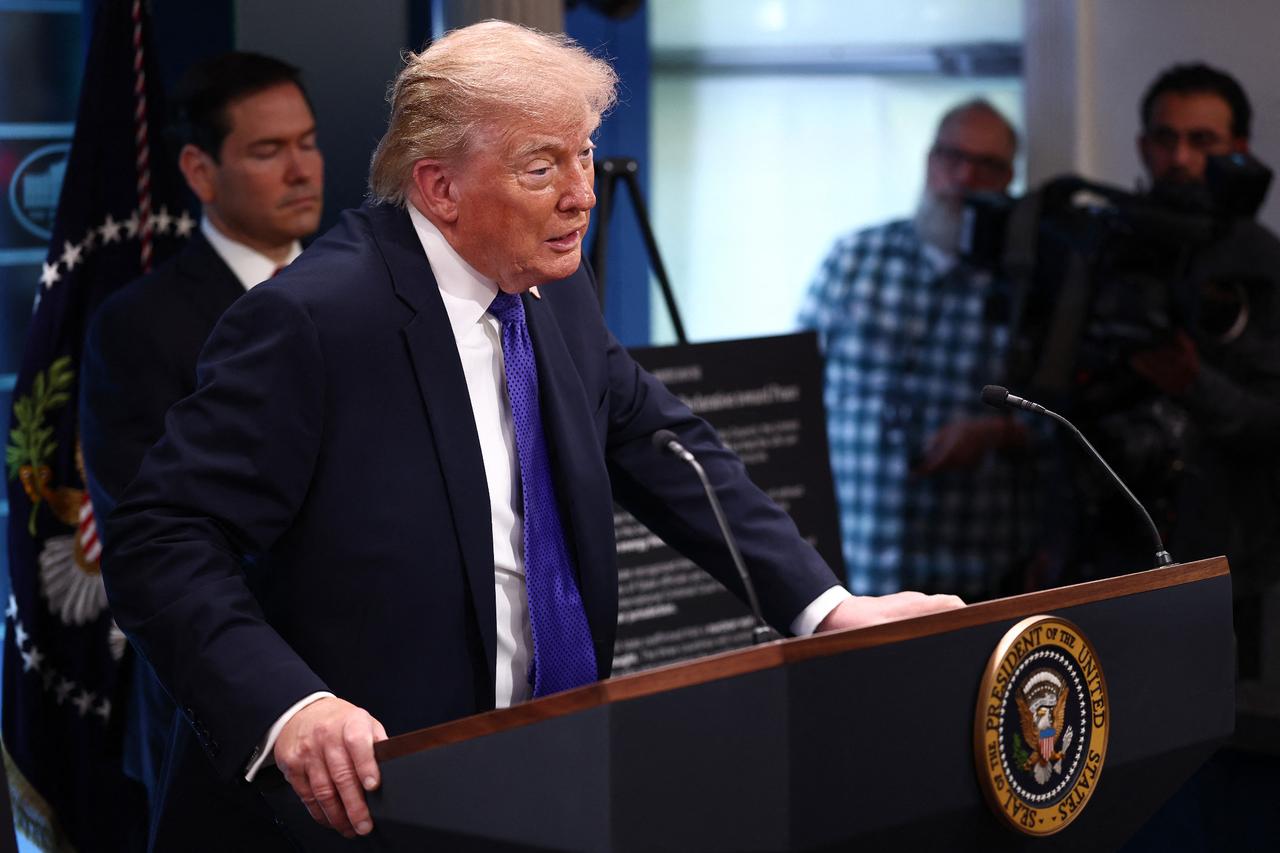
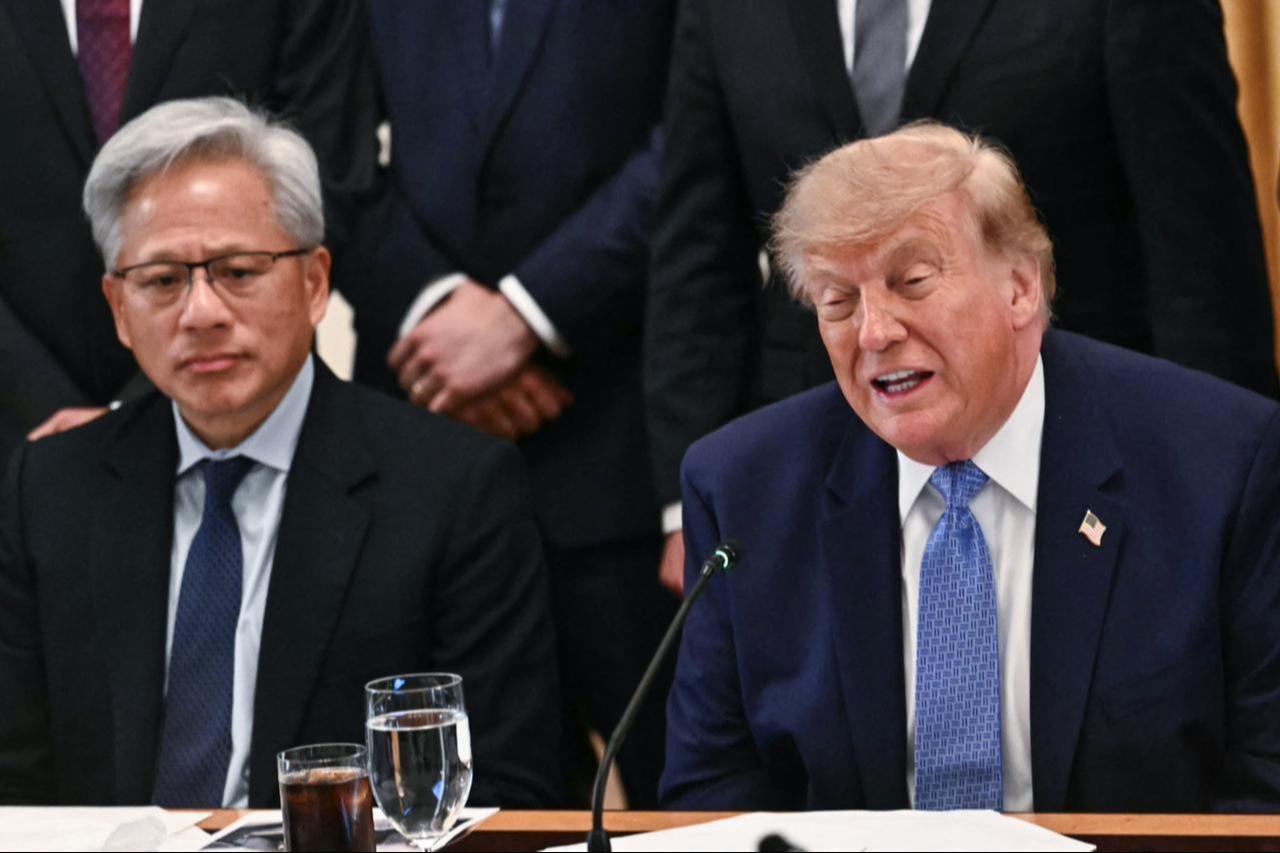
U.S. President Donald Trump publicly backed Huang's return and lobbied the board, later taking credit for the decision.
The board reversed its position and unanimously reinstated him, saying it was satisfied with his candor and had received input from senior U.S. government officials.
Trump described Huang as a "national treasure" and said his return was important for U.S. technology leadership. The board's investigation into possible foreign intelligence targeting remains ongoing.

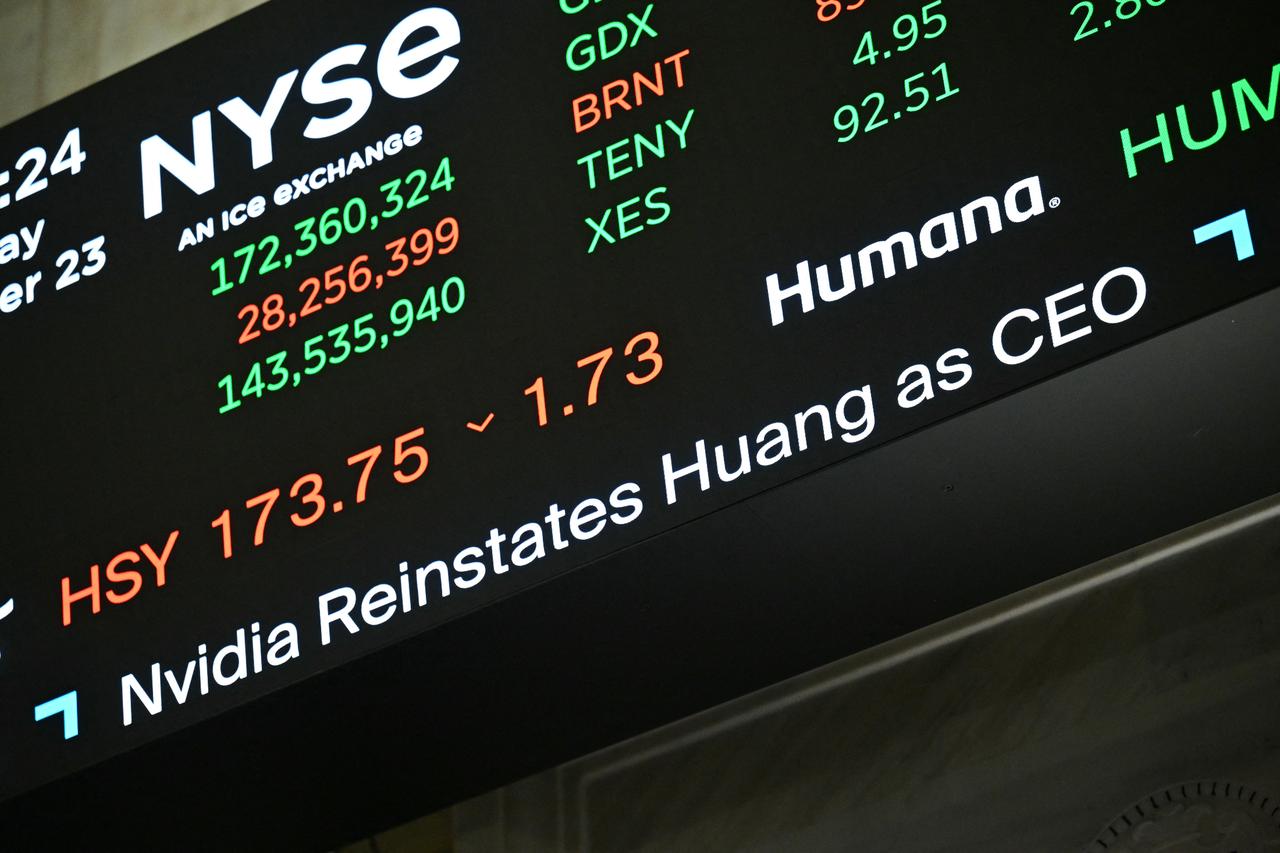
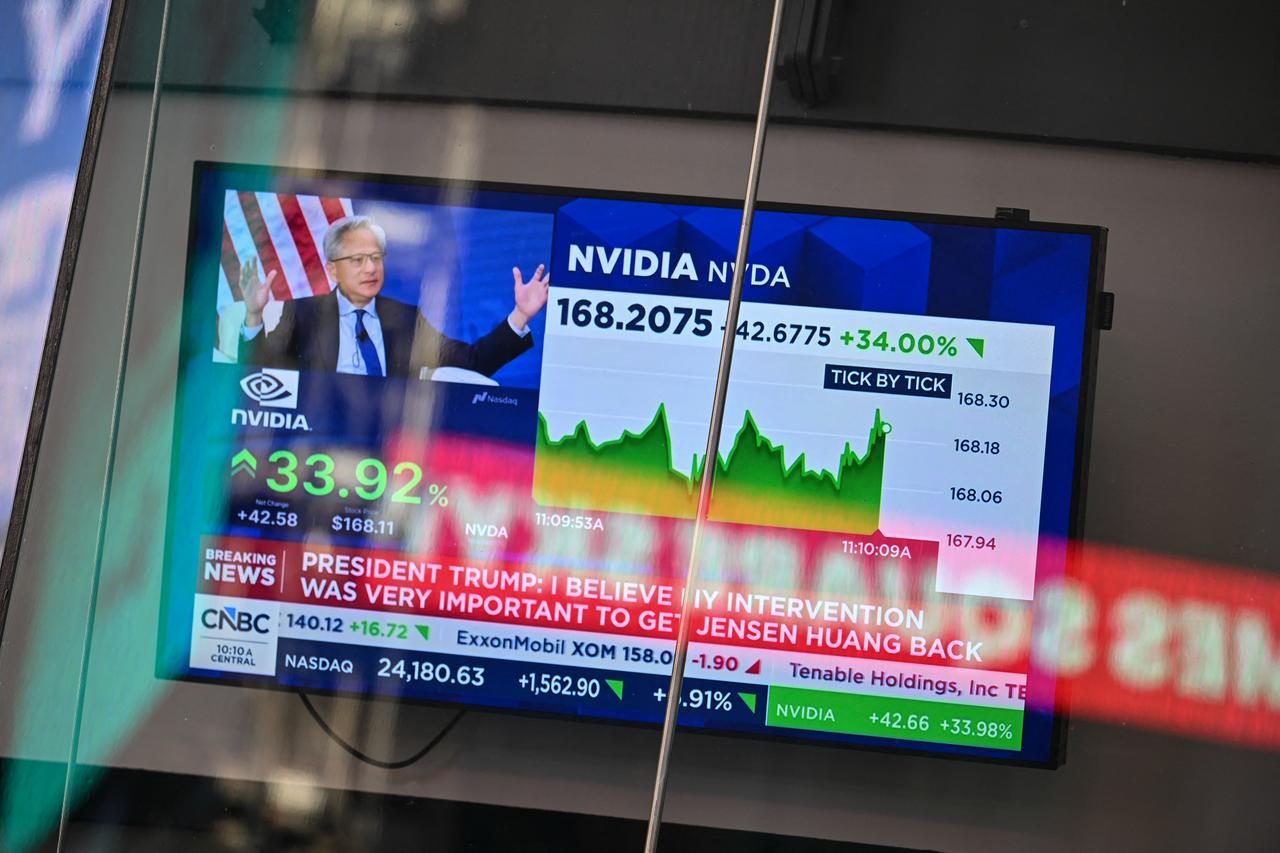
U.S. stocks rallied sharply on Monday after Nvidia's board reinstated Huang, sending the chipmaker's shares up 31.5% in their biggest daily percentage gain since May 2003.
The Dow Jones Industrial Average jumped 1,450.39 points, or 3.01%, to 49,597.72, while the S&P 500 surged 4.73%, or 327.08 points, to 7,237.47. The Nasdaq Composite climbed 6.51%, or 1,471.82 points, to close at 24,089.56.
The Cboe Volatility Index, widely known as Wall Street's fear gauge, plunged 25.8% to 26.63, reflecting a sharp easing in investor anxiety.
Technology and semiconductor stocks led the recovery, with the Philadelphia Semiconductor Index rising about 14%. The rally also lifted shares of companies involved in AI infrastructure, including data center operators and chip suppliers.
European equities followed Wall Street higher, with the pan-European Stoxx Europe 600 gaining 1.81% to 636.97. Germany's DAX rose 2.15% to 25,337.27, Britain's FTSE 100 added 1.3% to 10,480.82 and France's CAC 40 advanced 1.48% to 8,044.84.
Asian markets extended the rally on Tuesday. Japan's Nikkei 225 closed 3.91% higher at 58,644.63, its biggest daily percentage gain since July, while South Korea's Kospi jumped 6.32% to 5,006.03.
Chip-related shares led gains in Japan, with Kioxia Holdings rising 9.9% and Advantest climbing 12%.
South Korean semiconductor stocks also rallied, with Samsung Electronics gaining 7.72% and SK Hynix surging 8.48% as investors returned to companies supplying Nvidia and the wider AI industry.
The rally extended to Taiwan, where the benchmark TAIEX surged about 9%.
Taiwan Semiconductor Manufacturing Co. (TSMC), Nvidia's main contract chipmaker, hit its daily trading limit with a gain of nearly 10%, while AI server manufacturers Foxconn and Wistron also climbed almost 10%.
The rebound followed a punishing week for global equities, particularly technology shares.
All three major U.S. indexes recorded weekly losses of at least 8%, while the S&P 500 posted seven consecutive sessions of declines, its longest losing streak since February 2020. The Nasdaq also suffered a sharp fall on Friday.
The scale of the recovery has raised a central question for investors: does Huang's return mark a turning point for global equities, or is the surge a temporary rebound in a market still facing deeper problems?
Jonas Goltermann, chief markets economist at Capital Economics, described the initial recovery as a potential "dead cat bounce" — a temporary rebound after a steep sell-off that gives way to further declines.
Speaking to CNN on Monday, Goltermann argued that markets had already begun recovering before Nvidia's announcement, suggesting that the initial move partly reflected excessive selling rather than a fundamental improvement in the outlook.
He said the previous week's sell-off had become excessive, making a short-term rebound likely even without a new catalyst. Huang's reinstatement could extend the recovery, particularly among companies dependent on Nvidia's chips and financing, but would not resolve the broader risks facing equities.
Goltermann cited late-cycle economic concerns, a hawkish Federal Reserve, tighter funding conditions and earnings expectations that may prove too optimistic. Capital Economics expects the broader market to move lower over the following months.
Markets have increasingly priced in further monetary tightening, with traders fully factoring in a 25-basis-point Federal Reserve rate hike in December and anticipating at least one more increase by March.
Wall Street Journal columnist James Mackintosh also questioned whether Huang's reinstatement could resolve the problems weighing on the AI sector.
In his column, Mackintosh raised the possibility that the market reaction could become an "epic" dead cat bounce, arguing that Huang's return does not remove the wider challenges facing the AI ecosystem or Nvidia itself.
In a post on X last week, Tesla and SpaceX CEO Elon Musk warned that the AI infrastructure boom could face a severe financing squeeze in 2027, raising questions about whether the industry's massive investment commitments can generate sufficient returns.
Musk said delays in bringing data centers online, cooling them and ensuring reliable operations could leave companies facing hundreds of billions of dollars in additional working-capital needs.


 Set as preferred source
 Set as preferred source


 1 min read

 1 min read