

 Newsletters





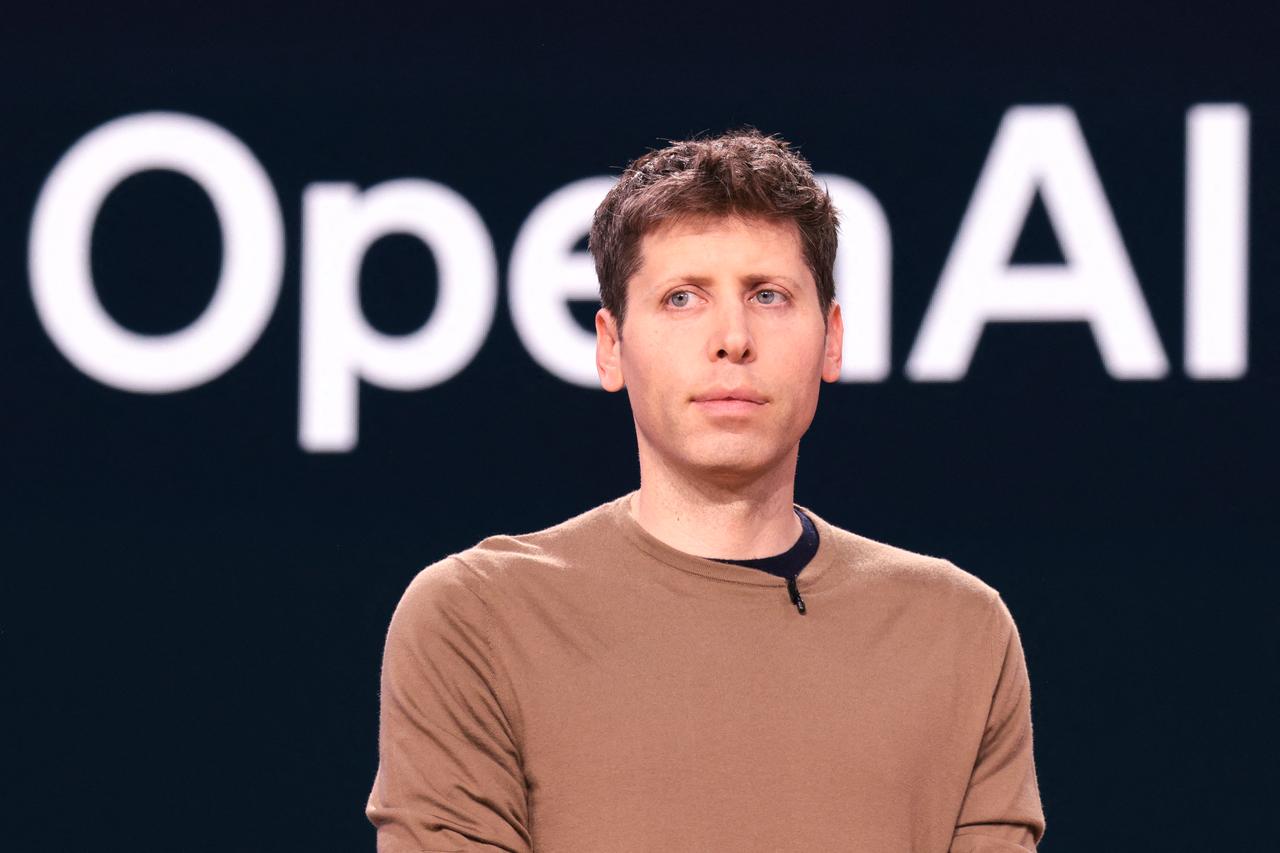
OpenAI Chief Executive Officer Sam Altman said the company is close to creating a system capable of fulfilling nearly any request but stressed that such technology must remain widely accessible rather than concentrated in the hands of a few.
Speaking on a recent episode of the Relentless podcast, Altman said one of his biggest concerns is the possibility of "AI authoritarianism" emerging in the world, referring to a scenario in which artificial intelligence is controlled by a small number of companies or countries that restrict access to the technology.


Altman said the central question of the moment is whether the world moves toward "AI authoritarianism or liberty," adding that history shows trading liberty for safety tends to produce a long-term net loss.
The OpenAI chief said the company aims to make its technology "extremely widespread, extremely cheap, extremely powerful" and available for use by the public at large.
He argued that broader access to AI, absent authoritarian control, would substantially improve people's well-being.

Discussing the current state of artificial intelligence, Altman said the technology has moved beyond simply imitating human behavior and has reached a stage where it can develop in unpredictable ways.
He said this capability would have seemed like a distant fantasy 10 years ago but now stands to produce outcomes he described as broadly positive for the world.
Altman also said the vision some other companies hold for AI's development is "very frightening," and indicated OpenAI would work to prevent such scenarios from materializing.
 1 min read
Addressing what he called a marketing challenge facing OpenAI and the wider AI industry, Altman said the sector is close to producing a system he compared to a "genie" capable of granting a wide range of requests.
He said the industry's task going forward is to ensure the earliest such capabilities broadly benefit humanity and to expand the scope of what people are able to use the technology for.
Altman's comments came on the July 25 episode of the Relentless podcast. His remarks followed a broader debate over AI access after the release of an open-source Chinese model earlier in the month, which reignited discussion over whether AI development should remain concentrated among a handful of firms or move toward wider distribution.
Altman's remarks were notable given OpenAI's own position as one of a small number of companies developing the most advanced AI models currently in use and given that its systems remain proprietary rather than open-source.


 Set as preferred source
 Set as preferred source






 1 min read


