Newsletters




Russian crude prices surged to their highest level in more than a decade, as a global oil rally driven by the Iran war lifted markets and raised the prospect of stronger export revenues for Moscow.
Urals crude climbed to $116.05 per barrel at the Baltic port of Primorsk, placing prices at nearly twice the $59 per barrel level assumed in Russia’s 2026 budget.
The upward move extended to Black Sea shipments, with Urals at Novorossiysk reaching $114.45 per barrel on Thursday.
At the same time, the discount to the global dated Brent benchmark narrowed sharply, slipping below $27.75 per barrel—its tightest level since mid-December. The shift points to firmer demand for Russian barrels despite ongoing sanctions and trade frictions.
The Iran war has tightened global oil supply by disrupting flows through the Strait of Hormuz, a route that carries roughly one-fifth of the world’s oil.
U.S. President Donald Trump has demanded that Tehran reopen the waterway, threatening that failure to comply could trigger strikes on critical infrastructure. The ultimatum has added urgency to markets already under pressure, reinforcing the upward move in prices.
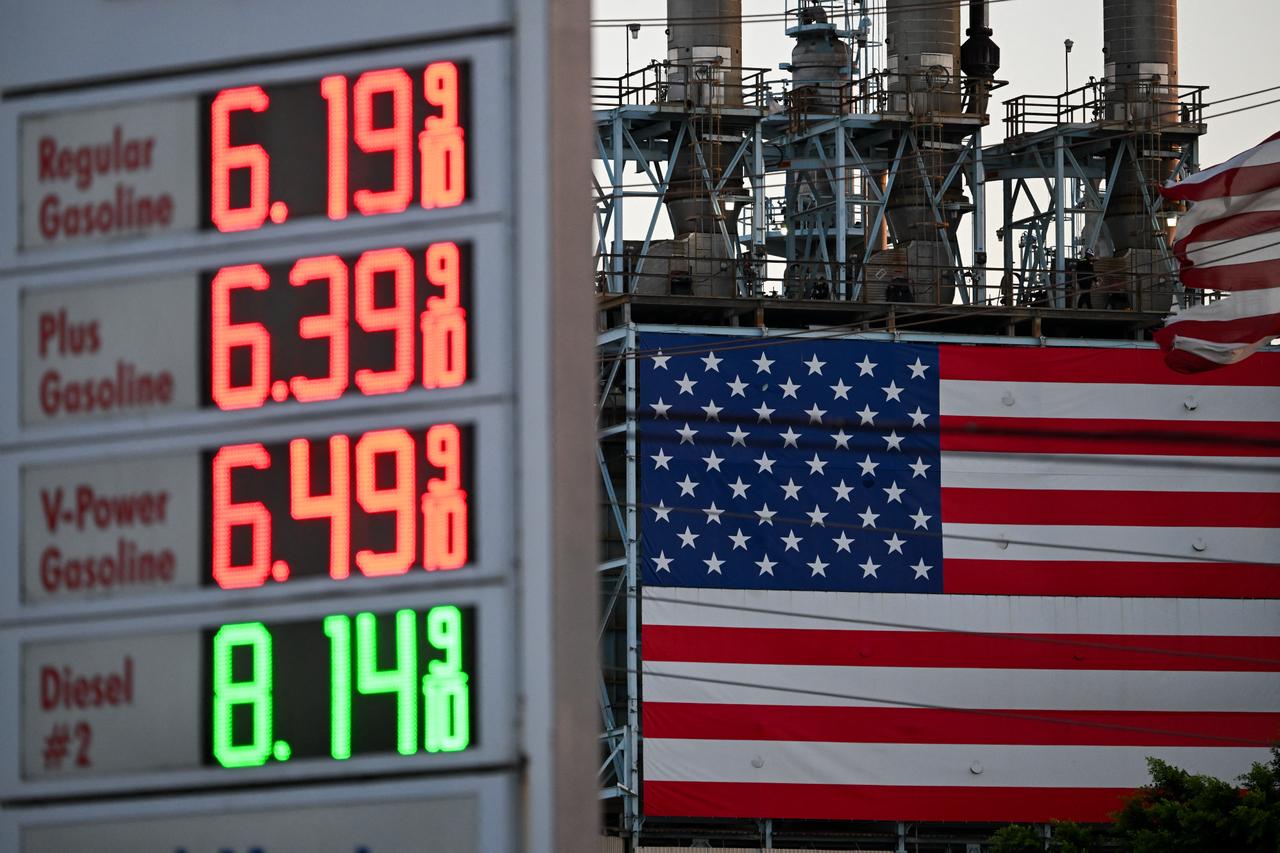
On Tuesday, U.S. benchmark WTI crude prices kept climbing above the international benchmark Brent crude, with both hovering around $115.7 and $110.3 per barrel, as tight near-term supply and contract timing differences lifted WTI into a rare premium.
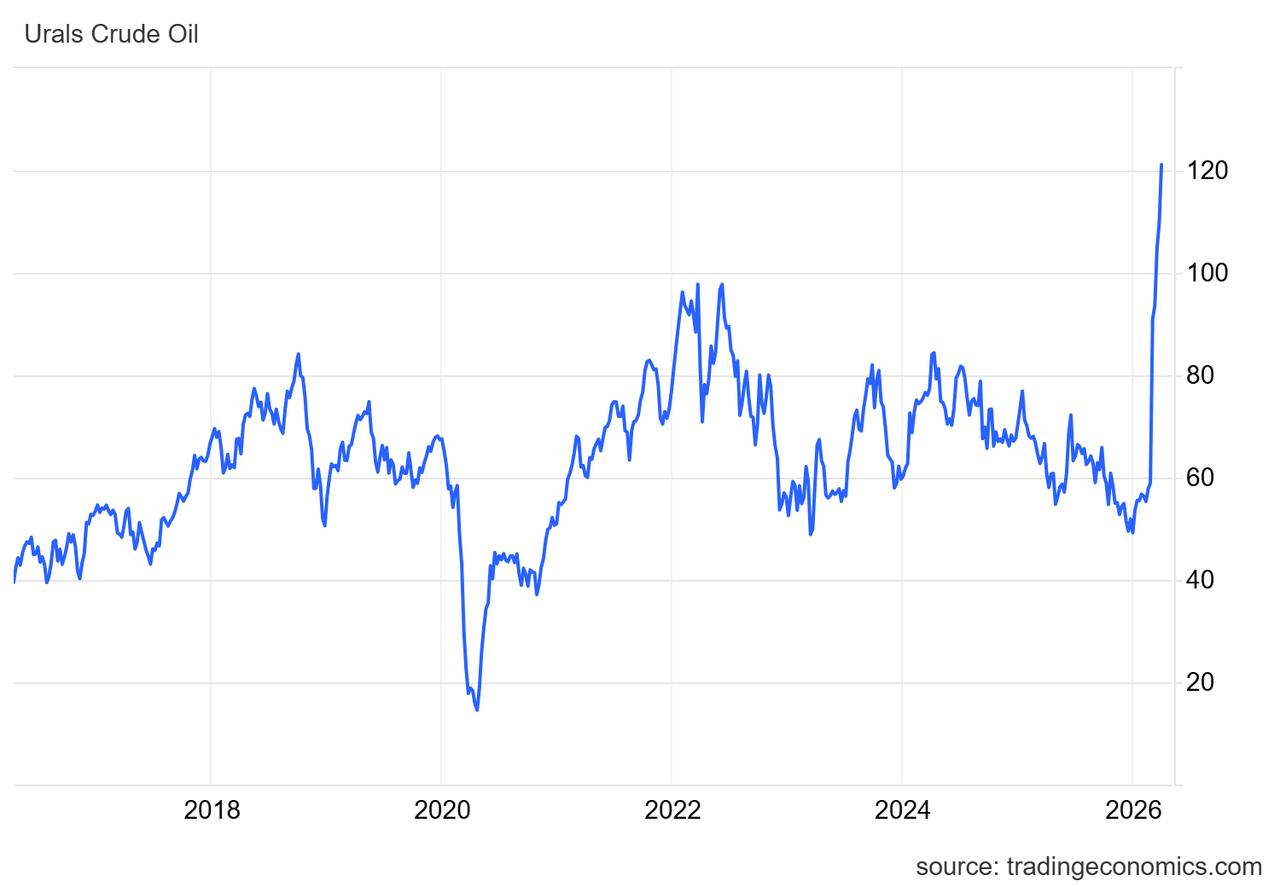

The rally is handing the Kremlin an unexpected financial cushion as it continues its war in Ukraine, with stronger oil income easing fiscal strain.
Still, Moscow’s ability to fully benefit from the price surge faces mounting constraints.
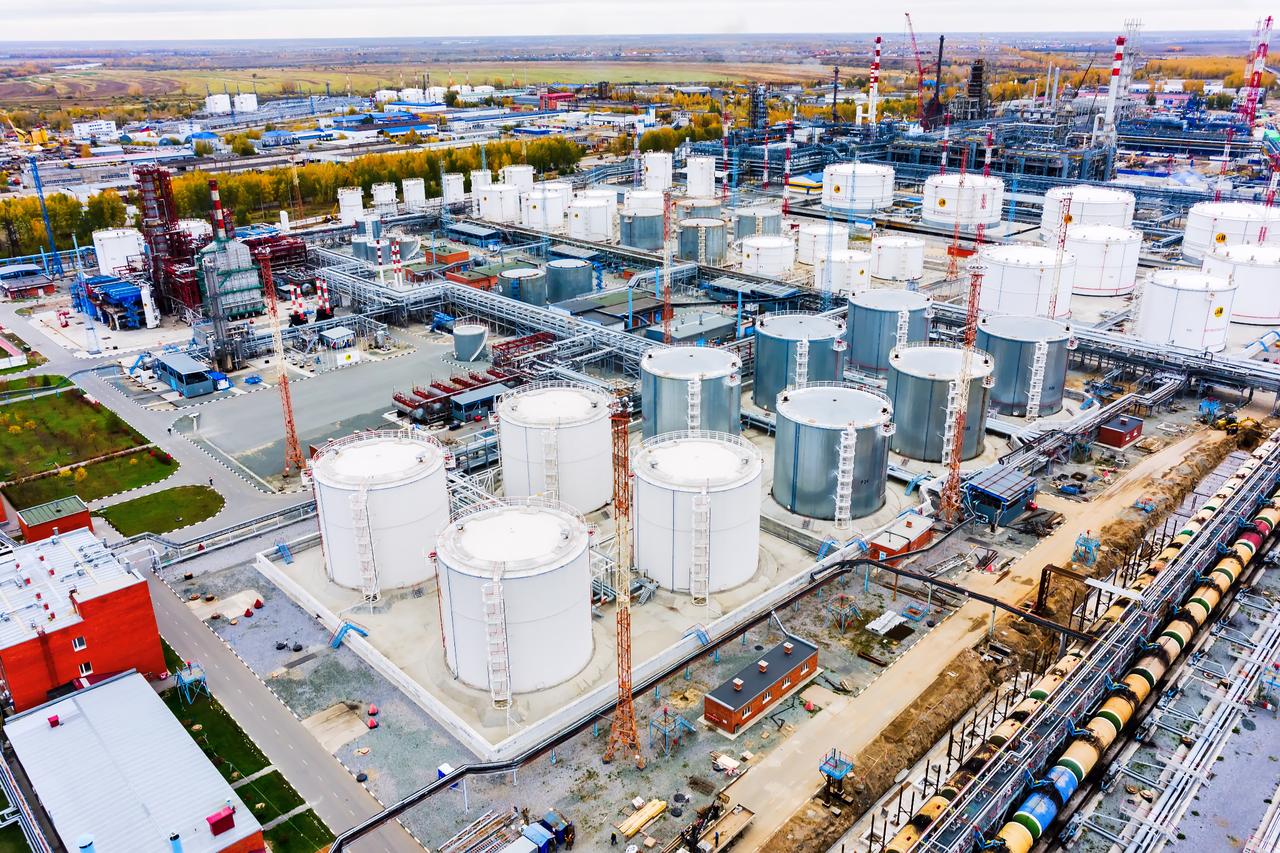
Ukrainian forces have stepped up attacks on Russia’s oil infrastructure, targeting refineries and key export terminals. Strikes have focused particularly on Baltic ports, which handle around 40% of the country’s seaborne crude exports. These disruptions are weighing on loading operations and could limit export volumes, narrowing the financial upside from higher prices.
In 2025, Russia’s oil and natural gas revenues fell 24% from a year earlier to 8.5 trillion rubles ($108.2 billion), as Europe phased out Russian energy imports and sanctions weighed on exports.


 Set as preferred source
 Set as preferred source


 1 min read
 1 min read