Newsletters


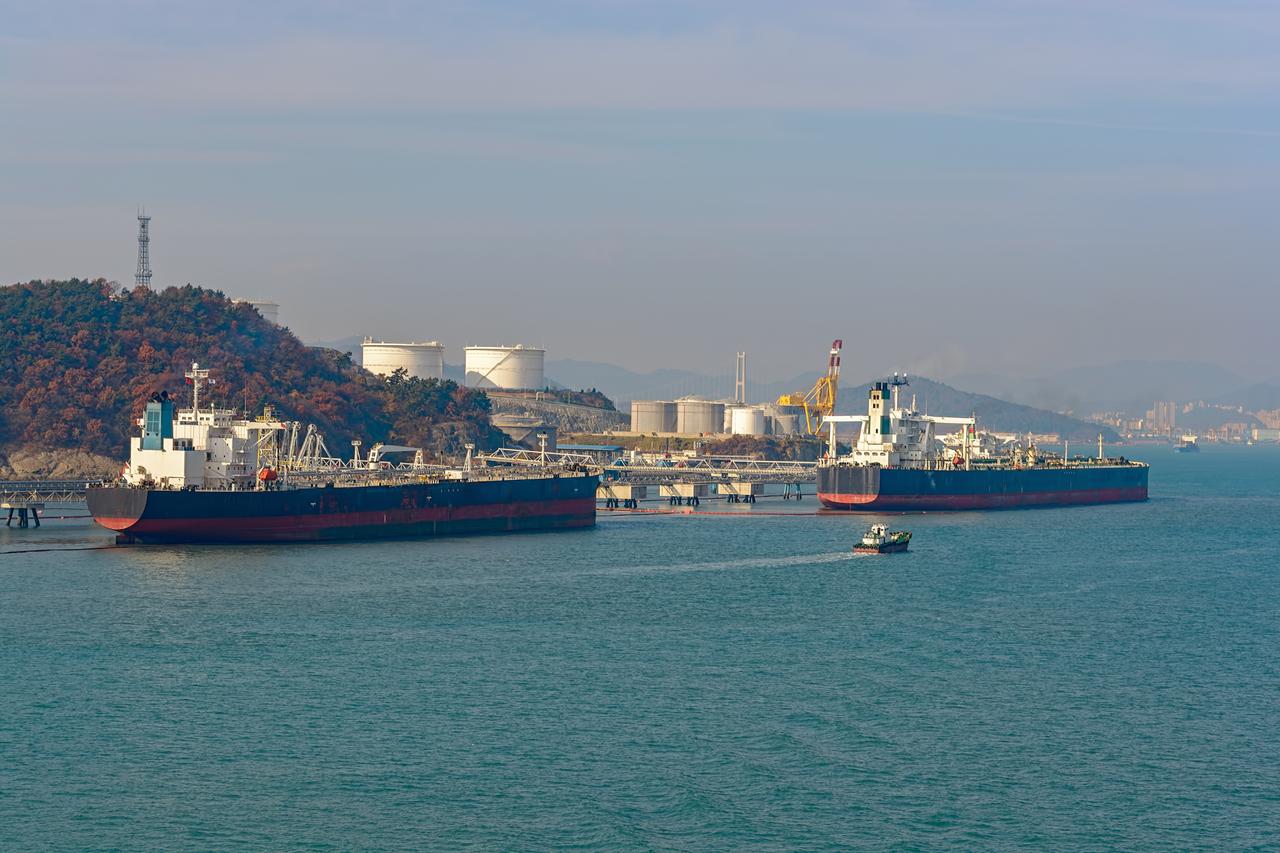


South Korea has locked in 24 million barrels of crude oil from the United Arab Emirates (UAE) as strain around the Strait of Hormuz continues to rattle global markets during the Iran war.
The deal comes as S&P Global’s Dubai crude benchmark—one of the main pricing references for Middle Eastern oil sold to Asia—jumped to a record $153.25 per barrel on Monday before settling at $129.89, as the country’s alternative export route through Fujairah faced repeated disruptions from drone strikes.
Kang Hoon-sik, chief of staff to President Lee Jae Myung, said the UAE had committed to prioritizing South Korea in its crude exports following recent talks in the Gulf. "The UAE clearly promised us that no country would receive crude oil ahead of South Korea and that we are the ‘No. 1 priority’ in terms of its oil supply," Kang said.
The total supply includes an earlier 6 million barrels and a newly arranged 18 million barrels, which Seoul can draw on as needed. The additional volumes consist of 6 million barrels shipped via three UAE-flagged vessels and 12 million barrels transported by six Korean-flagged tankers.
Both sides also agreed to prepare a memorandum of understanding covering crude supply chains and alternative transport routes. Kang said the arrangement allows South Korea to make emergency purchases at any time and reduces the risk of supply shortages.
South Korea relies heavily on the Middle East for its energy needs, with roughly 70% of its crude oil imports coming from the region, including Saudi Arabia, the UAE, Iraq and Kuwait. In 2025, these imports averaged about 1.95 million barrels per day, with Saudi Arabia as the largest supplier and the UAE among the top three.
Following the news, the benchmark Kospi index closed up 5%, as leading Korean tech stocks rebounded after a sharp sell-off earlier in the conflict driven by potential supply shocks.


Oil flows from the Middle East to Asia have dropped sharply as tensions linked to the U.S.-Israeli strikes on Iran and Tehran’s response disrupt maritime traffic through the Strait of Hormuz. Data from Kpler showed exports fell to 11.665 million barrels per day in March 2026, down from around 19 million barrels per day in February and roughly 32% lower than the same period last year.
The UAE’s oil production has fallen by more than half as the conflict prompted state energy firm ADNOC to implement widespread output cuts, according to sources cited by Reuters. Although the country has developed infrastructure to bypass the Strait of Hormuz, its capacity remains limited compared to total production.
Before the conflict, the UAE’s oil exports reached a record of around 2.75 million barrels per day (bpd), while production stood at over 3 million bpd.
Fujairah, one of the world’s largest oil storage and bunkering hubs, typically handling around 1 million barrels per day and serving as a key route bypassing the Strait of Hormuz, has faced repeated setbacks in recent days, with Iranian drone strikes halting loadings at the port.


 Set as preferred source
 Set as preferred source


 1 min read
 1 min read