Newsletters




The world's leading semiconductor company, Nvidia, has announced several major artificial intelligence deals in South Korea. The agreements, revealed on Monday, include projects in data infrastructure, advanced memory chips, and robotics with some of South Korea’s biggest technology companies.
The biggest announcement is a partnership with SK Telecom, South Korea's dominant wireless telecommunications operator, to build a "gigawatt-scale" AI data center.
The first data center is expected to open in 2027 and will support "AI services for enterprises and industries across Korea, with the vision to expand to greater Asia regions," according to a joint statement from the companies. They did not share the investment amount for this project or for the other partnerships announced at the same time.
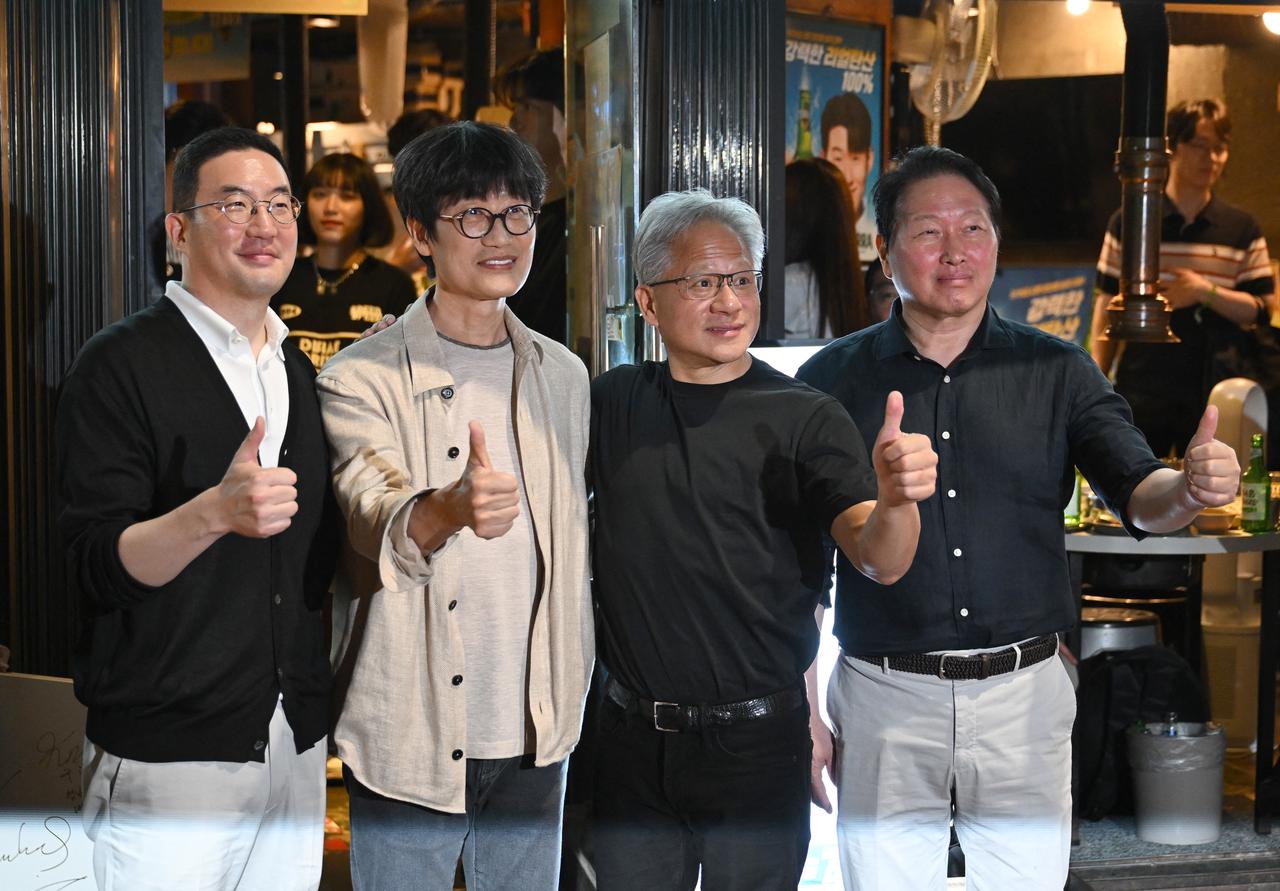
Nvidia also announced new partnerships with Naver, LG Group, Hyundai, and Doosan Group, focusing on areas like AI robotics. These deals were revealed after Nvidia CEO Jensen Huang met with South Korean tech leaders in Seoul and appeared on a popular TV show over the weekend.

Nvidia also announced a "multi-year technology partnership" with chipmaker SK Hynix to develop advanced memory components, an area facing a major global shortage. Both companies said this partnership would "sustain the global buildout of AI factories" by increasing the supply of in-demand memory chips.
Lian Jye Su, chief analyst at Omdia, said the agreements are "about strengthening existing relationships and further validating South Korea's role in the global AI supply chain."
These announcements come as governments and companies around the world invest hundreds of billions of dollars in AI infrastructure, thereby increasing demand for the memory chips that power AI systems. This surge has led to much higher profits for manufacturers like SK Hynix and Samsung Electronics.
At last week's Computex trade show in Taipei, Huang highlighted the supply shortage by signing a memory chip display at the SK Hynix booth with the words: "Please make more."
The chair of SK Group, which owns both SK Telecom and SK Hynix, promised last week to double the production capacity of silicon wafers used in memory chip manufacturing. However, he also said that shortages could continue until 2030.
The rapid growth of AI has sparked a wider debate in South Korea about how profits should be shared.
Samsung Electronics recently made a bonus agreement with its union, allowing about 60% of its domestic employees to receive a payment of around $330,000 this year, based on market estimates of operating profit. The agreement was made to prevent a strike.
When asked about the Samsung labor dispute in Taipei, Huang said companies should pay workers as much as possible.
On Monday, South Korean President Lee Jae Myung spoke about the issue, calling the question of sharing AI-driven gains "very difficult" but "an unavoidable reality" today. Lee asked whether extra profits should go only to companies or if workers, investors, the government, and taxpayers should also get a share.
He also said that redistributing corporate profits could discourage investment and suggested that the issue might eventually need to be discussed internationally.


 Set as preferred source
 Set as preferred source


 1 min read
 1 min read