Newsletters




U.S.-based S&P Global Market Intelligence expects the Central Bank of the Republic of Türkiye (CBRT) to leave interest rates unchanged at its meeting this week and does not expect rate cuts to resume before December, citing mounting external and structural pressures.
The central bank is likely to continue tightening liquidity and rely on non-rate measures, while the uncertain impact of the Iran war on Turkish markets is expected to persist and potentially undermine earlier disinflation efforts, Andrew Birch, associate director for European economics at the institution, said in a note.
Rising risks to the current account deficit, weak foreign capital inflows, widening bond-yield spreads, and lower international reserves all argue against a return to rate cuts, Birch emphasized.
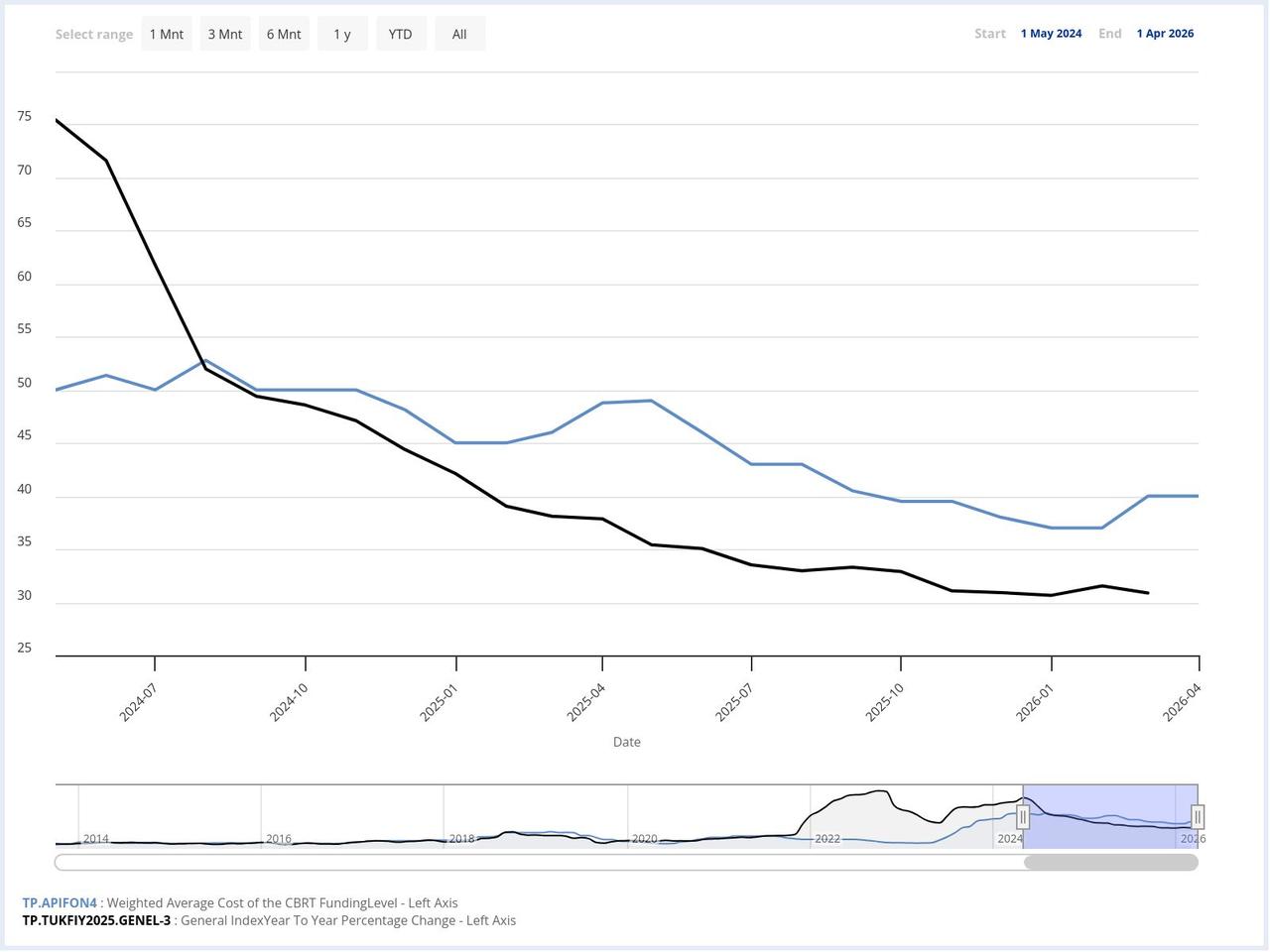
Following the outbreak of the war, Turkish policymakers moved to raise funding costs to 40% from the 37% policy rate by steering banks toward overnight borrowing, and paused the easing cycle at the March meeting.
At the upcoming Monetary Policy Committee (MPC) meeting on Wednesday, April 22, the CBRT is widely expected to keep the policy rate unchanged at 37%.

Separately, S&P Global Ratings Senior Director Frank Gill told Anadolu Agency that the war in the Middle East is placing pressure on Türkiye’s inflation and reserves, while risks remain balanced.
Last week, S&P affirmed Türkiye’s sovereign credit ratings at "BB-/B" and maintained its outlook at "stable."
Gill noted that Türkiye is highly sensitive to rising oil and gas prices, adding that higher energy costs are weighing on inflation, the balance of payments, and confidence in the currency.
The central bank has intervened in spot markets, while additional effects have been observed through gold swap transactions, he added.
External shocks have also increased pressure on international reserves, reflecting broader impacts on the central bank’s balance sheet.
A rate cut before the end of summer appears unlikely under current conditions, Gill said, adding that tight monetary policy is expected to continue.

In a similar assessment, Türkiye’s interest rate cycle could tilt toward easing after July if pressure from the Iran war eases, Garanti BBVA’s Chief Mahmut Akten said, noting that the CBRT has already taken sufficient steps in its fight against inflation.
Akten said that interest rates are currently positioned above inflation and provide a strong real return.
If the ceasefire process in the region holds, and no unexpected developments arise, the central bank may not need to implement additional rate increases.
Further tightening would strain the entire banking sector, Akten told Bloomberg HT, adding that under a more stable backdrop, a gradual shift toward lower rates could begin in July.


 Set as preferred source
 Set as preferred source


 1 min read
 1 min read