Newsletters


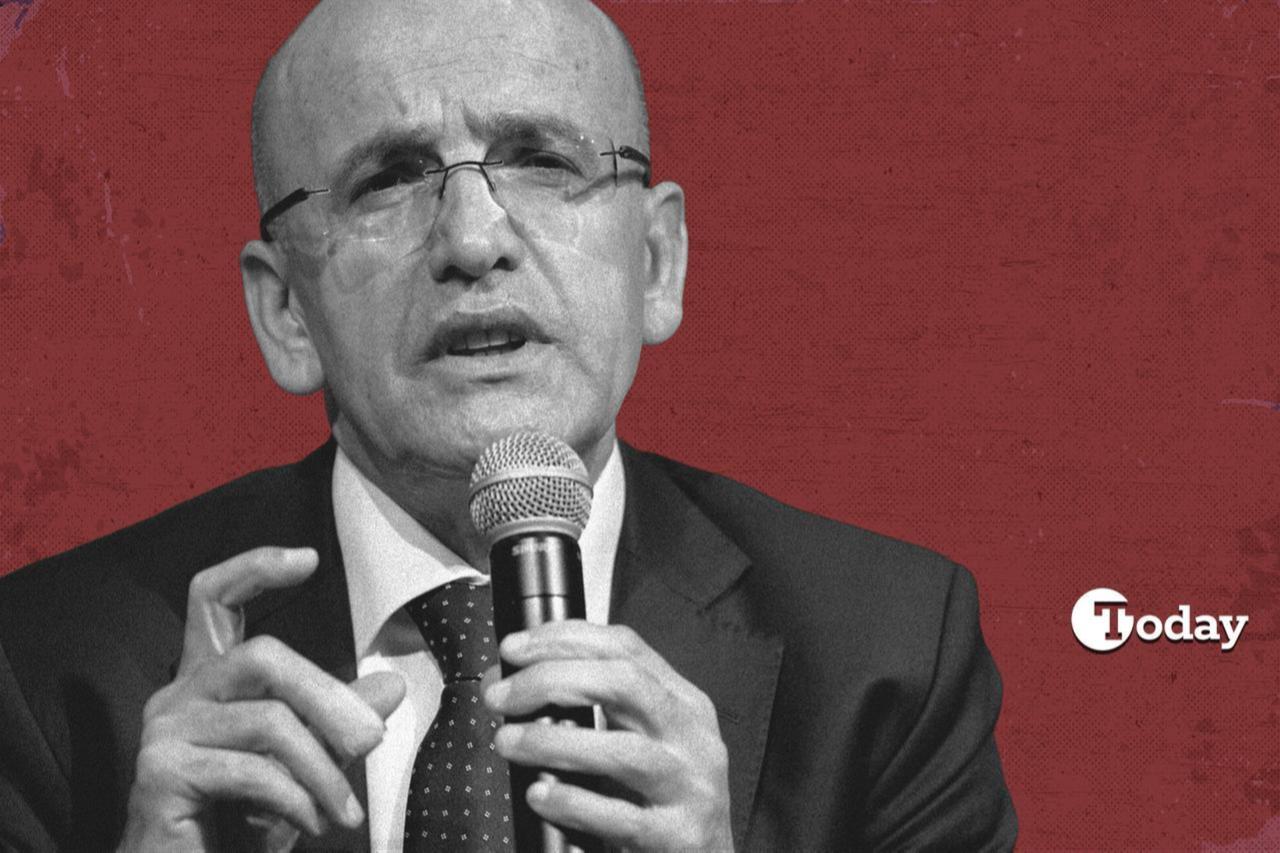


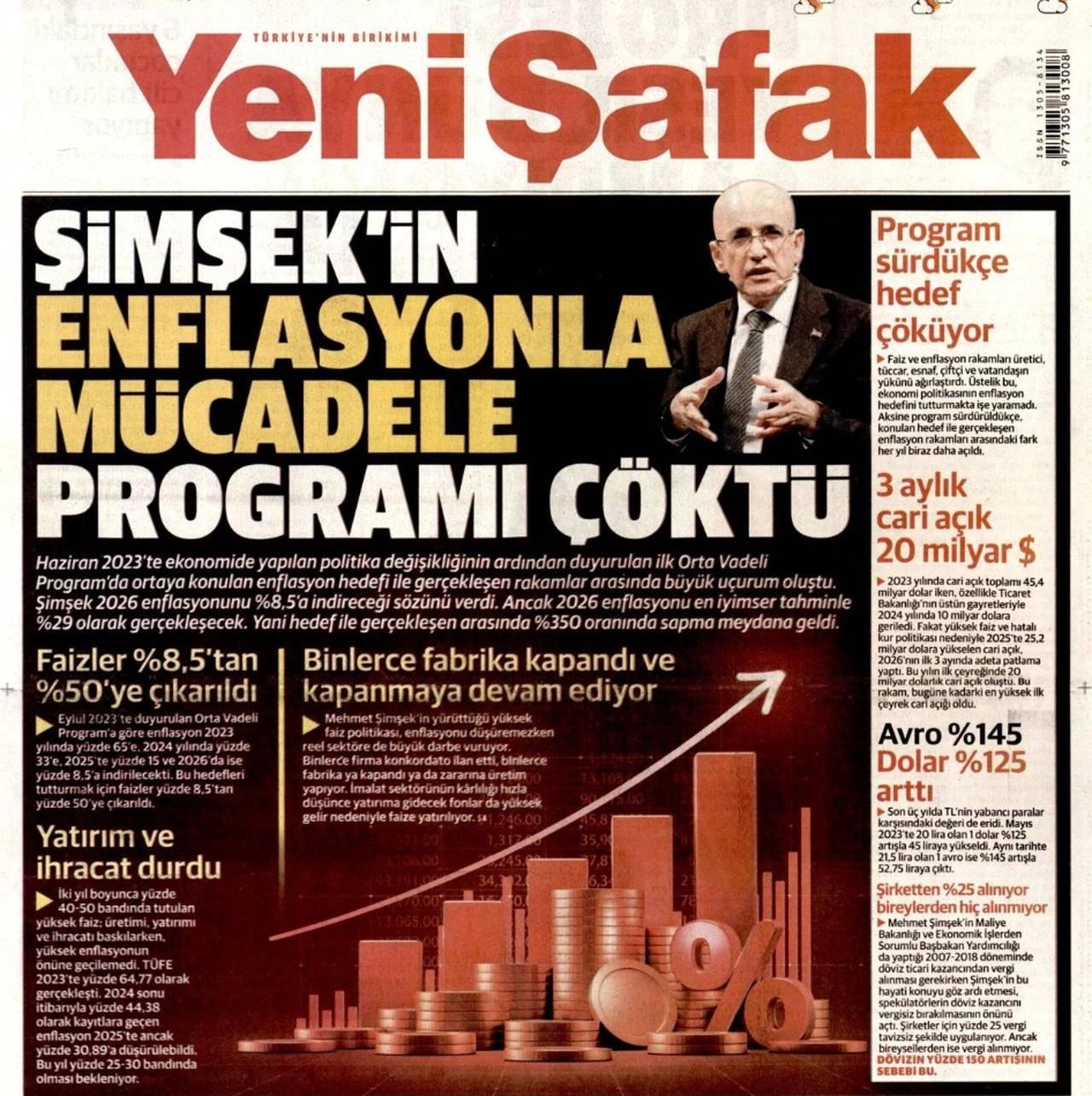
Yeni Safak, a Turkish pro-government daily known for its closeness to the ruling Justice and Development Party (AK Party), intensified its criticism of Finance Minister Mehmet Simsek and the ongoing disinflation program, arguing that the program "has collapsed" and no longer reflects reality.
The newspaper carried the criticism as its front-page headline on Monday, declaring, "Simsek’s disinflation program has collapsed," and pointed to a widening gap between official inflation targets and actual figures following the June 2023 policy shift.
The report argued that the discrepancy between the targets set in the 2023–2025 Medium-Term Program (MTP) and current figures has reached "record" levels, claiming that such a large discrepancy in inflation forecasts "had never been seen in any country at any point in history."
The 2023–2025 MTP, the first economic program prepared under Mehmet Simsek’s tenure, projected inflation would decline from 65% in 2023 to 33% in 2024, 15% in 2025, and 8.5% in 2026.
However, in subsequent medium-term programs, the government gradually revised its forecasts upward, setting a 16% target for end-2026.
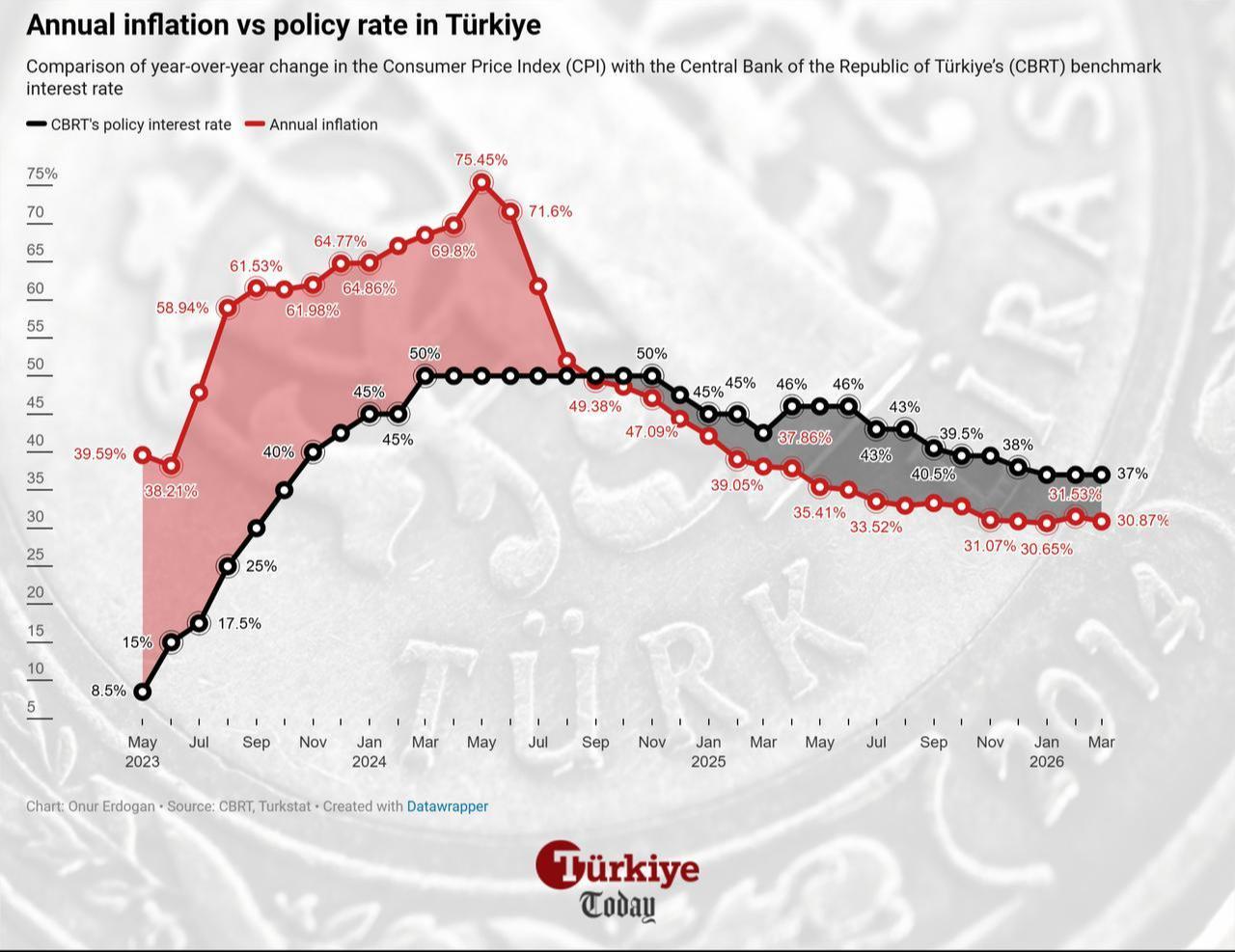
The report went on to criticize the tight monetary conditions in place since mid-2023, with the policy rate rising to 50% in March 2024 from 8.5% in May 2023, and remaining elevated at 37% as of March 2026.
Inflation, meanwhile, still stands above 30% as of March 2026, showing the program’s inability to ensure price stability, while production, investment, and exports have come under pressure, with many firms seeking restructuring and others curtailing output or shutting down operations, it added.
The paper also highlighted the depreciation of the Turkish lira over the past three years. The U.S. dollar/Turkish lira exchange rate rose from 20 in May 2023 to 45, marking a 125% increase, while the euro/Turkish lira rate climbed from 21.5 to 52.75, up 145%.
On the external front, the current account deficit narrowed to $10 billion in 2024 from $45.4 billion in 2023, but widened again to $25.2 billion in 2025.
In the first quarter of 2026 alone, the deficit reached $20 billion, putting it on track to exceed $65 billion for the full year if current trends persist, it cautioned.

Yeni Safak's criticism of current economic policies is not new; nevertheless, the increasingly harsh tone attracts attention as Türkiye's disinflation path has recently been challenged by a spike in food prices at the beginning of the year and the onset of the Iran war, sending energy costs higher and triggering massive capital outflows.
In March, the Central Bank of the Republic of Türkiye (CBRT) paused its easing cycle that had been in place for five consecutive months starting in July 2025, bringing the policy rate down to 37% from 46%.
Gradual easing of inflation resumed in March as the reintroduced fuel tax buffer system helped to alleviate cost pressures amid surging oil prices; however, the trend of consumer price growth seemed to be slowing, particularly after the Iran war.
Policymakers will convene on Wednesday, April 22, at the year's third Monetary Policy Committee (MPC) meeting, and market surveys anticipate that the policy rate will be kept steady.
On the other hand, as the bank halted one-week repo auctions and started to fund the market through its higher overnight rate at 40% since the start of the conflict, many also expect a 300-basis-point hike back to the 40% level.
Amid this backdrop, signs of slowing economic activity, with gross domestic product (GDP) growing by 0.4% in the last quarter of 2025 and shrinking export momentum, particularly after the tensions in the Gulf, add pressure to the ongoing challenges.
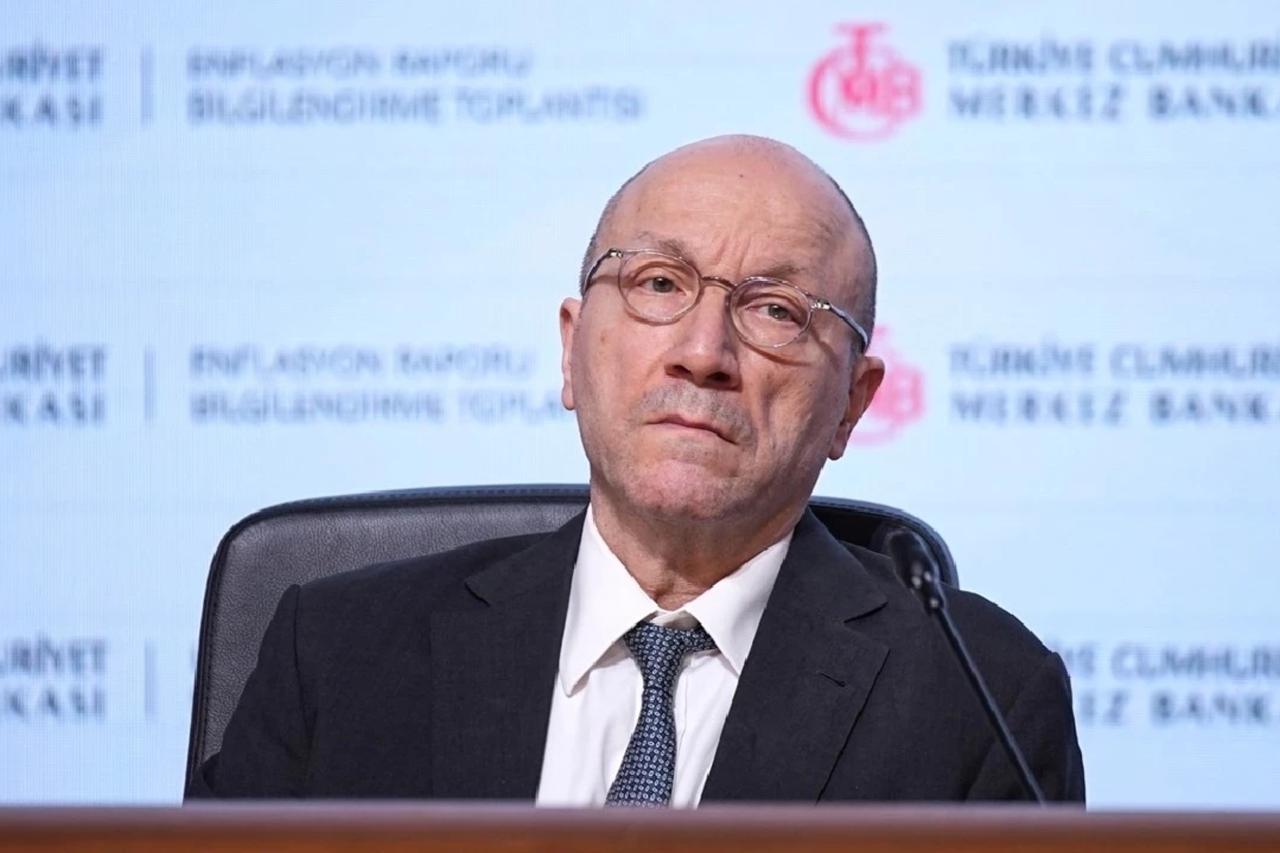
Central Bank Governor Fatih Karahan also acknowledged that outlook during investor meetings held in New York last week, flagging declining demand and production along with falling capacity utilization rates.
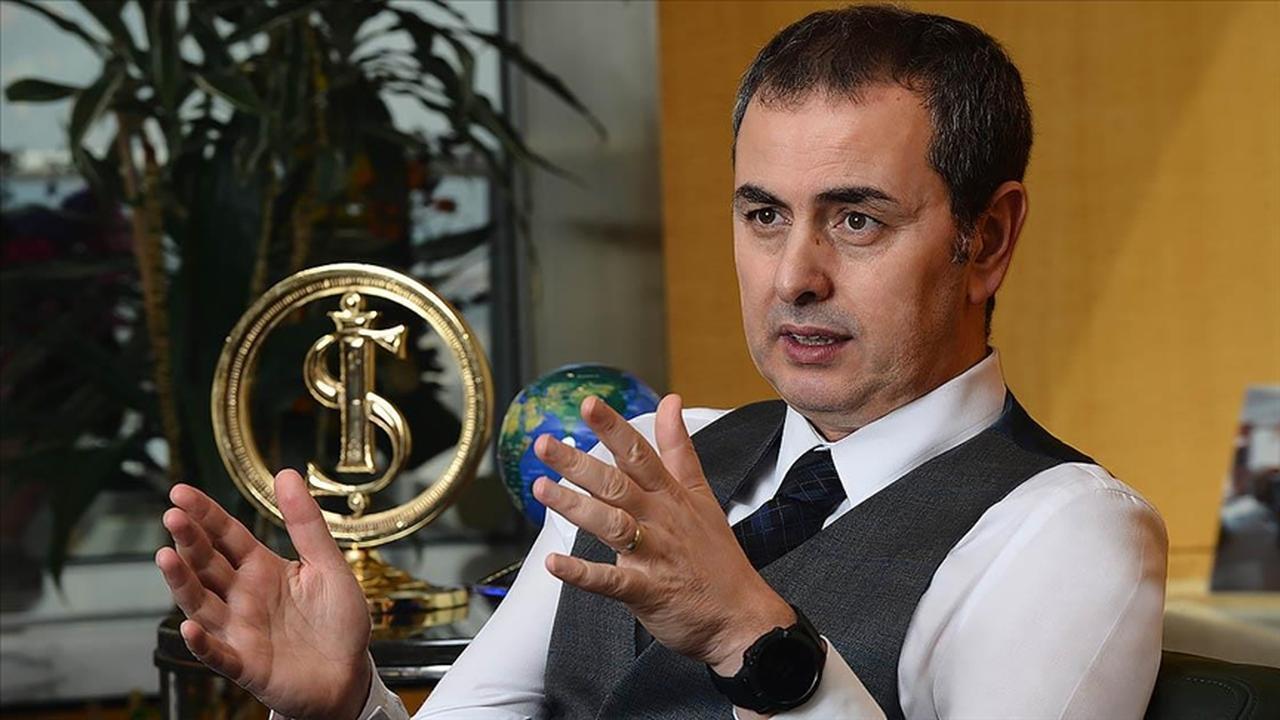
The trajectory of Türkiye’s ongoing disinflation program is increasingly debated in financial circles, with the head of the country’s largest private bank suggesting a brief break from tight monetary conditions to ease pressure on the real sector if current conditions continue to weigh on economic activity.
Hakan Aran, CEO of Is Bank, said last week that external shocks—particularly energy prices rising to $90–100 per barrel—have reshaped the economic environment, making disinflation efforts less viable.
"Inflation is now inevitable," he said, citing supply constraints, rising energy costs, and broad price volatility. Year-end inflation is expected to settle between 27% and 32% regardless of policy stance, he advocated, questioning the logic of maintaining a stance that delivers limited gains.
He argued that resources should instead be directed toward strengthening the real sector until global conditions stabilize, particularly energy prices. "If you see that you cannot win, continuing the same program and adding new problems does not make sense," he said.
The remarks quickly spread on social media, igniting debate over the outlook for the Turkish economy, with many viewing them as a call for a policy shift, while others questioned the sustainability of the program.
In an interview with Bloomberg HT later, Aran clarified that he does not call for a break from disinflation, stating that the Is Bank supports the medium-term program built on that framework.
However, he proposed revising the program to reflect current conditions. "Until this environment normalizes, I suggest a revision that establishes a new equilibrium and prevents rising fragility in the real sector and industry," he said.
During meetings in Washington and New York last week, Finance Minister Mehmet Simsek addressed rising risks to Türkiye’s economic outlook, emphasizing the country’s resilience and capacity to absorb external shocks.
He also pointed to post-war opportunities for Türkiye, highlighting ongoing trade route initiatives such as the Middle Corridor, which positions the country as a regional hub.
The minister reassured investors that the program remains on track and will continue until price stability is achieved.
However, some reports suggested that the criticism reflects pressure from business groups aligned with the newspaper, effectively signaling a message to President Recep Tayyip Erdogan to remove Simsek amid challenging external conditions.
Journalist Murat Yetkin said the newspaper is effectively sending a message to Erdogan, calling for Simsek’s removal despite difficult external conditions.
Appointed in May 2023, Simsek has been the leading figure in Türkiye’s shift from the heterodox policies of the previous period to a more orthodox economic framework.


 Set as preferred source
 Set as preferred source


 1 min read
 1 min read