Newsletters


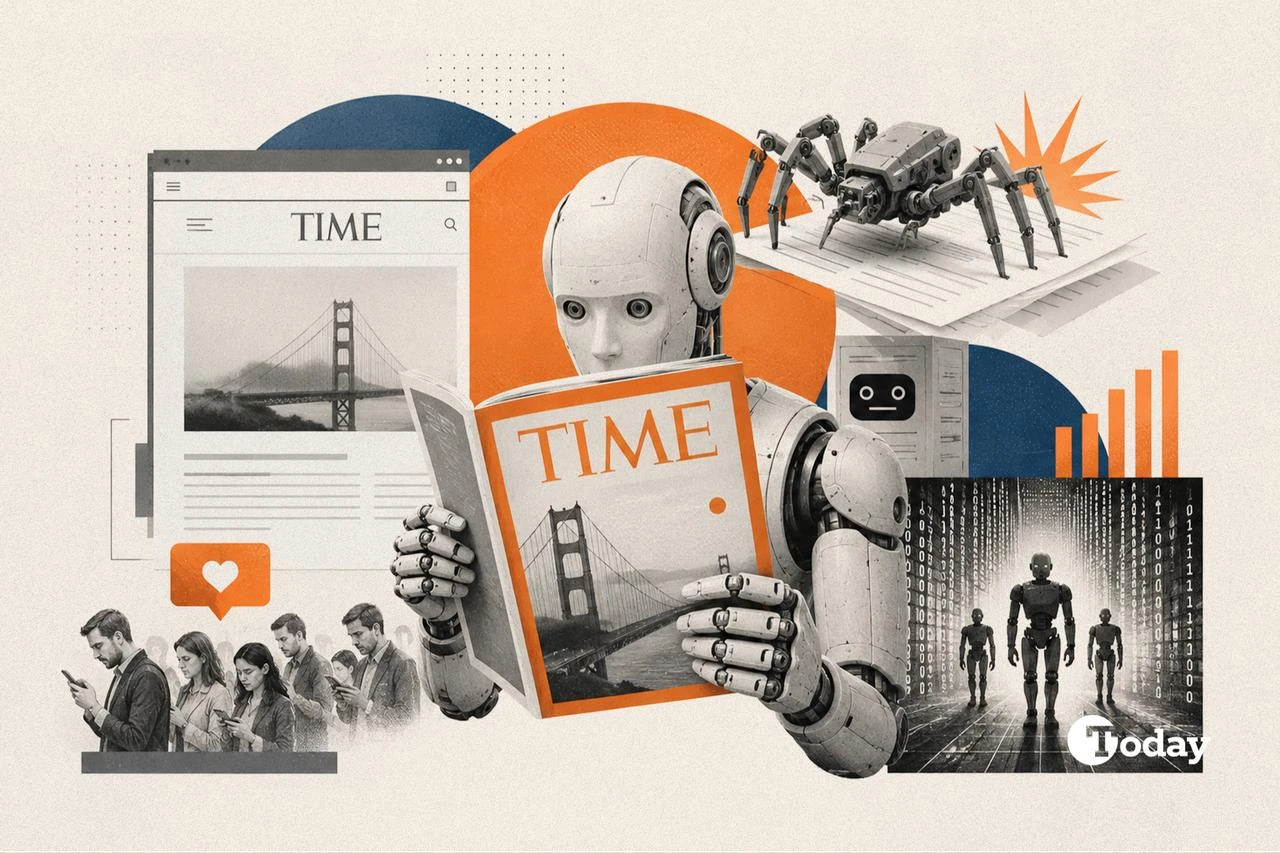


You ask an AI assistant a question. It responds confidently, citing facts, comparing options and sounding neutral. But behind the scenes, it draws from a different version of the internet, a set of web pages built for machines that people never see.
On some of these pages, at least one major publication has started adding ads written specifically for AI to pick up and repeat as if they were just information. The reader never opens the page or sees the ad. They only see the answer.


The publication in question is Time magazine. According to Digiday, Time now offers a second, machine-readable version of its site, simplified from HTML to Markdown, made just for AI crawlers.
On these pages, the company runs what it calls agent ads: AI-generated FAQ sections designed to answer the exact questions someone might ask a chatbot.
These are labeled as sponsored content, but only on the machine-facing page. Vincent Schmalbach, a German software developer, was the first to document this in detail. He described FAQ blocks for the online bank Ally that repeat brand claims almost word for word, ready to be used in a chatbot's response.
Time does not show every crawler the same content. Google's standard indexing bot reportedly gets the same page that a human would see. But the bots behind AI assistants and AI search, like ClaudeBot, OAI-SearchBot and PerplexityBot, reportedly get an alternate version that includes ads. So, the difference is not about indexing or not indexing. It's about what humans see versus what machines see.

The simple answer is survival. Referral traffic across the industry has plummeted, mostly because AI systems now answer questions directly instead of sending people to the original source.
Time's executives have said that, on most days, bots now visit its pages more than humans do. If the audience is shifting from people to machines, then advertising should shift too.
One adtech executive told Digiday that shaping what a chatbot says about a brand can matter more than reaching any single reader, since a chatbot's answer is repeated to everyone who asks.
A television or print ad only lasts for one broadcast or one issue. But an answer built into an AI system's understanding of a brand can be repeated endlessly, across countless conversations, without anyone choosing to see it.

That raises a harder question, one that does not have a clear answer yet: when an ad moves from a labeled source page into a generated answer, does the disclosure move with it?
Time does mark its agent ads as sponsored content on the machine-facing page. But once an AI system scrapes that page, paraphrases it and adds a sentence or two into a generated answer, nothing currently requires the disclosure to stay with the content.
There is no regulation, industry standard or shared technical rule that requires an AI assistant to say "this fact came from a paid placement" when giving a recommendation. The publisher discloses. What happens after that is, functionally, unsupervised.
It is also worth noting that AI companies with their own advertising products, including ChatGPT and Google, reportedly keep a clearer line between sponsored and regular content than this publisher-side approach.
This is a strange reversal. The platforms built to make money from ads are, at least officially, more careful about labeling them than the news organizations trying to adapt.

This is not just happening at Time, and it probably will not stay limited to banks and FAQ pages. As AI systems do more of their own research, searching, comparing and deciding, most of that activity will never be seen by a person.
The bot becomes the audience. The bot is the first reader. Somewhere along the way, an answer is created, and a person receives it as if it were simply the truth.
So, the next time an AI assistant tells you which bank has the most fee-free ATMs or which product is "in a category of one," it might be repeating exactly what someone paid for it to say.
Maybe that will be disclosed to you someday. Or maybe it will just become another hidden part of the answer, impossible to tell apart from the rest.
For now, there is no way for the real, human reader to know the difference. And it does not seem like anyone building these systems is rushing to change that.


 Set as preferred source
 Set as preferred source



 1 min read