Sign in
 Newsletters


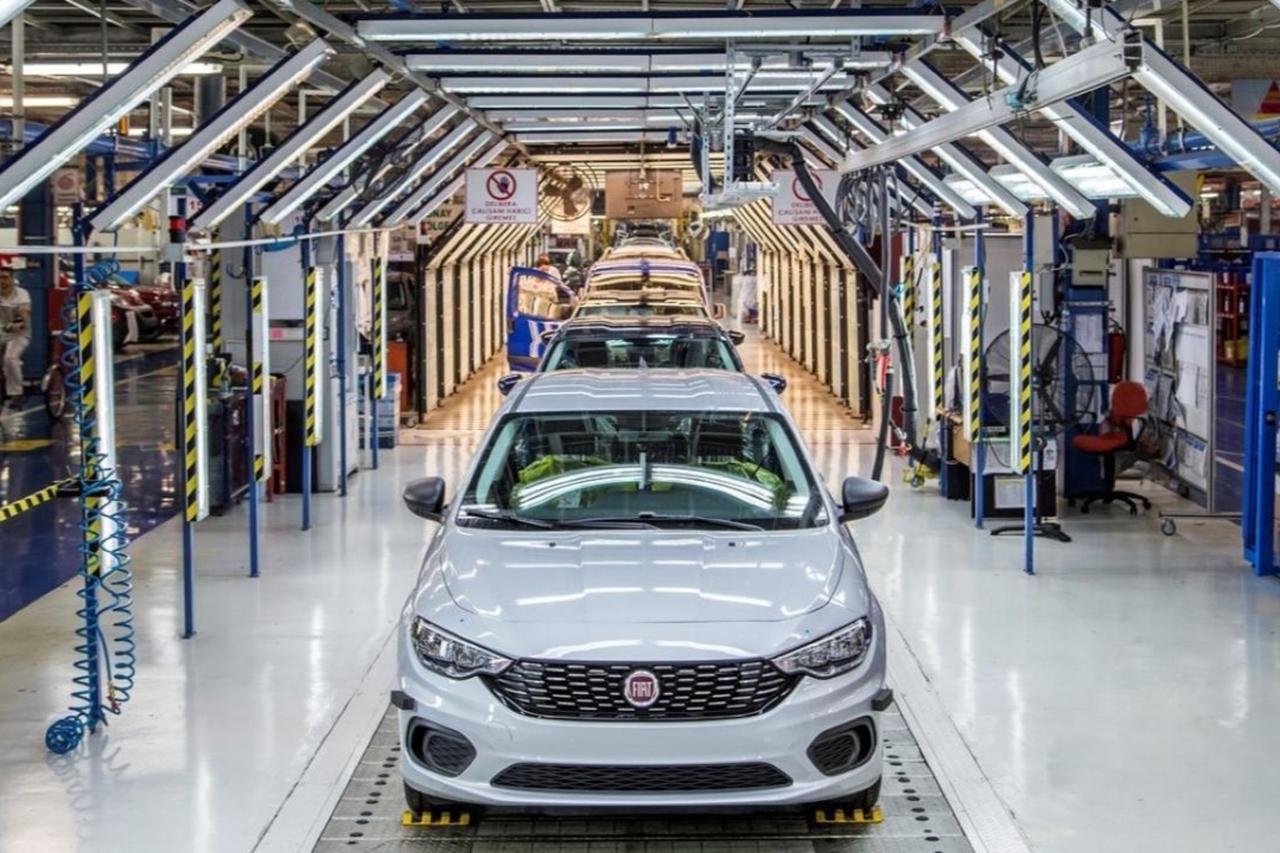


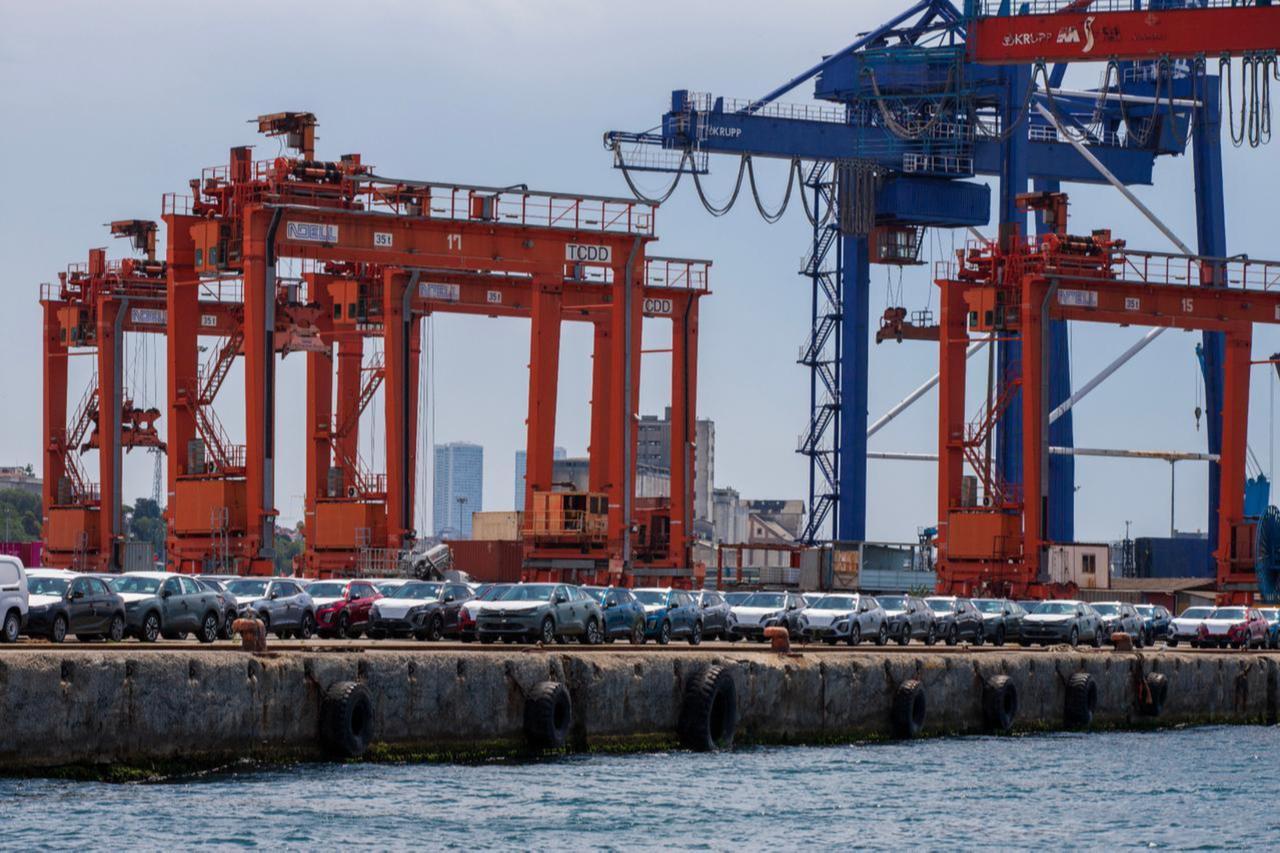
Türkiye’s automotive export revenues climbed 3% to $35.2 billion in the first 10 months of the year despite shrinking production, led by a drop in passenger car manufacturing, according to a report by the Turkish Automotive Manufacturers’ Association (OSD) on Monday.
The country’s total auto exports declined 9%, reaching 779,557 units, driven by a 25% drop in passenger car exports, which totaled 364,636 in January-October.
Conversely, commercial vehicle exports grew 11%, and tractor exports also rose 11%, reaching 10,322 units over the same period, mitigating some of the losses in passenger car exports.
Passenger car export revenues fell 6% to $8.9 billion, while overall auto and supply industry exports grew 3.1% and 2.8% in dollar terms, respectively.
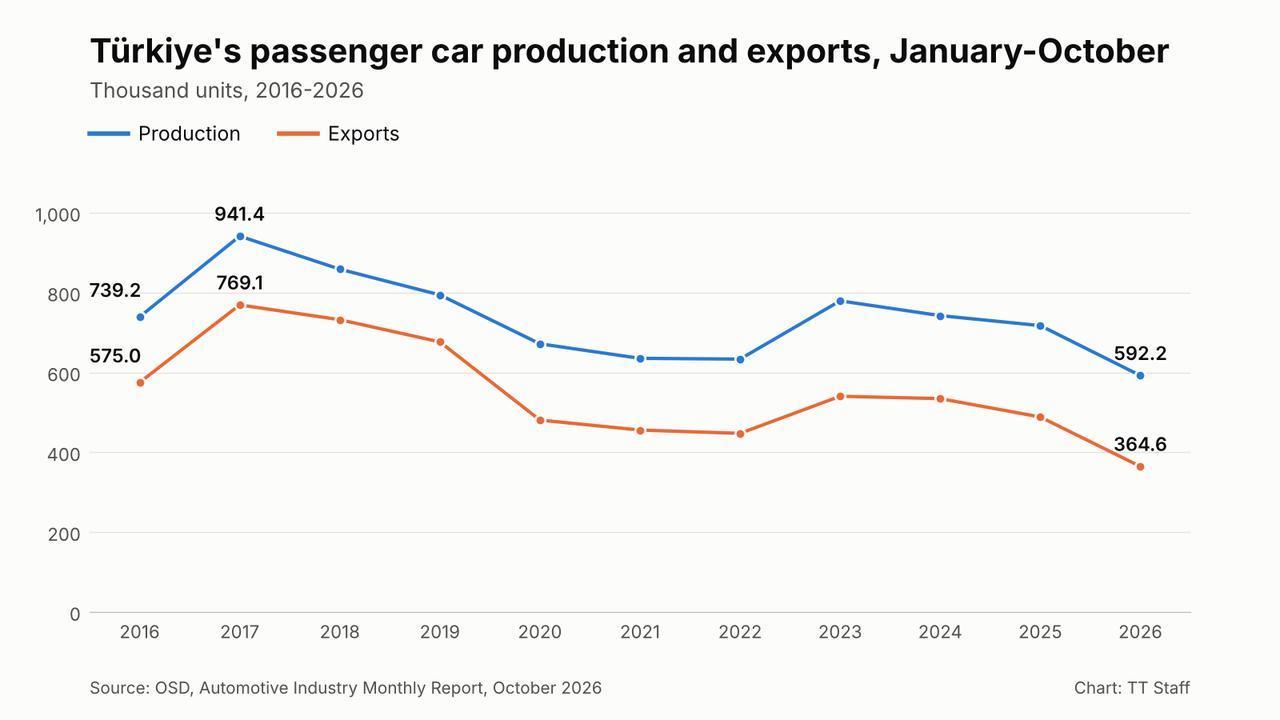

Türkiye’s total auto production declined 6% on an annual basis, reaching nearly 1.1 million units. The drop was led by a 17% decline in passenger car production, which fell to 592,163 units in January-October.
Commercial vehicle production rose 12% as light and heavy commercial vehicle manufacturing surged 13% and 5%, respectively.
Despite the lower unit volume, the Turkish auto sector maintained its leading position in the sectoral export rankings with a 17% surge, according to the OSD.
Domestically, the Turkish auto market contracted 15% year-on-year in January-October, totaling 916,149 units. The passenger car market declined 17% to 692,916 units sold.
The commercial vehicle market saw a 9% drop in domestic sales, as light commercial sales fell 9% and heavy commercial sales declined 7%.
The Turkish auto industry’s overall capacity utilization stood at 61%, while this rate was 63% for light vehicles, 60% for trucks, 67% for buses and midibuses and 28% for tractors.
Domestically produced vehicles made up 35% of passenger car sales and 24% of the light commercial vehicle market, the data showed.


 Set as preferred source
 Set as preferred source


 1 min read
 1 min read