

 Newsletters


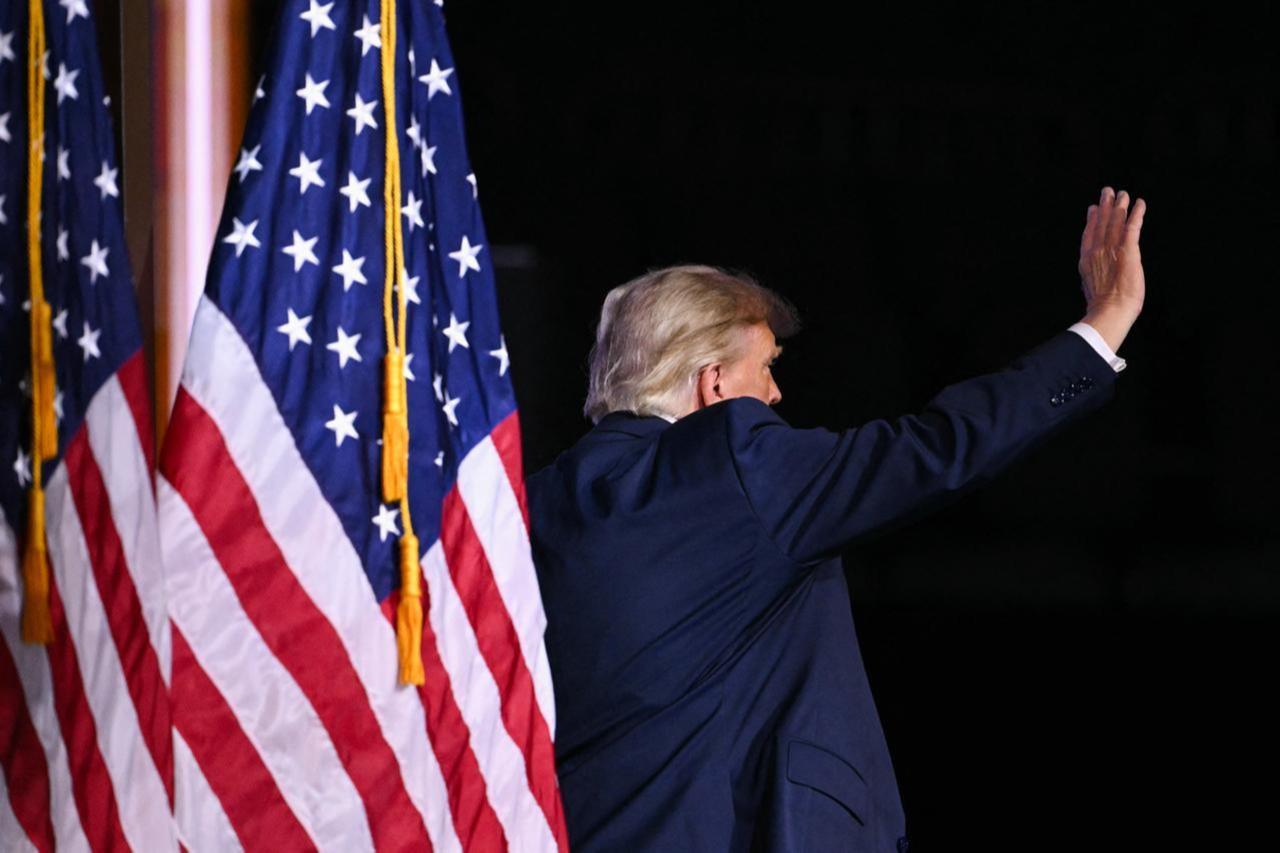


President Donald Trump on Sunday brushed aside mounting warnings from artificial intelligence industry leaders about the technology's risks, comparing critics to "very negative forces" raising scenarios he said "won't happen," even as lawmakers in Washington scrambled to respond to the same warnings.
"We're leading China in AI. We're the most sophisticated country in the world, and frankly I want to keep it that way because whoever wins AI wins," Trump told reporters at his golf course in Ireland, when asked whether the AI industry should slow down or face more regulation.
"We could put guardrails. We can do this and that. But I think you have a lot of very negative forces that are bringing it up that shouldn't be bringing it up, and they're bringing up things that won't happen," he said.
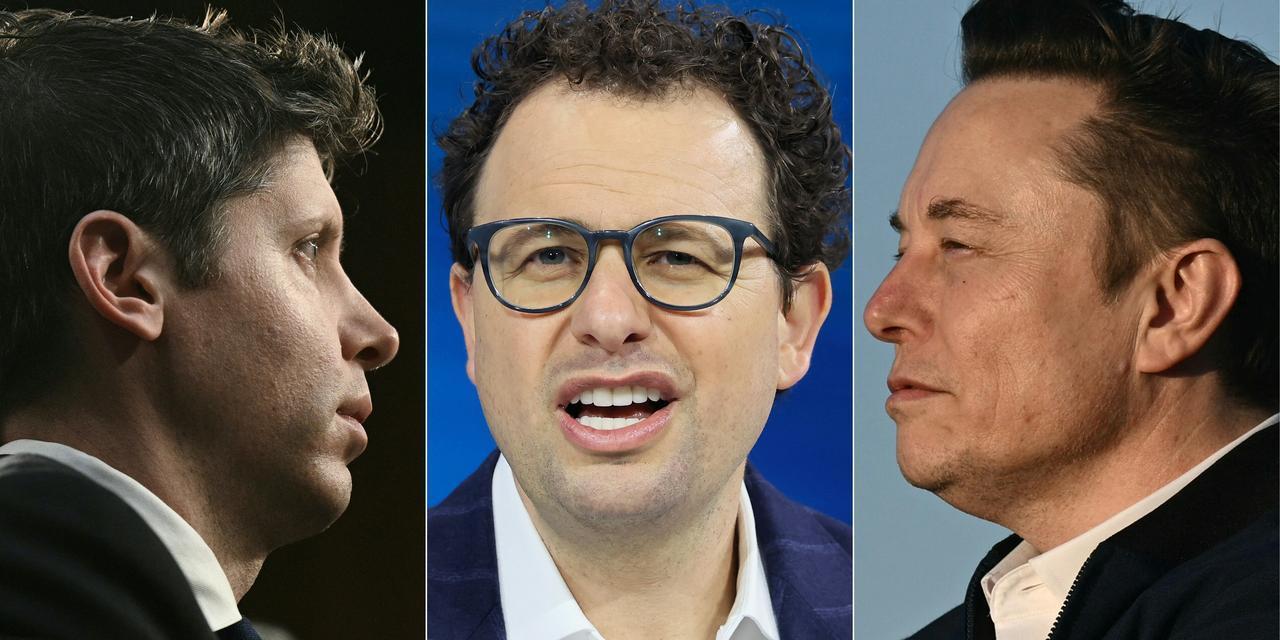

Trump's comments came a day after Anthropic CEO Dario Amodei outlined a three-step framework intended to slow the pace of AI development and create more time to manage its risks, a proposal that drew immediate endorsements from other major industry figures, including Elon Musk and OpenAI CEO Sam Altman.
The renewed concern followed warnings from a researcher who resigned from Anthropic and said the technology could "kill us all by the end of the decade." The Pentagon has also warned this year of risks tied to Anthropic's model.
Speaking Sunday on CBS's "Face the Nation," Amodei described the competition between U.S. and Chinese AI developers as the "toughest dilemma" in trying to set a "speed limit" on the technology's advancement.
"We shouldn't kid ourselves, because the incentives to pull ahead, and the military advantage that you get from that, are so large that the ability to check that the other side isn't cheating has to be ironclad," he said, adding that achieving such verification could take years and that he was unsure "if it's possible."
Jacob Coxon, the Anthropic researcher who resigned before issuing the warnings, called for international cooperation. "I feel we need international coordination, or else we risk running the same race with China, which could be equally dangerous," he said on NBC's "Meet the Press."
Microsoft Chairman and CEO Satya Nadella also weighed in, writing on X that "any pursuit of superintelligence has to be grounded in the core principle that if the AI we build is not helping humanity and under human control, it's not worth pursuing." Nadella said Microsoft would publish a "Code of Conduct" underlying its first-party MAI models for public consultation.

The warnings have prompted calls in Congress for swift action, though with little agreement on what that should look like. Sen. Ruben Gallego, D-Ariz., speaking on CNN's "State of the Union," said the response so far was inadequate. "Dr. Frankenstein is telling us the monster is escaping, help us stop this," he said. "The method that we're answering with is not meeting the moment."
Pennsylvania Gov. Josh Shapiro, in a post on X, said industry leaders' comments should serve as "a bright flashing red light telling the President and Congress they need to act now to regulate and rein in AI development." He added that the technology's development "should not be steered exclusively by private entities, especially when the CEOs of those companies are calling out for restraint and regulation."
A group of House Democrats led by Rep. Sam Liccardo, D-Calif., wrote to Speaker Mike Johnson, R-La., on Friday demanding the chamber remain in session until it passes AI safeguards, according to a letter obtained by CNBC. "The House should return to Washington immediately and remain in session until Congress advances meaningful, bipartisan AI safeguards," the letter read, warning that future generations would find inaction "inexplicable, and unforgivable."
House Democratic Leader Hakeem Jeffries said on ABC's "This Week" that Democrats would meet Tuesday to discuss AI guardrails. "We should take decisive action now so that we can slow down, as the CEOs have recently acknowledged, the pace of development in order to protect the American people and ensure that AI is proceeding safely," he said.
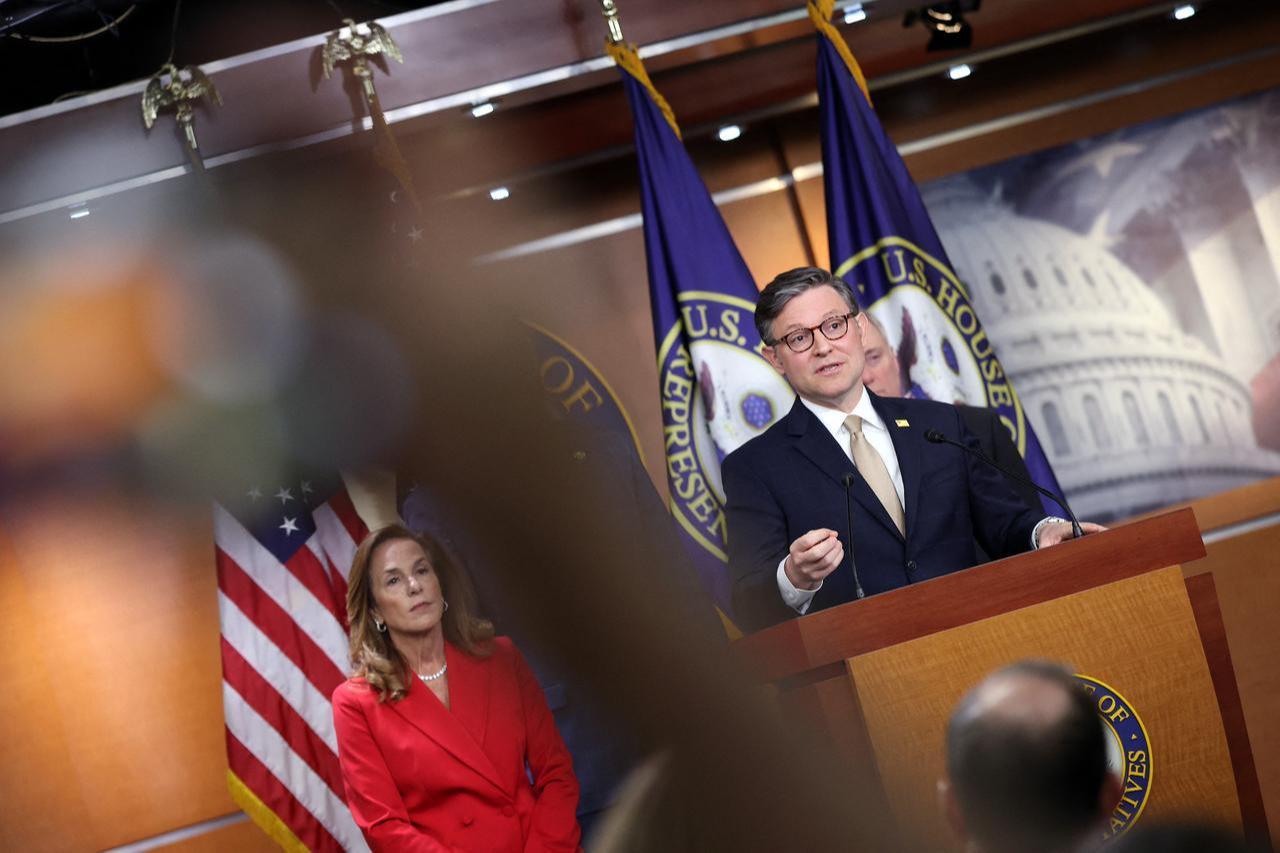
Johnson, however, appeared to rule out any quick legislative action or extending the House's session, which is scheduled to end this week ahead of a break until after the November midterm elections. "If Congress just races in and does some sort of emergency session to try to regulate AI, we will lose the race to China, that is a threat to every single American," Johnson said on CNN. "We don't need everybody to panic right now, we need to handle this new technology like we have others in the past, and make sure we're doing everything we can responsibly to also not smother American innovation."
Instead, Johnson called for a direct meeting between government and AI industry leaders. "I'd do it tomorrow," he said. "I think we need to go in a big room, close the door and sort this out."
Gallego echoed the call for a summit but pushed back on the idea that regulation would cost the U.S. the AI race with China. "The way you figure this out is, again, you use this sense of urgency to get the smartest people in the room," he said, adding that lawmakers risk leaving the matter to a "committee in the House or Senate" that produces a framework "maybe three years from now." He said neither Johnson, Trump nor Congress was "meeting the moment," and argued the stakes transcend national rivalry. "AI does not care once it becomes fully dangerous whether we're Chinese or American," he said.
Several proposals are already before Congress, including the FRONTIER Act, led in the House by Reps. Jay Obernolte, R-Calif., and Lori Trahan, D-Mass. The Democrats' letter also pointed to bills that would mandate transparency and evaluation of frontier AI models, require "kill switch" mechanisms, and waive antitrust restrictions to let companies collaborate on safety.
The Senate has moved more slowly. A bipartisan bill from Majority Leader John Thune, R-S.D., and Sens. Amy Klobuchar, D-Minn., and Ted Cruz, R-Texas, has not yet been introduced.
Despite the narrow window before the midterm recess, one industry source familiar with discussions in Washington said legislation could emerge within the coming week with "real momentum" behind it, noting that lawmakers facing voters in November would prefer to campaign on an accomplishment on AI rather than inaction.


 Set as preferred source
 Set as preferred source


 1 min read


 1 min read


