Sign in
 Newsletters


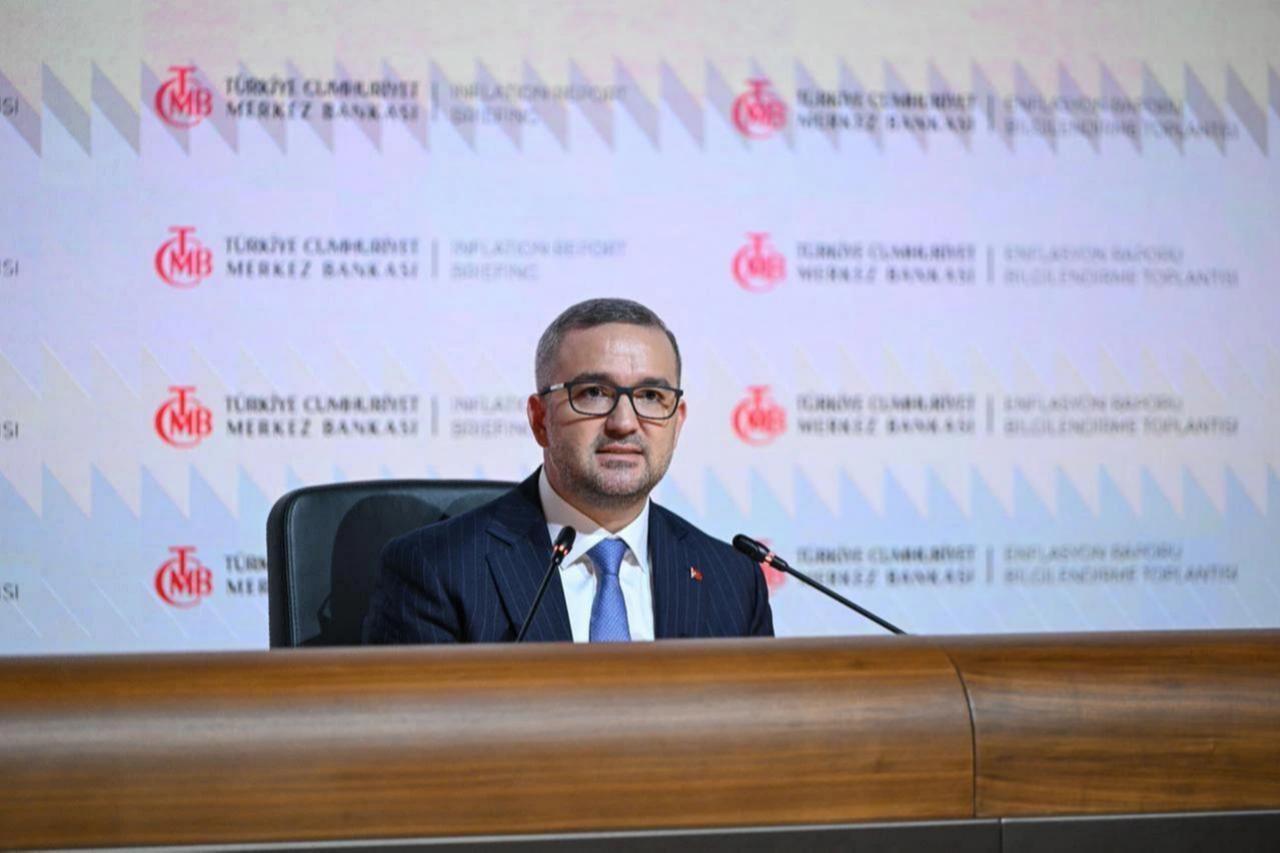


Central Bank of the Republic of Türkiye (TCMB) Governor Fatih Karahan has pledged to maintain tight monetary policy until price stability is achieved, acknowledging that weaker domestic demand and rising costs are making investment and employment decisions increasingly difficult for businesses.
Speaking at a gala dinner organized by the Independent Industrialists and Businessmen Association (MUSIAD) in London, Karahan addressed the impact of geopolitical tensions on inflation, progress in the disinflation process and the challenges facing exporters.
His remarks come as the TCMB continues to navigate an inflation outlook complicated by higher energy prices. The bank raised its 2026 year-end inflation forecast to 29.5% from 28% in its Nov. 12 inflation report while projecting inflation of 21% for 2027.
Geopolitical developments have driven a sharp increase in energy prices this year, putting upward pressure on consumer prices and keeping inflation elevated for much of the period, Karahan noted.
"We responded to this shock quickly. It put upward pressure on prices and kept inflation elevated at around 30% for much of the year," he said, according to CNBC-e.
Türkiye's annual consumer inflation stood at 29.77% in October, up from 29.73% in September, according to the Turkish Statistical Institute (TurkStat)
Despite these pressures, the TCMB has reported improvements in underlying inflation, particularly in the services sector, where price increases have historically proved difficult to bring down.
Karahan pointed to rental inflation as an example, adding that tighter monetary policy had helped cool domestic demand and bring down the underlying inflation trend.
Inflation expectations among households and businesses have also declined, although the improvement has fallen short of the central bank's projections at the beginning of the year.
"This requires us to continue taking steps and remain cautious," Karahan said.
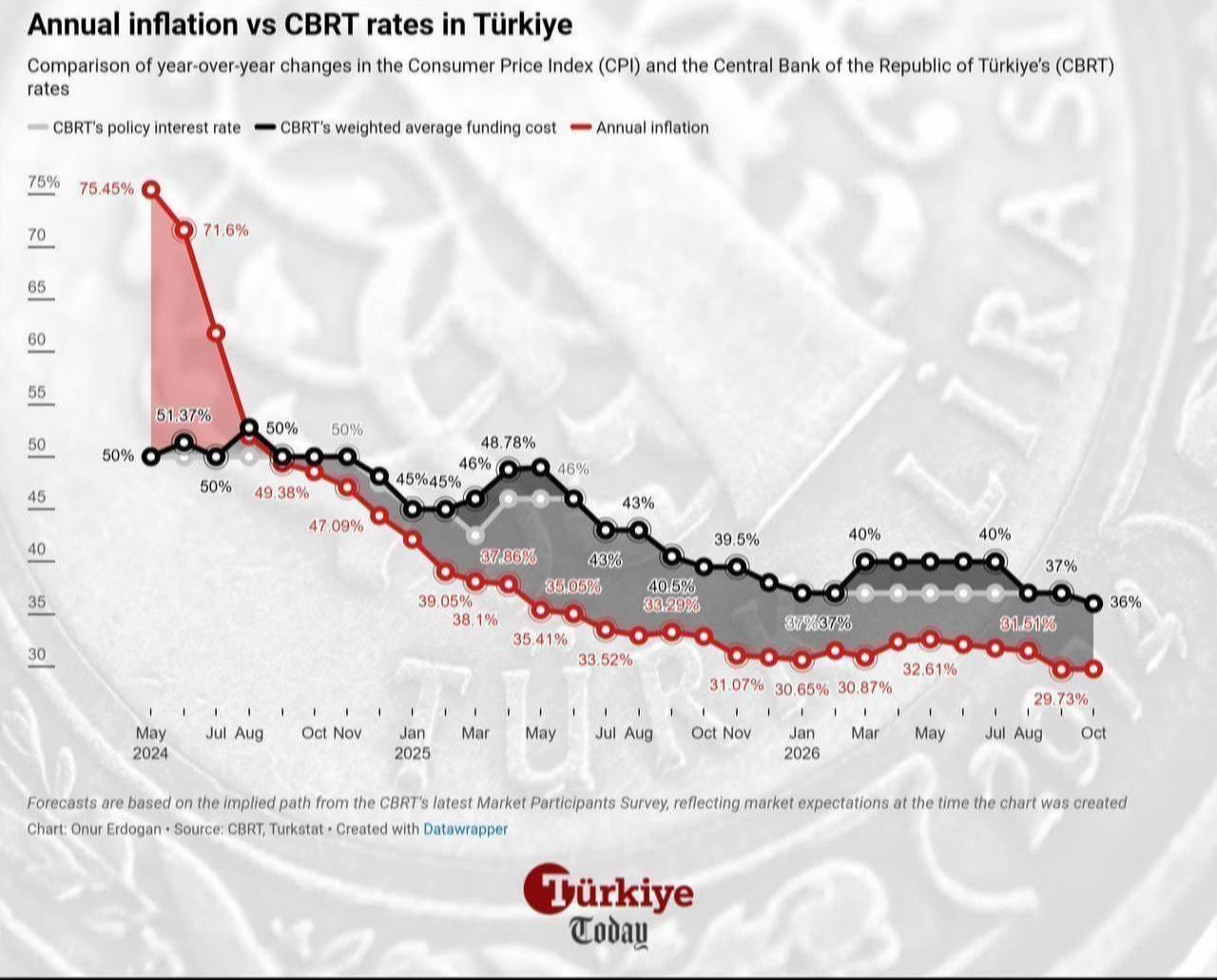

The TCMB cut its benchmark policy rate by 100 basis points to 36% in October, following a period in which it kept borrowing costs unchanged at 37% as it assessed inflationary pressures from geopolitical developments.
The bank has also continued to use liquidity and macroprudential measures to maintain tight financial conditions. On Nov. 27, it suspended one-week repo auctions, a move that can raise banks' funding costs even without an increase in the benchmark policy rate.
Karahan acknowledged that the disinflation process is creating difficulties for companies, particularly as weaker demand complicates investment and hiring decisions.
Higher energy prices have also increased Türkiye's import bill, given the country's heavy reliance on imported energy.
However, improvements in the non-energy trade balance and continued tourism revenues have helped keep the current account deficit-to-GDP ratio below its historical average, he explained.
Exporters, meanwhile, face pressure on profit margins as the Turkish Lira appreciates in real terms during the disinflation process. Companies earning revenue in foreign currencies but covering a significant share of their costs in lira are particularly exposed.
"I am aware that this adjustment process is challenging for businesses. It is not an easy process. When demand weakens, making employment and investment decisions becomes even more difficult," Karahan said.
He also highlighted the uncertainty companies face when setting prices for products that will be delivered months later or committing money to new production lines without knowing their future operating costs.
Karahan argued that a lasting decline in inflation would give businesses greater confidence when making those decisions.
"Our fight against inflation will continue until price stability is achieved," he said.


 Set as preferred source
 Set as preferred source


 2 min read
 1 min read