Sign in
 Newsletters




The Central Bank of the Republic of Türkiye (TCMB) is increasingly likely to pause its interest rate-cutting cycle in December as resident companies step up foreign currency purchases, according to U.S.-Based investment bank Goldman Sachs.
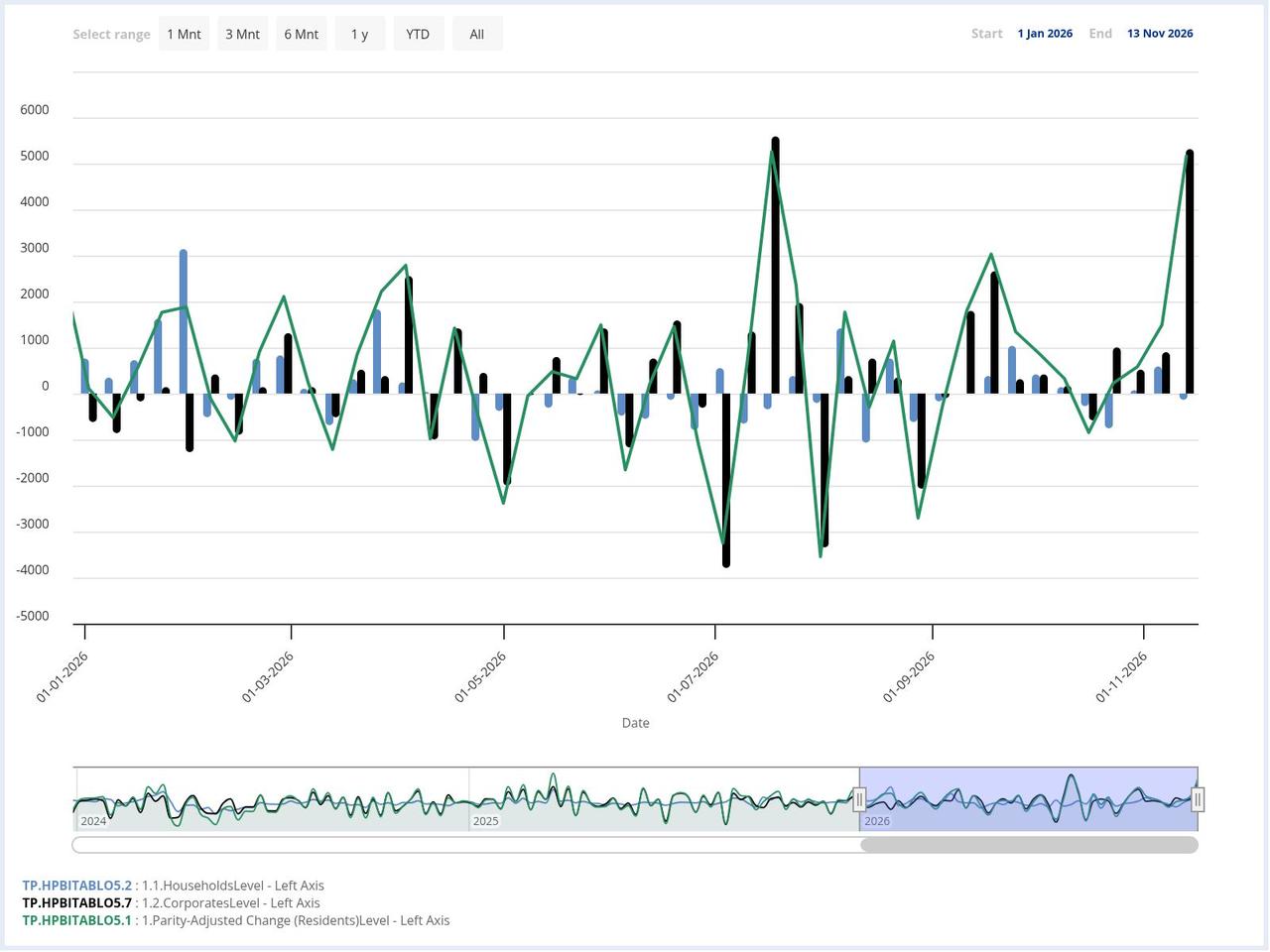
The bank pointed to a $5 billion weekly increase in foreign-currency deposits, excluding gold and valuation effects, in the week through Nov. 13. The rise marked the second-largest weekly increase after a $6 billion jump recorded in the final week of March 2025.
Developments suggest the central bank may try to keep its rate-cutting cycle on track while relying on macroprudential measures to contain dollarization, while concerns over the September fund scandal fallout on economic growth could also be shaping this approach, the bank assessed.
Foreign-currency deposits have increased by $14 billion over 11 weeks between September and November, nearly double the $7 billion rise recorded over six weeks between March 19 and April 30, 2025, Goldman Sachs noted.
The bank sees a key difference between the two episodes: the earlier shift into foreign currencies was short-lived and largely reversed in subsequent months, while the latest increase appears more persistent.
Companies account for approximately 90% of the latest increase, with their contribution approaching the entire rise in November. They accounted for roughly 60% of the growth during the March-April 2025 episode.
Companies currently hold 58% of foreign-currency deposits in Türkiye, compared with 42% held by households.
Goldman Sachs noted that the distinction matters for monetary policy, as the TCMB places greater emphasis on household dollarization.
Household demand for foreign currencies can better indicate confidence in the lira, while corporate FX holdings are largely tied to business transactions and can be more easily reversed, the bank emphasized.
Since late February, foreign-currency deposits have risen by $19 billion, excluding valuation effects, while gold deposits have increased by $2 billion.
Goldman Sachs attributed the initial increase in FX deposits during September and October partly to the fund scandal, with much of the money coming out of money market funds. Those funds had lost $11 billion since the end of August before recovering by $1.5 billion in the week through Nov. 13.
However, the bank believes the latest increase in foreign-currency demand reflects expectations of further interest rate cuts and faster lira depreciation rather than another fund-related shock.

TCMB Governor Fatih Karahan reiterated the central bank's commitment to supporting demand for the Turkish lira in an interview with state-run Anadolu Agency on Monday.
He said the bank could combine its policy rate with macroprudential and liquidity tools if demand for the lira weakens.
"If we see a weakening in demand for the Turkish lira, we'll assess the impact on the inflation outlook – the policy rate is our primary tool and we can also deploy macroprudential and liquidity tools," he told Anadolu Agency.
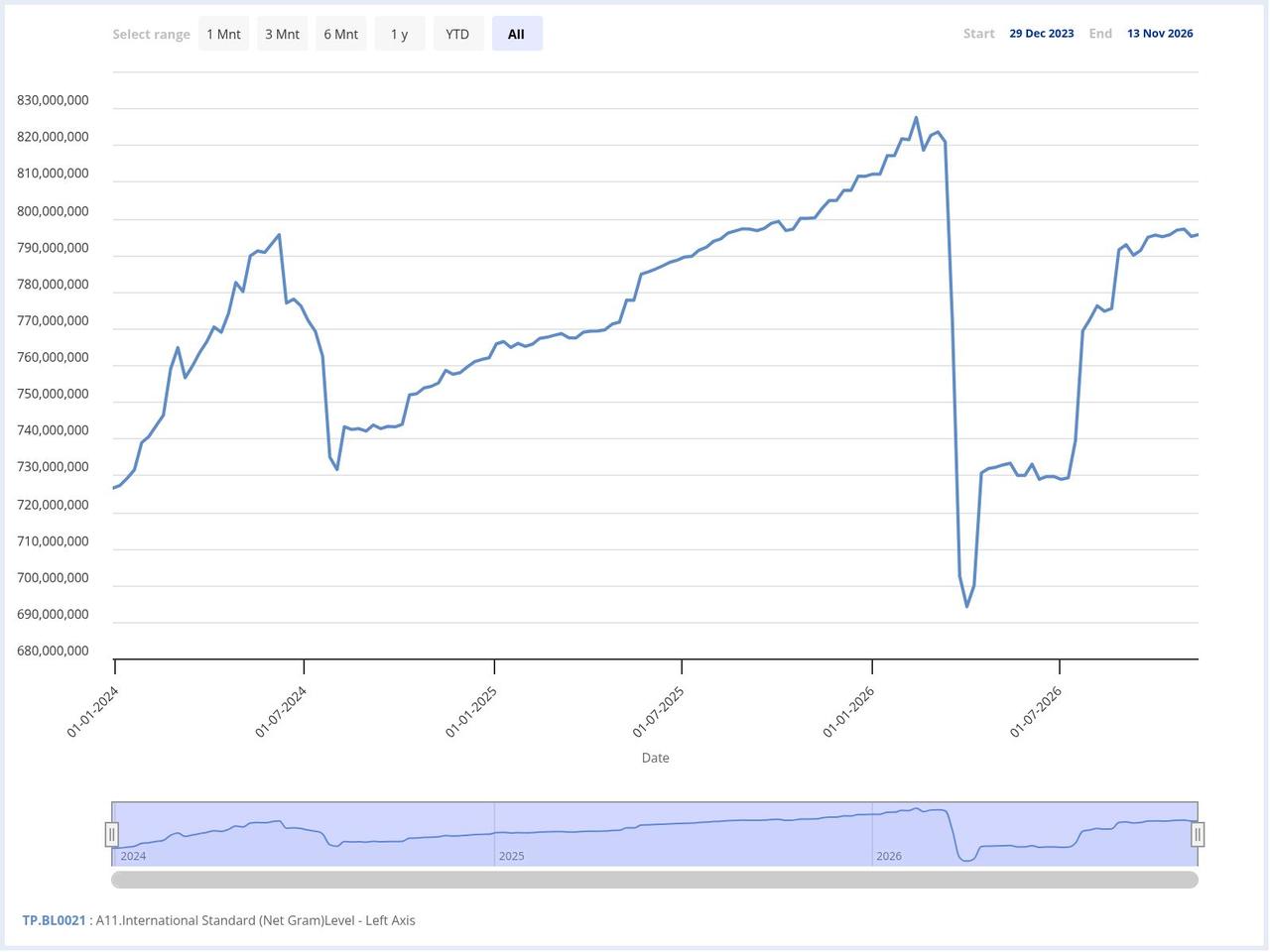
Karahan said gross reserves fell by $51 billion, from $210 billion before the war to $159 billion as of Nov. 13. Gold valuation losses accounted for approximately $32 billion, or around 60% of the decline.
He attributed further losses in the following week to falling gold prices and foreign investor outflows amid deteriorating global risk sentiment.
Gold accounts for more than 60% of the TCMB's total reserves, making price fluctuations a significant factor in reserve movements.
Karahan said the bank had conducted gold-for-FX swaps after the war began and closed them at maturity, but could deploy gold-linked instruments again if needed to strengthen its foreign exchange position.
He also raised the possibility of additional measures, including withholding tax changes, to encourage lira savings.
Despite recent shocks, Karahan maintained that domestic demand for the lira remained stable, reflecting confidence in the central bank's policies.
He warned that annual inflation could rise in November because of food-price base effects but described the inflation risk outlook as more balanced, with slowing domestic demand offsetting some upside pressures.
Inflation expectations, however, had not improved as much as the central bank had anticipated at the beginning of the year, requiring policymakers to maintain a cautious monetary stance.
TCMB's most recent Monetary Policy Committee decision was on Oct. 22, when policymakers lowered the benchmark one-week repo rate by 100 basis points to 36% from 37%.
In its decision, the committee pointed to a slowdown in the underlying inflation trend, supported by weakening domestic demand and limited pass-through of supply-side shocks to consumer prices.
However, it warned that elevated energy prices amid geopolitical tensions continued to pose upside risks to the inflation outlook.
The committee reiterated that future decisions would depend on realized and expected inflation, underlying price trends and the broader inflation outlook, adding that it remained prepared to tighten policy if inflation risks increased significantly and persistently.
At the central bank's final Inflation Report briefing of the year on Nov. 12, the TCMB revised its year-end 2026 inflation forecast upward to 29.5%, citing the impact of geopolitical developments, elevated energy prices and higher food inflation assumptions.
The bank projects inflation to decline to 21% by the end of 2027, 13.5% by the end of 2028 and 9% by the end of 2029, before eventually reaching its medium-term target of 5%.
Karahan said improvements in underlying inflation had become more visible, particularly in services and core goods. However, supply-side shocks linked to geopolitical developments continued to limit the decline in headline inflation.
The central bank's next Monetary Policy Committee meeting is scheduled for Dec. 10, when policymakers will decide whether to resume interest rate cuts or keep the benchmark rate unchanged amid rising demand for foreign currencies and persistent inflation risks.


 Set as preferred source
 Set as preferred source


 2 min read
 1 min read