Newsletters


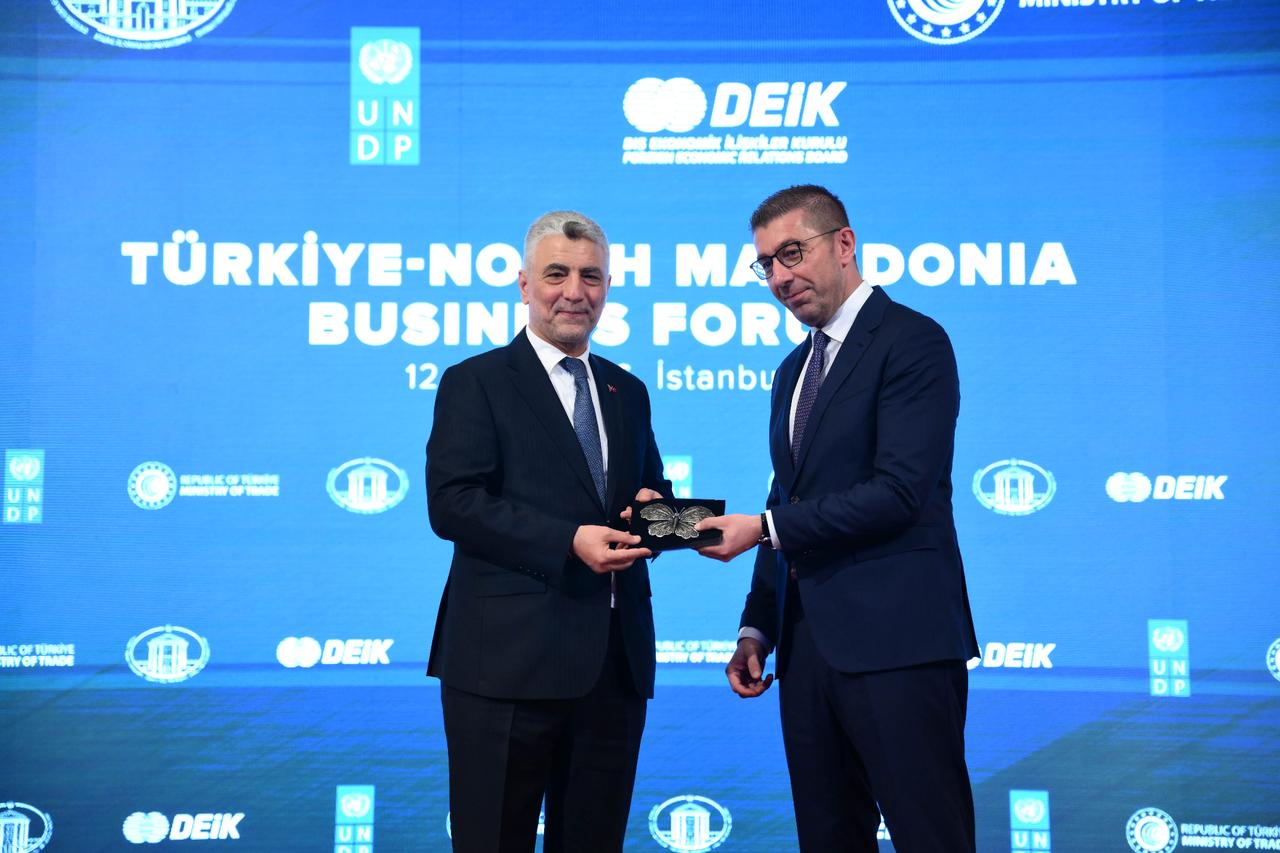


Officials and business leaders from Türkiye and North Macedonia gathered in Istanbul on Friday to discuss expanding bilateral trade, strengthening transport corridors and exploring new investment opportunities.
The Türkiye-North Macedonia Business Forum, organized by Türkiye's Foreign Economic Relations Board (DEIK), brought together senior officials from both countries, including North Macedonian Prime Minister Hristijan Mickoski.
Turkish Transport and Infrastructure Minister Abdulkadir Uraloglu said the historical ties between Türkiye and North Macedonia continue to deepen and stressed the strategic importance of developing alternative transport routes amid regional instability.
He noted that conflicts around Türkiye have underscored the urgent need to diversify transportation corridors.
According to Uraloglu, Türkiye has invested $355 billion in infrastructure, particularly transportation projects, over the past 23 years.
"We estimate that this will contribute $2 trillion to the national economy over the next 10 years. Through this initiative, we are also contributing to the employment of 1.2 million people annually," he said.
Uraloglu also said a cooperation agreement between Turkish State Railways and North Macedonia's Railway Infrastructure Agency would strengthen bilateral cooperation.
"We are situated at a highly strategic point connecting Europe and Asia, we are gradually increasing these transit points day by day," he said.
He added that Türkiye recently secured $6.75 billion in financing from six international institutions led by the World Bank for the approximately 120-kilometer railway line that will pass over Istanbul's Yavuz Sultan Selim Bridge.
Referring to the planned Development Road Corridor linking the Gulf region with Türkiye, Uraloglu said the project would reduce dependence on existing maritime chokepoints.
"If we had completed this corridor today, we wouldn’t have had the Strait of Hormuz dominate the global agenda to such an extent due to traffic from Iraq," he said.
He also emphasized that Türkiye is ready to cooperate with North Macedonia and share its expertise.
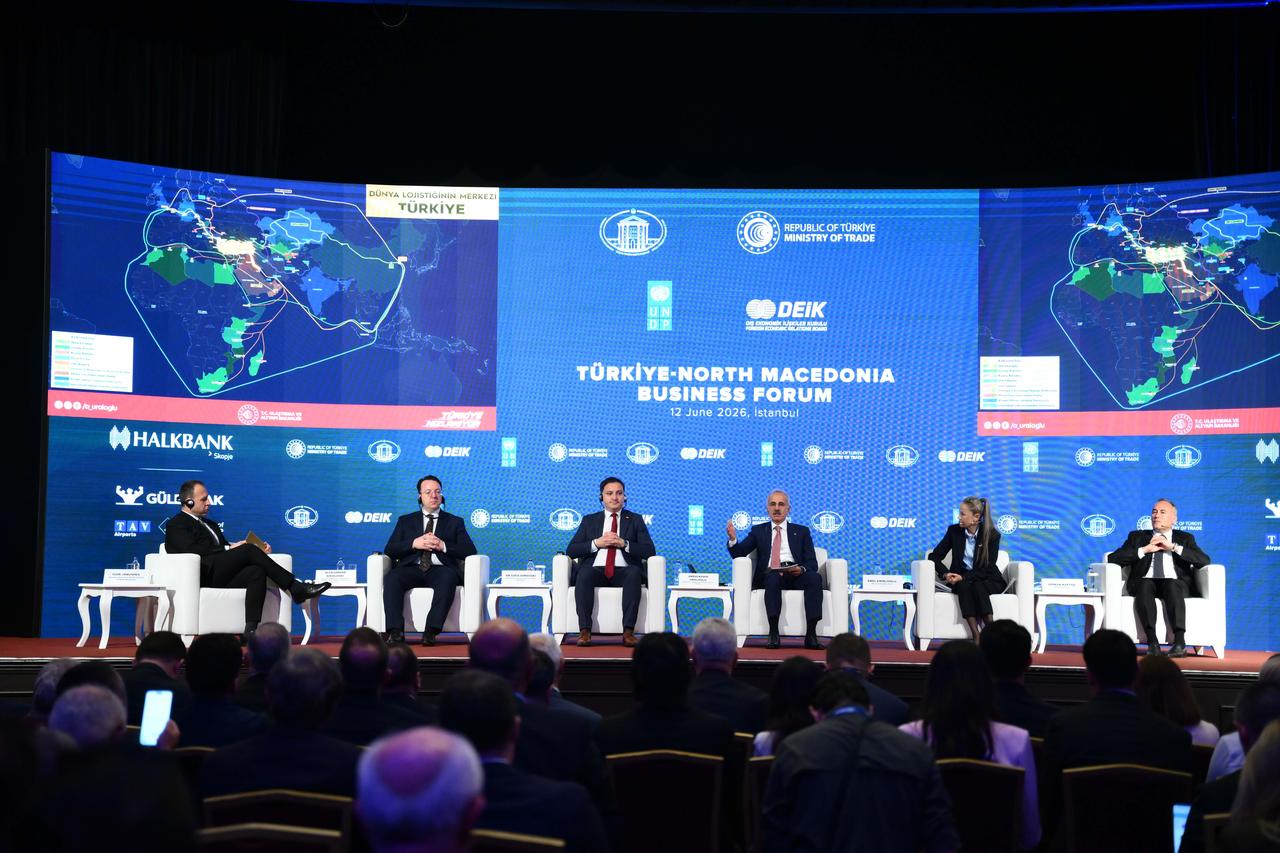

North Macedonian Government Secretary General Igor Janushev said his country is developing Corridors 8 and 10 to strengthen its strategic position within regional transport networks.
He announced plans to invest €5.5 billion ($6.4 billion) in infrastructure over the next five to seven years. He noted that the government had signed a strategic partnership agreement with the United Kingdom to help finance the projects.
Janushev praised the role of Turkish companies in railway and highway construction and said a €450 million tender for the third section of Corridor 8, backed by the European Investment Bank and the European Union, would be launched within weeks.
Prime Minister Hristijan Mickoski encouraged Turkish investors to expand their presence in North Macedonia.
"The doors are open, the opportunities are real, and we can build the future together," he said.
Speaking at the forum, Mickoski recalled that Türkiye was among the first countries to recognize North Macedonia's independence in 1991 and argued that the strong political relationship should translate into greater economic cooperation.
He highlighted the close human ties between the two countries, noting that more than one million people in Türkiye have roots in North Macedonia.
"There are few countries in the world that can boast such deep human ties as exist between both countries today," he said.
Mickoski described North Macedonia as a gateway linking the Middle East, Türkiye and Southeast Europe with the rest of the continent and said Turkish manufacturers could use the country as a base to access European markets.
He also pointed to reforms aimed at improving the business climate, reducing bureaucracy and digitizing public services.
"Our goal is not just to attract investment; our goal is to build a long-term partnership that will create value for both partners," he added.
Turkish Trade Minister Omer Bolat said bilateral trade between the two countries has reached around $1 billion and noted that Turkish contractors have completed 45 projects worth approximately $2 billion in North Macedonia.
He added that around 4,000 Turkish companies operate in sectors including manufacturing, banking and services, while state lender Halkbank maintains 49 branches and employs around 800 people in the country.
Bolat said negotiations are continuing to modernize the bilateral free trade agreement by expanding it to cover services and e-commerce. He noted that Turkish contractors are ready to participate in projects financed under the European Union's Growth Plan for North Macedonia.
North Macedonia's Minister of European Affairs Bekim Sali said Turkish companies have made significant contributions to the country's industrial and infrastructure development and invited them to explore opportunities in renewable energy, green manufacturing and digitalization.
Foreign Affairs and Foreign Trade Minister Timcho Mucunski described the bilateral relationship as a strategic partnership built on mutual trust, noting that more than 3,000 Turkish companies operate in North Macedonia.
He said integrating foreign trade into the foreign ministry's portfolio reflects the government's decision to place economic diplomacy at the center of its external policy.
DEIK Chairman Nail Olpak said Turkish businesses aim to double the current $1 billion trade volume with North Macedonia.
He highlighted the country's location along major European transport corridors as an important opportunity for Turkish construction and logistics firms and said Türkiye's expertise in solar power, wind energy and energy efficiency could support North Macedonia's renewable energy ambitions.
Olpak also pointed to financing constraints and shortages of skilled labor as challenges that should be addressed to encourage further investment.
Meanwhile, United Nations Development Program's (UNDP) Deputy Regional Director Nick Hartmann said North Macedonia's long-term development strategy includes structural reforms designed to boost investor confidence.
He added that the UNDP has developed an investor map intended to connect national priorities with global development goals and help mobilize international capital by providing data on risks and potential returns.


 Set as preferred source
 Set as preferred source


 1 min read

 1 min read