Newsletters




Türkiye's energy demand is projected to triple over the next three decades, with actual growth likely to exceed current estimates due to emerging technologies, the country's energy minister said at an international summit in Libya on Saturday.
Alparslan Bayraktar, Türkiye's Energy and Natural Resources Minister, told a ministerial panel at the Libya Energy and Economy Summit that rising global uncertainty and geopolitical tensions are forcing nations to fundamentally reshape their energy policies through stronger political will and international cooperation.
Speaking on a panel titled "Strategic Partnerships: Positioning Libya as a Global Energy Leader," Bayraktar said supply security remains Ankara's paramount energy concern as the country confronts surging consumption that has already increased sharply over the past 20 years.
"Most likely, the demand is going to grow even more than triple. So, that's why we need to address this growing demand," Bayraktar said, noting that factors including artificial intelligence, data centers and cooling requirements are not yet fully captured in existing forecasts.

Türkiye is pursuing a comprehensive policy framework centered on renewable energy to address three interconnected challenges: supply security, import dependence and climate commitments. The country aims to achieve carbon neutrality by the early 2050s, a goal set by President Recep Tayyip Erdogan.
Bayraktar emphasized Türkiye's renewable energy potential, saying the country adds 8 to 9 gigawatts of new solar and wind capacity annually while tapping solar, wind, geothermal and biogas resources. The government is also implementing what he described as an ambitious energy efficiency program.
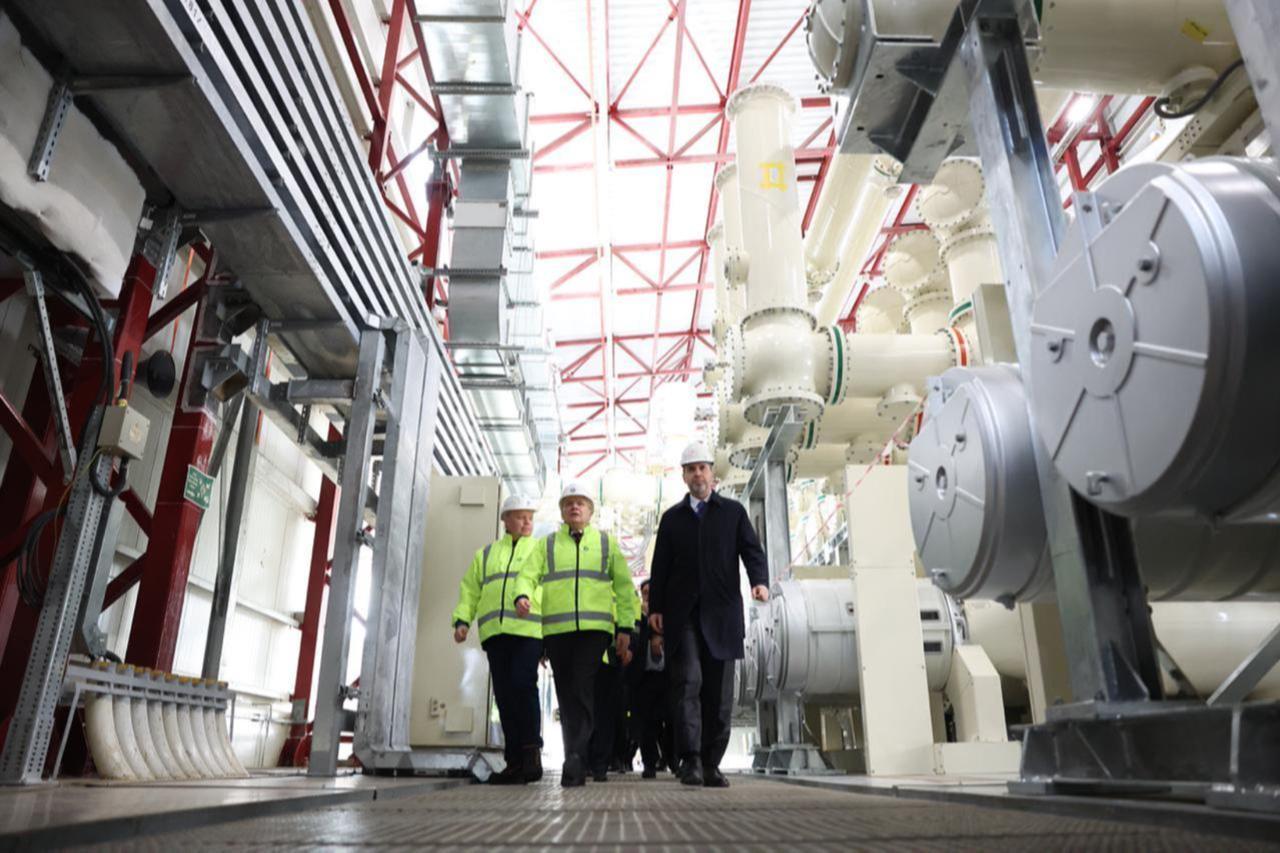
Nuclear power represents another pillar of the long-term strategy. Four reactors are under construction at the Akkuyu Nuclear Power Plant, with the first reactor expected to begin generating electricity this year, Bayraktar said.
The minister acknowledged that reducing import dependence poses a major challenge for Türkiye, which currently imports large volumes of natural gas, oil and coal from global markets.
Türkiye's national oil company has shifted strategy over the past decade toward offshore and onshore exploration, currently producing around 300,000 barrels of oil and gas per day. Production from the Sakarya Gas Field in the Black Sea has reached nearly 60,000 barrels of oil equivalent daily and is expected to double to 120,000 barrels this year, then quadruple by 2028, according to Bayraktar.
The Gabar field in southeastern Türkiye now produces around 80,000 barrels of oil per day, he added.
Bayraktar said Ankara aims to reach 500,000 barrels per day by 2028, with an eventual target of one million barrels daily, emphasizing that partnerships with capable international firms are essential to achieving those goals.
"We believe, with the international cooperation, and that's why we are in Libya, we have very strong and ambitious targets and joint efforts with our colleagues here," Bayraktar said. "Türkiye will be much more active in Libya, onshore and offshore, very soon."
Beyond Libya, Türkiye is cooperating with international energy companies including Chevron and ExxonMobil while pursuing projects in Iraq, Kazakhstan, Pakistan and other regions.
Bayraktar highlighted Türkiye's efforts to diversify its energy supply portfolio through long-term agreements, primarily with US exporters and suppliers. He described diversification as key to achieving sustainable energy development over the long term.
With geopolitical tensions continuing to roil energy markets, Bayraktar said Türkiye is pursuing what he characterized as a "Turkish path" to navigate volatility in the global energy landscape.
He concluded by stressing that political determination and robust international partnerships remain critical tools for addressing future uncertainties in energy markets.
"Strong international cooperation is the key thing to address all these challenges that we are facing," Bayraktar said.


 Set as preferred source
 Set as preferred source


 1 min read
 1 min read