Newsletters





Türkiye's central government budget posted a ₺298.2 billion ($6.4 billion) deficit in May, reversing a ₺235.2 billion surplus a year earlier as tax receipts tumbled and weighed on revenues, Treasury and Finance Ministry data showed.
Budget expenditures rose 27% year-on-year to ₺1.4 trillion, while revenues fell 18% to ₺1.1 trillion. Tax collections dropped 22.1%, or ₺264.9 billion, from a year earlier to ₺931.5 billion. Meanwhile, the primary balance, which excludes interest payments, swung to a ₺169.3 billion deficit from a ₺346.4 billion surplus a year earlier.
The steepest decline among major tax categories came from income tax revenues, which fell 57.4%, or ₺122.5 billion, to ₺91.1 billion. Domestic value-added tax collections also came under pressure, dropping 66.1% to ₺35 billion. Corporate tax revenues decreased 21.9% to ₺367.6 billion, while Special Consumption Tax (SCT) revenues fell 9.5%, or ₺13.7 billion, to ₺129.9 billion.
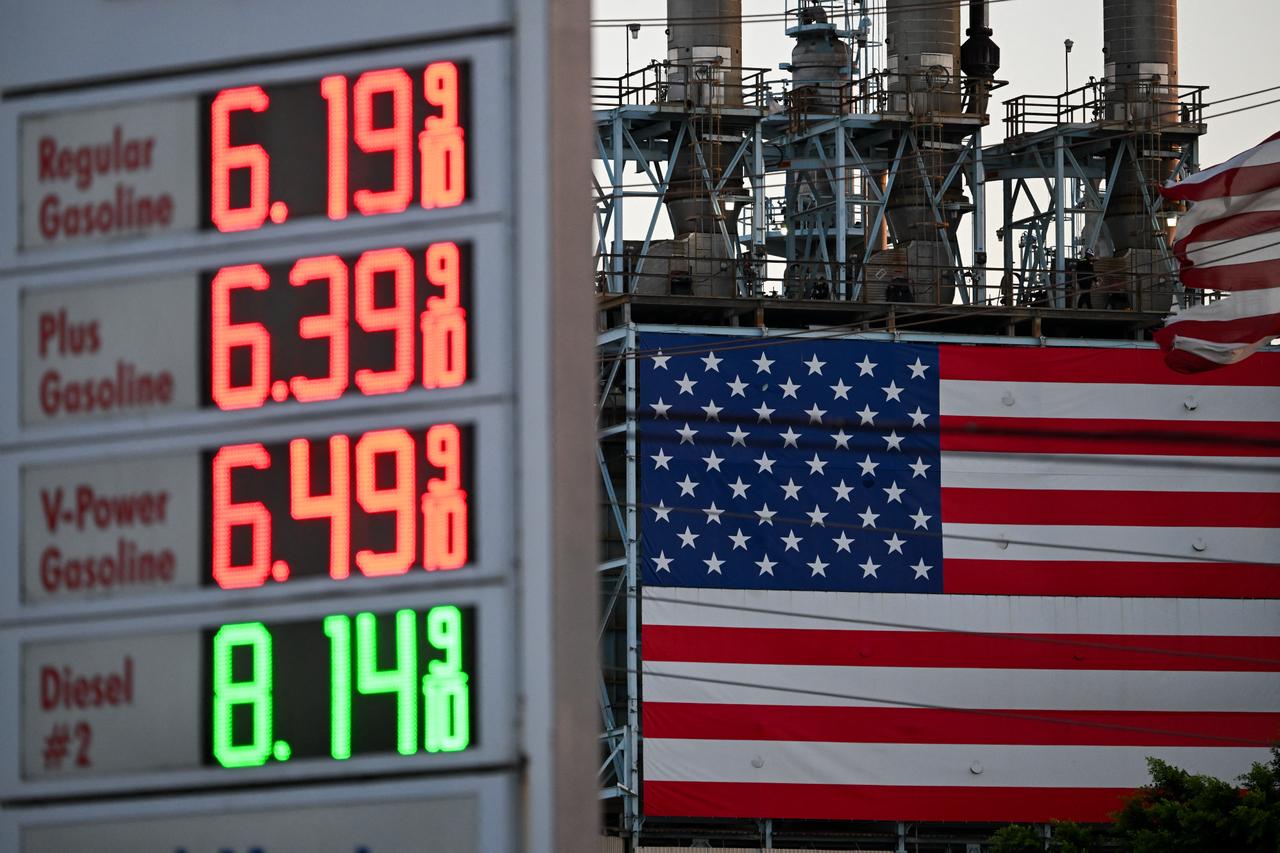
The decline in SCT revenues largely reflected a fuel tax mechanism reintroduced in March to shield consumers from rising global oil prices following the Iran conflict. The measure reduced fuel-related SCT collections by ₺37 billion in May alone and by a cumulative ₺66.6 billion over April and May.
Treasury and Finance Minister Mehmet Simsek previously said the tax buffer, also known as the sliding scale mechanism, could reduce government revenues by as much as ₺600 billion if it remains in place for the entire year.
Meanwhile, non-tax revenues provided some support to the budget, rising 22.9% year-on-year to ₺129.9 billion.
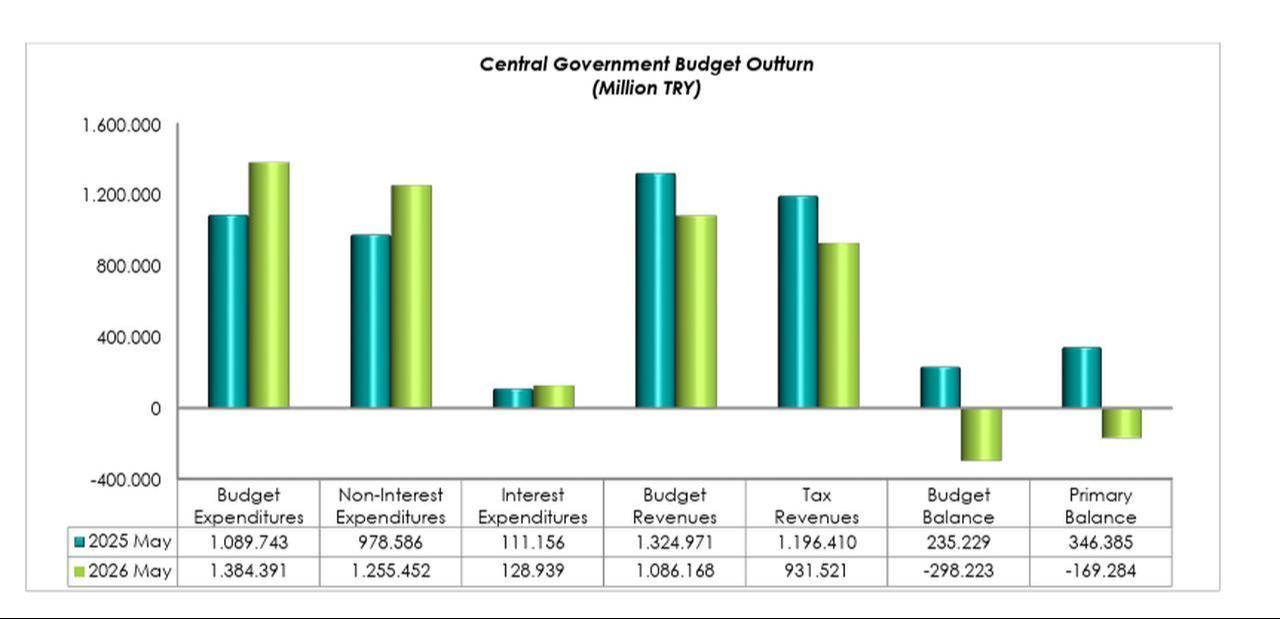

The increase in spending was driven by higher personnel costs, which jumped 48.1%, or ₺132.4 billion, year-on-year to ₺407.5 billion. Current transfers, the largest expenditure category, rose 14.8% to ₺524.4 billion. Interest expenditures also continued to climb, increasing 16%, or ₺17.8 billion, to ₺128.9 billion.
In the January-May period, central government expenditures increased 37.4% year-on-year to ₺7.3 trillion, while revenues rose 33.9% to ₺6.3 trillion. As a result, the budget deficit widened by ₺406.7 billion, or 62.5%, from a year earlier to ₺1 trillion.
The government is targeting a full-year budget gap of ₺1.93 trillion under the 2026 central government budget, equivalent to 2.7% of gross domestic product. The shortfall accumulated in the first five months of the year already accounts for nearly 55% of that figure.


 Set as preferred source
 Set as preferred source


 1 min read
 1 min read