Sign in
 Newsletters


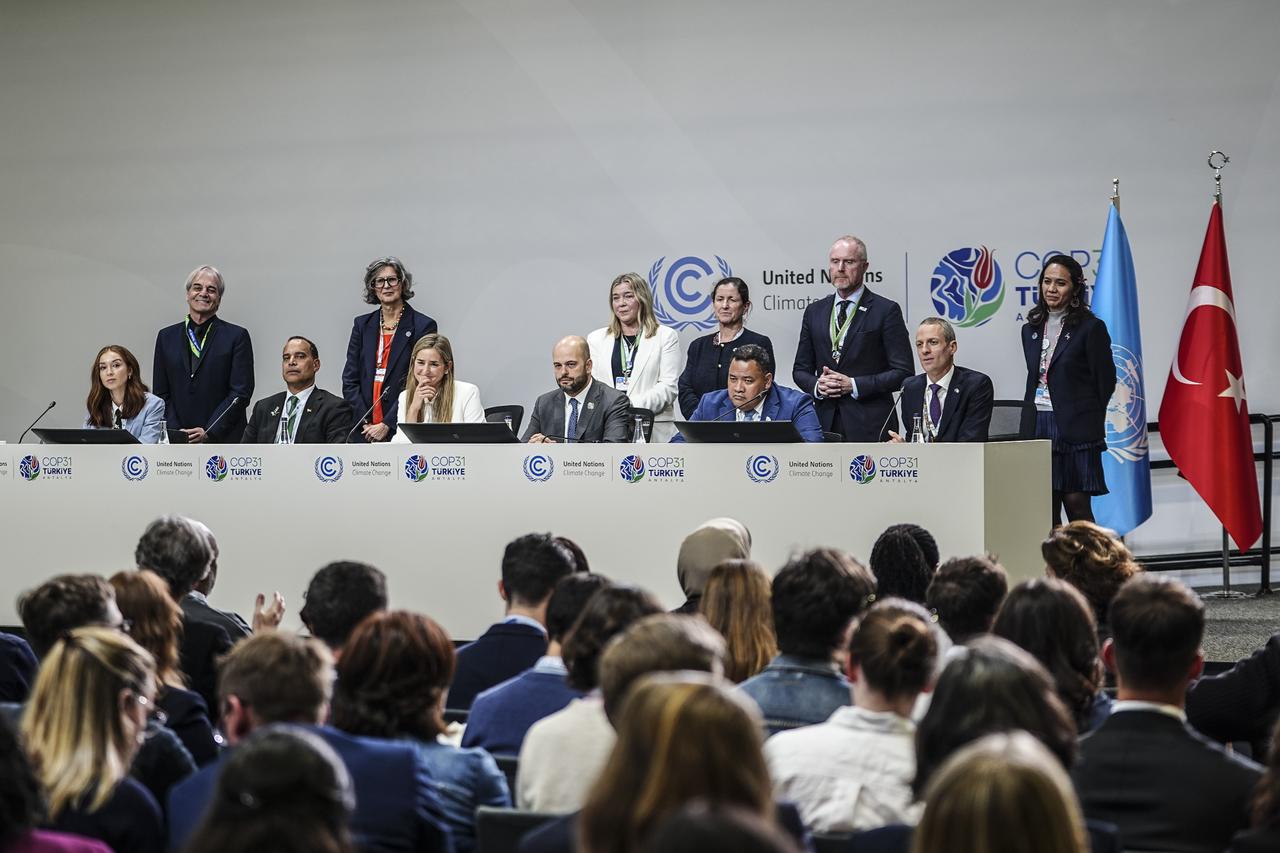


Türkiye's ambitious plan to increase electricity's share of global final energy consumption to 35% by 2035 has secured support from 75 countries and 94 organizations, the COP31 presidency said Wednesday, as international climate negotiations entered their second week in Antalya.
The initiative, known as the 35x35 target, is among the key implementation-focused commitments introduced under Türkiye's presidency of the 31st United Nations Climate Change Conference (COP31).
According to information obtained by Turkish news agency Anadolu from the COP31 presidency, 75 countries had expressed support for the initiative as of 9:30 a.m. local time Wednesday, Nov. 18.
Supporting countries include Germany, the United Kingdom, Norway, South Korea, Spain, Japan, Denmark, Canada and Kyrgyzstan.
The European Commission has also confirmed the European Union's support for the target, while Australia, which chairs negotiations at COP31, previously announced that it was among the initiative's first signatories.
Separately, 94 organizations representing the business community and civil society have endorsed the initiative.

The 35x35 initiative aims to raise electricity's share of global final energy consumption from approximately 22% to 35% by 2035, accelerating the transition toward cleaner energy sources.
The target was included in the first draft negotiating text released after the opening week of COP31 discussions in Antalya.
Representatives from more than 160 countries are participating in the summit, where negotiations are focused on translating existing climate commitments into concrete measures.
The inclusion of Türkiye's electrification target in the initial draft marks a step in negotiations, although the text remains subject to further discussions before any final agreement.

The initiative is designed to complement commitments made at COP28 in Dubai, where countries agreed to work toward tripling global renewable energy capacity and doubling the rate of energy efficiency improvements by 2030.
Increasing electricity's share of final energy consumption is expected to support emissions reductions by expanding the use of electricity in sectors traditionally dependent on fossil fuels.
The pledge also seeks to contribute to international efforts to limit global warming to as close as possible to 1.5 degrees Celsius above preindustrial levels, a central objective of the Paris Agreement.
Recent climate science assessments indicate a high risk of global temperatures exceeding the 1.5-degree threshold.
However, rapid and sustained reductions in greenhouse gas emissions could help limit the extent and duration of any temperature overshoot.
As negotiations continue in Antalya, Türkiye's 35x35 initiative remains one of the proposals aimed at turning international climate commitments into measurable action.


 Set as preferred source
 Set as preferred source


 1 min read
 1 min read