Newsletters


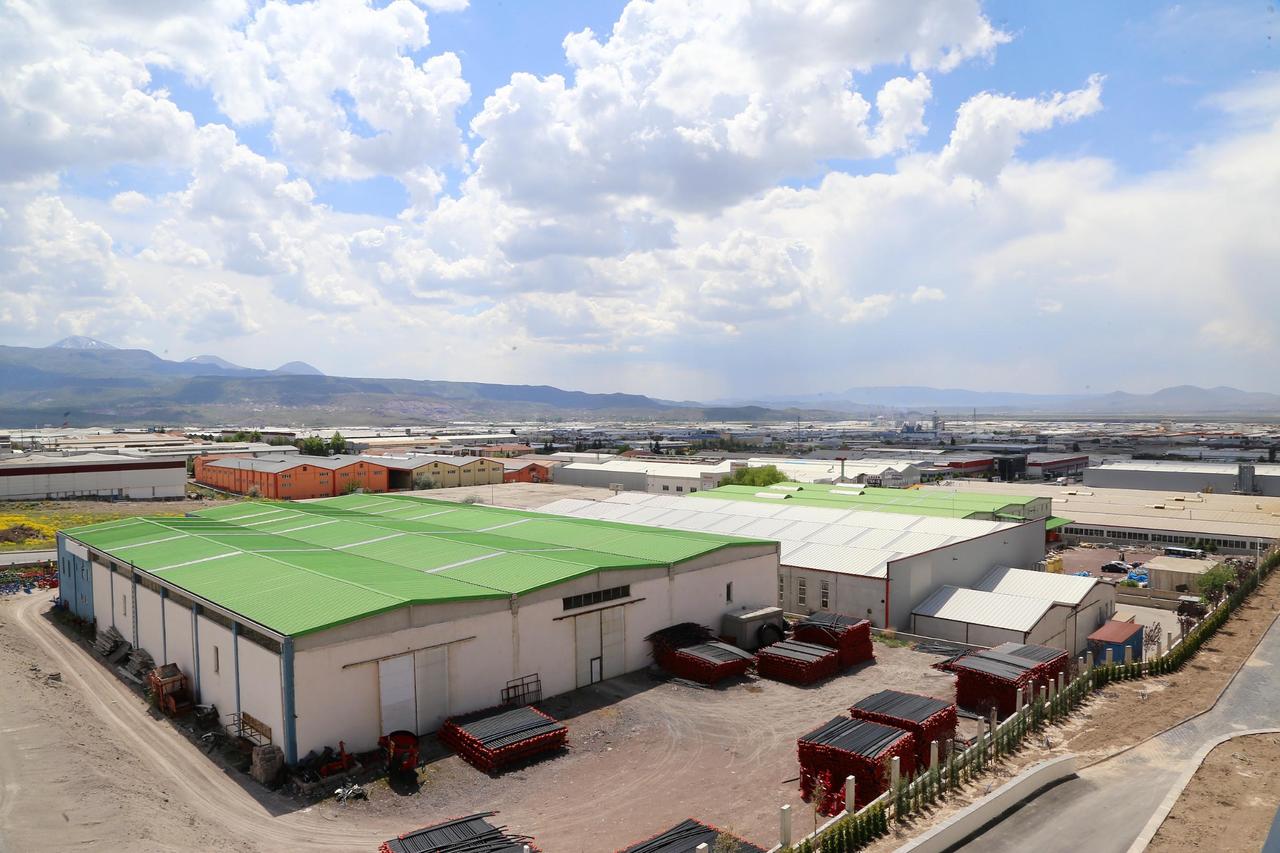


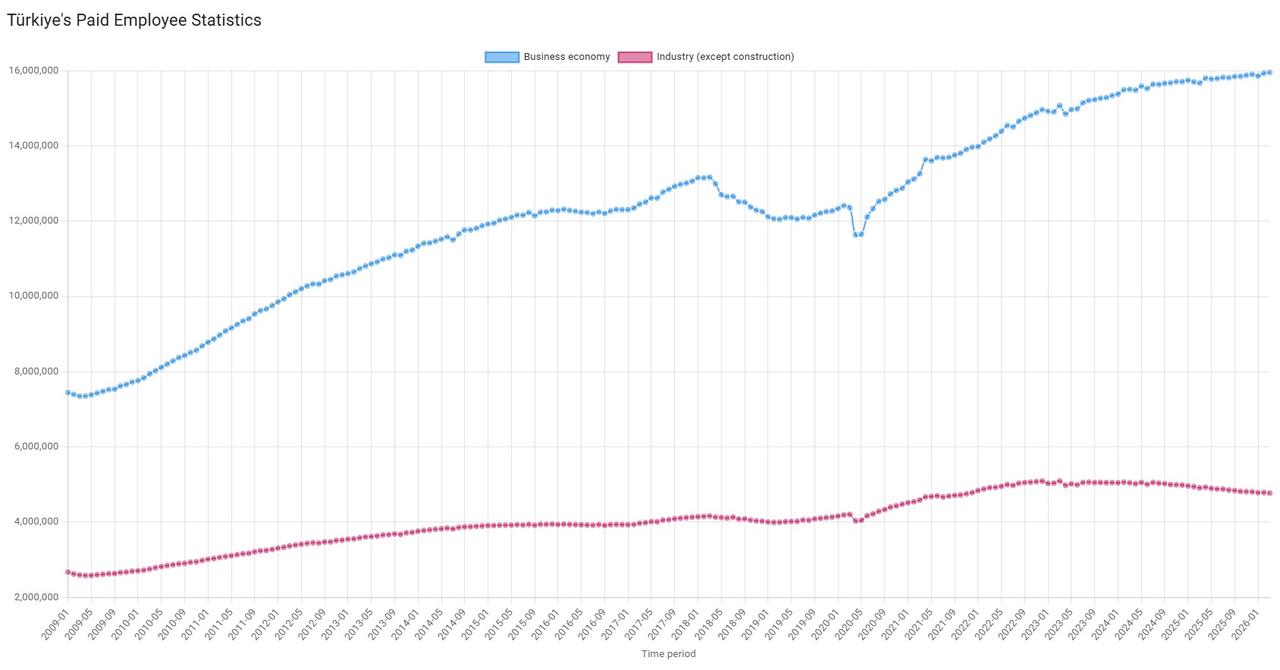
Türkiye’s industrial sector continued to lose ground in March as paid employment in manufacturing and production-related fields fell 2.7% year-over-year to 4.74 million, the lowest level since November 2021, official figures showed.
The decline marked a loss of 132,320 jobs over the past year and extended the industrial sector’s annual employment slide to a 20th consecutive month dating back to August 2024, while total employment in the sector has fallen by more than 300,000 from its 2023 peak above 5 million.
Total paid employment across industry, construction and trade-services rose 1.8% year-over-year in March 2026 to 15.6 million people, according to the Turkish Statistical Institute (TurkStat).
However, nearly all net job growth came from trade-services and construction. Trade and services added 300,806 workers over the past year, while construction employment increased by 111,914, highlighting a broader shift in Türkiye’s labor structure away from higher value-added industrial production toward more cyclical, service-led sectors.
As a result, industry’s share in total paid employment slipped to 30%, down 3.6 percentage points from November 2021 levels, while the deterioration became increasingly visible across Türkiye’s export-oriented manufacturing sectors, data compiled by business-focused ekonomim.com indicated.
Food manufacturing remained Türkiye’s largest industrial employer with 578,841 workers, up 2.9% year-over-year.
Losses deepened across textiles and apparel, with employment falling 10.1% in apparel manufacturing and 9.2% in textiles. Machinery and equipment manufacturing slipped back to 2022 levels at 290,156 workers amid rising labor and input costs.
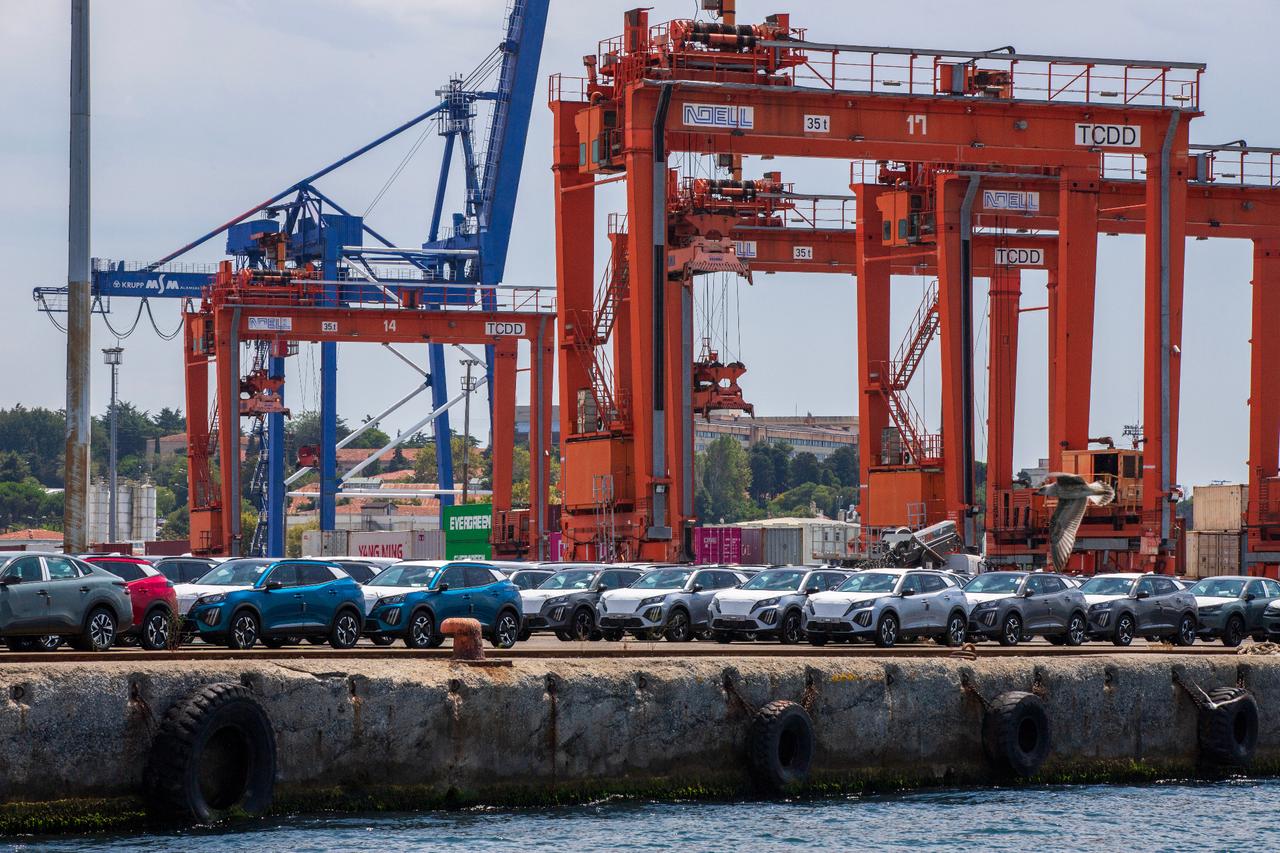
The automotive sector, Türkiye’s leading export industry, also weakened, with employment in motor vehicle and trailer manufacturing falling 2.9% annually to 234,460, the lowest since February 2023. Rubber and plastics manufacturing followed a similar path, shedding 2.8% of its workforce to 557,338 workers.

The weakening labor market reflected broader strains across Türkiye’s industrial sector as production, capacity use and manufacturing activity continued to lose momentum.
Industrial production fell 1.1% year-over-year in March, while first-quarter output contracted 1.3% from the same period last year.
Capacity utilization, which measures how much of factories’ production capacity is actively being used, stood at 75.8% in April, while the Manufacturing Purchasing Managers’ Index (PMI), a key gauge of factory activity based on new orders, output, employment and inventories, dropped from 47.90 to 45.70, its lowest level since October 2024.
Surging energy prices, weakening global demand, particularly in nearby export markets following the Iran war, and persistently high inflation further darkened the outlook, as rising production and labor costs continued to weigh on manufacturers.
Despite the slowdown, industry remained Türkiye’s main export engine in 2025, generating $194.7 billion in exports and accounting for 82% of the country’s total exports.


 Set as preferred source
 Set as preferred source


 1 min read
 1 min read